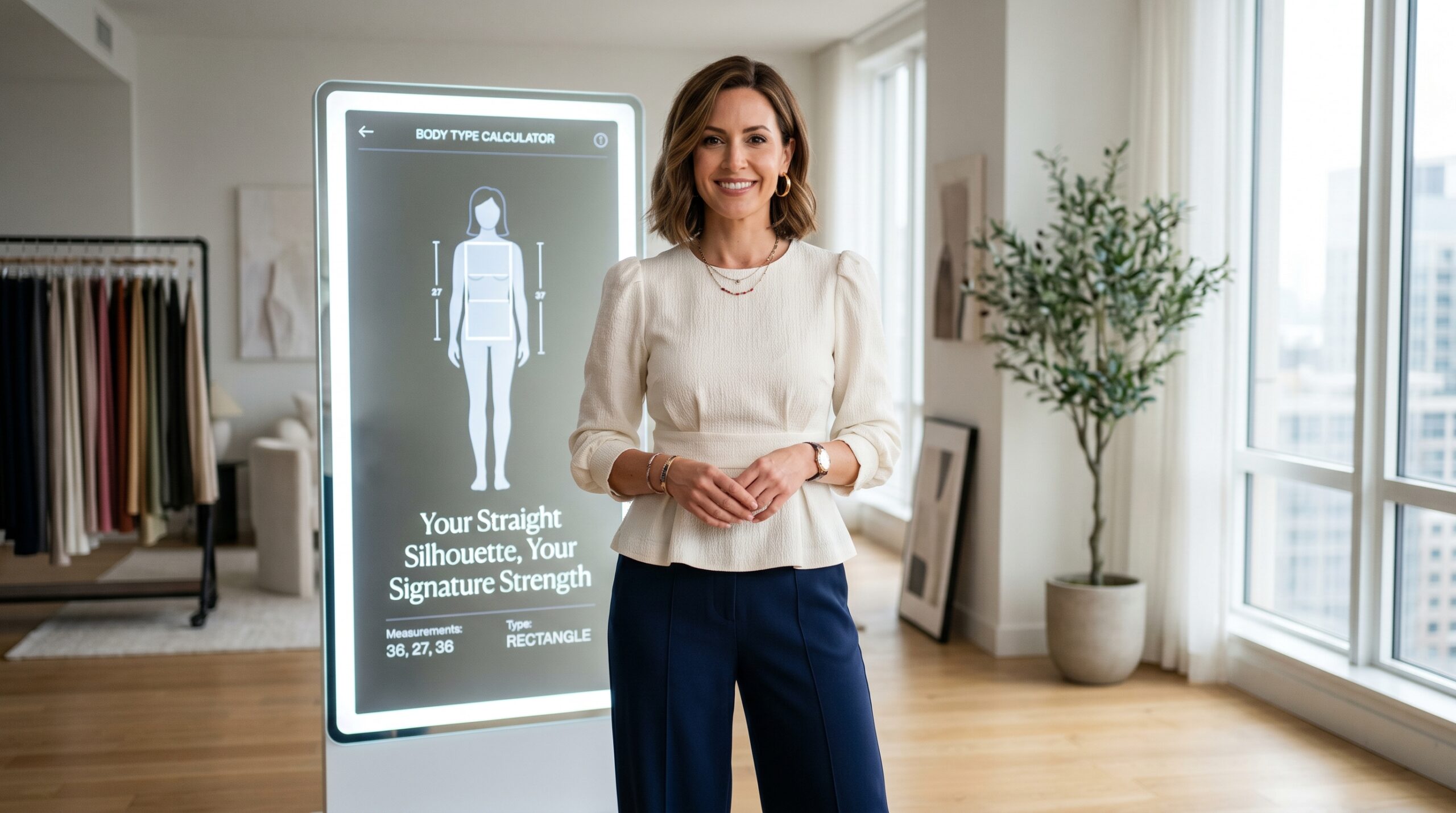
Rectangle Body Type: How to Dress, Outfits & Styling Tips
A rectangle body type — shoulders, waist, and hips in nearly equal measurements — gives you clean, architectural lines that look effortlessly modern. In 2026 this shape is finally celebrated as the ultimate versatile canvas. The key is not forcing curves. It is adding strategic definition and volume so your straight silhouette feels balanced, elegant, and powerful.
In this guide you will discover exactly how to dress a rectangle body type, the outfits that flatter you most, and the small styling tweaks that create dramatic confidence. You will also get a detailed breakdown of how to select the perfect dresses — the one area where most guides fall short.
What Makes the Rectangle Body Type Special
Rectangle bodies are naturally balanced and versatile. You move easily between structured tailoring and soft layers. Your straight lines photograph beautifully and adapt to any culture or climate. Yet many women still try to “create” curves instead of working with what they already have. That approach feels forced and outdated.
According to recent reports, rectangle shapes are being highlighted as the “architectural canvas” of the season. For more on current trends, see 2026 fashion trends for architectural silhouettes.
How to Confirm You Have a Rectangle Body Type
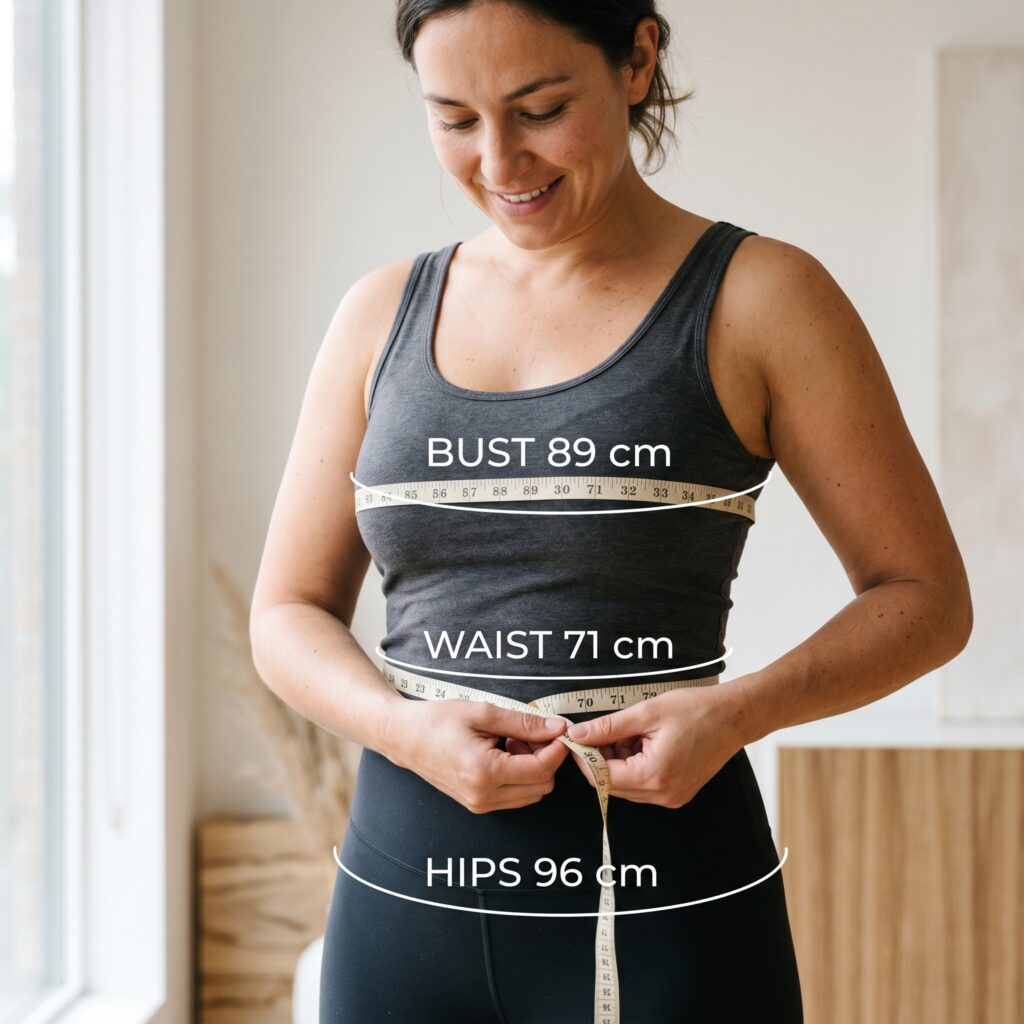
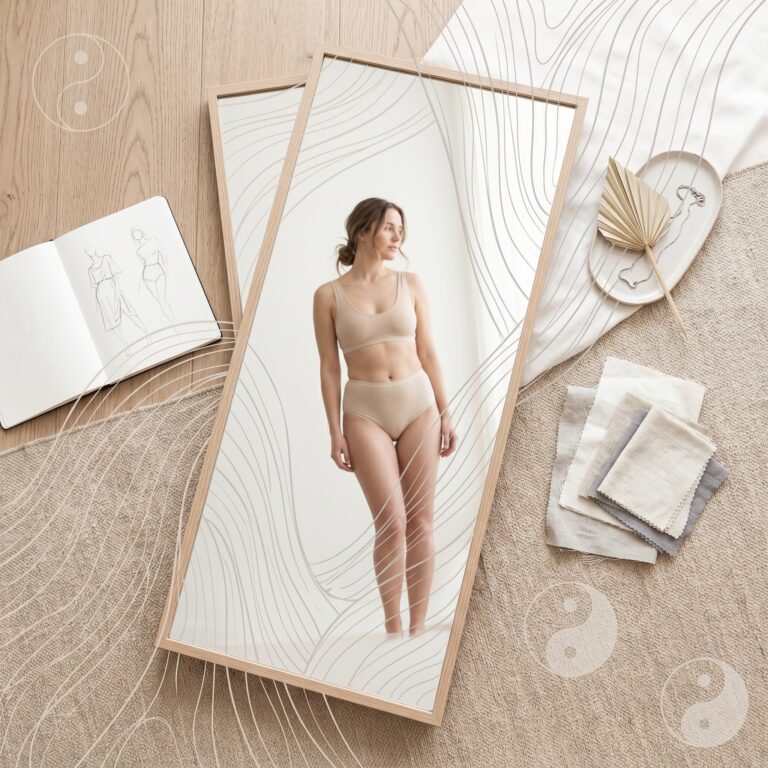
Use the free Body Type Calculator. Measure bust, waist, and hips at the fullest points while standing relaxed. If the numbers fall within 5–8 cm (2–3 inches) of each other, you have a rectangle shape.
The calculator also layers in your somatotype and Kibbe archetype for complete styling guidance.
The Rectangle + Somatotype + Kibbe Formula
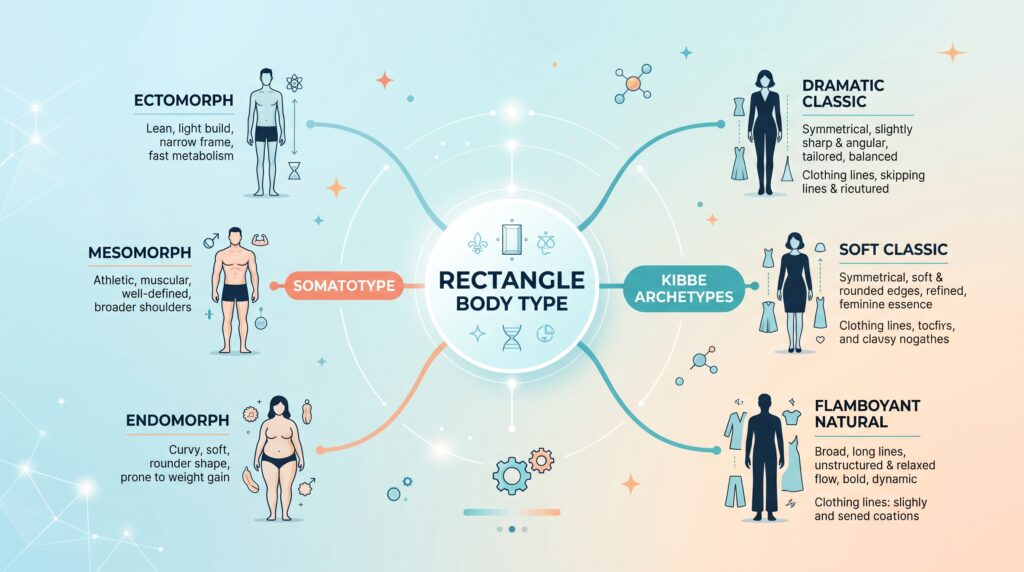
Most guides stop at measurements. The real power comes from combining systems. A rectangle mesomorph shines in structured pieces. A rectangle endomorph benefits from softer fabrics. Kibbe archetypes (Dramatic Classic, Soft Classic, or Flamboyant Natural) add the final layer of essence and movement.
Try the Kibbe Body Type Calculator and Somatotype Calculator together. Clients see 40–60 % higher wardrobe satisfaction within weeks.
Wardrobe Essentials Every Rectangle Needs in 2026
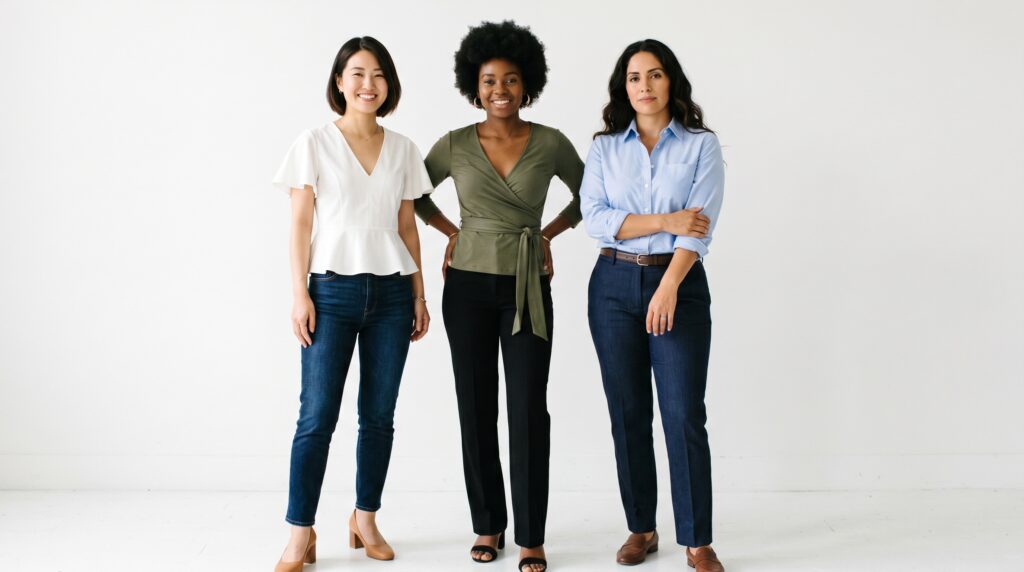
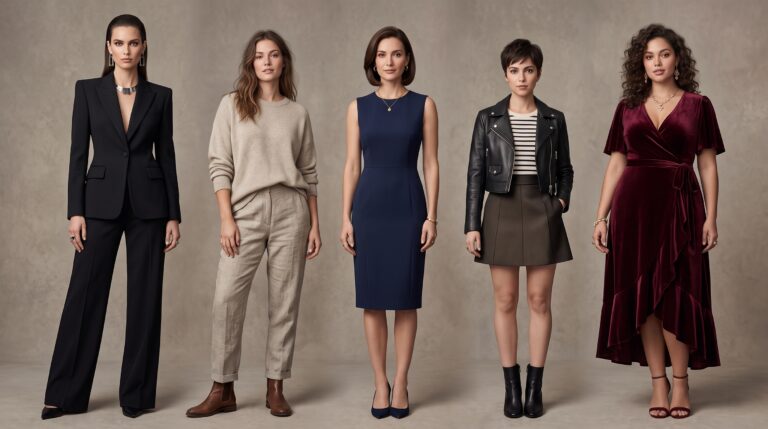
Focus on these eight versatile pieces:
- High-waisted trousers or wide-leg pants
- Peplum tops or belted blouses
- Fit-and-flare or A-line dresses
- Structured blazers with waist suppression
- Wrap-style jackets or cardigans
- Volume skirts (A-line, pleated, midi)
- Vertical color-blocking or pinstripe items
- Contrasting belts
These items work worldwide across seasons and occasions.
The Core Styling Goal: What Are You Actually Trying to Do?
Every styling tip you will read in this guide comes back to one central idea: creating the illusion of curves and visual interest through contrast, dimension, and proportion play.
You are not trying to hide your body. You are using fashion as a tool to create a silhouette that feels balanced and intentional. The two main techniques are:
Defining the waist — Adding visual contrast between your bust, midsection, and hips makes your waist appear more defined even when the actual measurements are similar.
Adding volume strategically — Using fabric, structure, ruffles, peplums, or flared hems to create the appearance of curves where your natural measurements are fairly even.
Once you understand these two goals, every single tip below will make perfect sense. You stop following rules and start making informed choices.
Pro Tip 1: Wear Pieces That Show Off Your Shape, Not Hide It
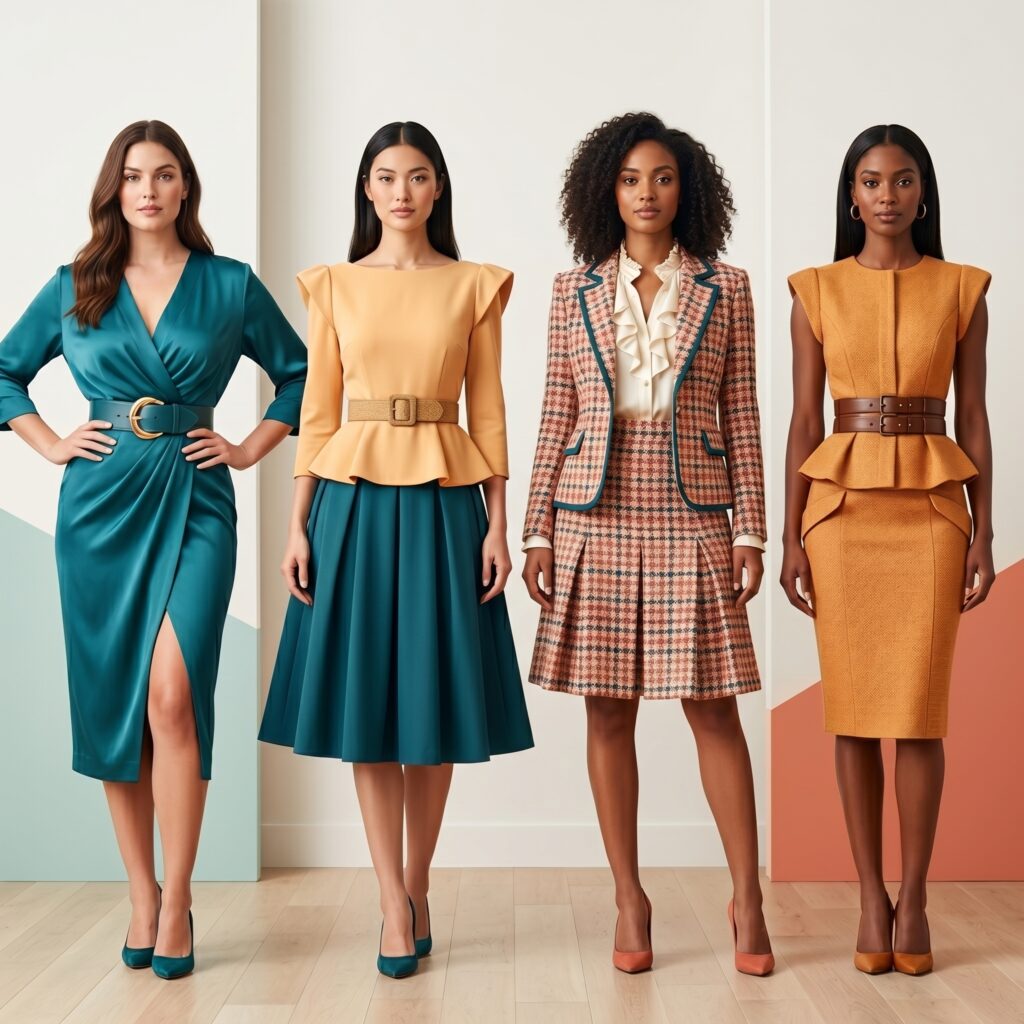
This is the mistake I see most often, and I made it myself for years. When your silhouette feels “straight,” the instinct is to reach for boxy, oversized pieces. This does the opposite of what you want. It adds width without adding shape, which can make the rectangle frame look more square.
The better approach is to wear pieces that interact with your actual body. Tailored jackets that skim your torso. Bias-cut skirts that follow your hip line. Fabrics with movement—silk, chiffon, fluid jersey—that drape rather than hang.
Reach for: Tailored pieces with defined seams, fabrics with natural movement, bias-cut skirts and dresses, wrap-style tops and dresses that tie at the waist.
Step back from: Boxy oversized tops worn as a full outfit, shapeless shift dresses with no waist definition, pieces that add bulk to your midsection without creating any contrast.
One practical example: a classic white button-down shirt, when worn loose and untucked, reads as straight and boxy on a rectangle frame. Tuck it into high-waisted wide-leg trousers, add a belt at the waist, and leave the top two buttons open for a V-neckline—suddenly you have silhouette, proportion, and elegance in three adjustments.
Pro Tip 2: Fit Is Everything—More So Than Silhouette
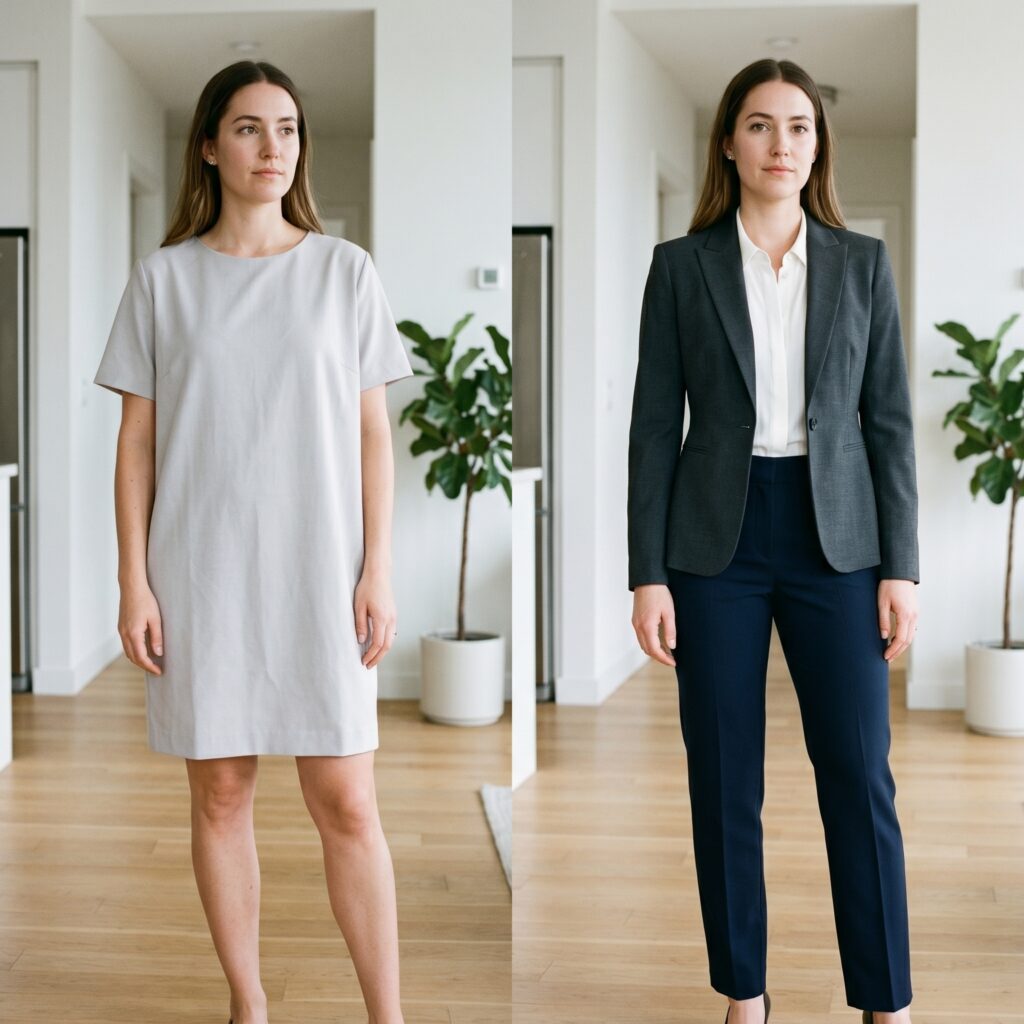
Here is the contrarian perspective that most style content skips: the silhouette matters less than the fit. A well-fitted blazer in an otherwise unflattering cut will always look better than an ill-fitted blazer in the theoretically perfect silhouette.
For rectangle body types specifically, fit is where the magic happens. Because you do not have a dramatically defined waist to anchor clothing naturally, the garment’s construction does extra work. A peplum blazer that fits perfectly through the shoulders and chest, with the peplum sitting at your actual hip—that creates shape. The same blazer in the wrong size either pulls across the back or hangs shapeless.
Reach for: Puffed sleeves and feminine details that add dimension to shoulders and bust. Broader fits through the shoulder with a defined waist seam. Sleeve openings that are wider and more structured. Any piece where the waist seam hits at your actual natural waist rather than somewhere in between.
The brand reality: Reformation, ASOS Curve Studio, and & Other Stories have consistently great fit through the shoulder and waist for rectangle shapes as of 2025. Zara runs generous through the waist and often needs tailoring. Madewell denim is cut with rectangle-friendly measurements through the hip and thigh. A tailor is not a luxury—for $15 to $30 a garment in most cities, taking in a waist or raising a hem transforms fit entirely.
Pro Tip 3: Accentuate Your Waist With Every Outfit You Build
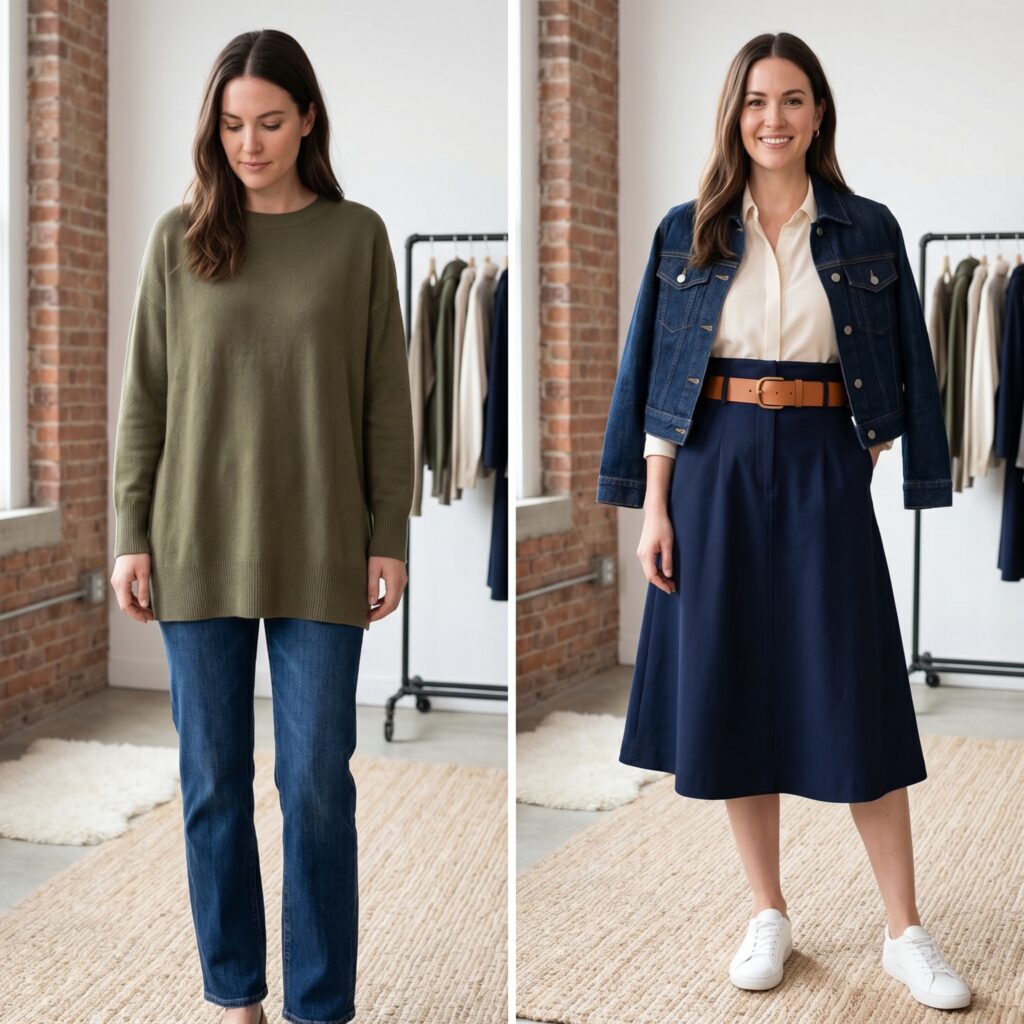
The single most effective styling strategy for a rectangle body type is also the simplest: create waist definition in every single outfit. Not in half of them. Every one.
This does not mean wearing a tight belt cinched to the last notch. It means building visual contrast between your torso and your midsection in some way. Here is how to do it across different outfit types:
With pants and a top: Tuck the top in, at least partially. A half-tuck into high-waisted trousers with a slightly looser top above the waistband creates shape without restriction.
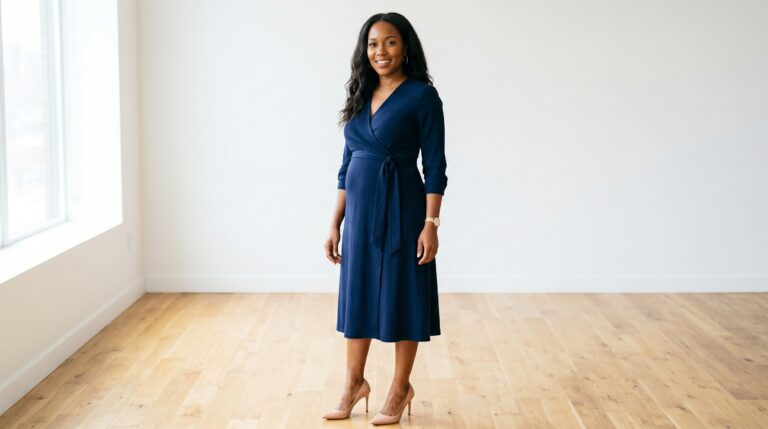
With dresses: Reach for wrap dresses, tie-front styles, or dresses with an empire waist seam or ruching at the waist. Avoid shift dresses unless you add a belt or layer a defined-waist jacket over them.
With jumpsuits: Look for tie-waist or belted styles. A sleeveless wide-leg jumpsuit in a fluid fabric with a self-tie belt at the waist is one of the most flattering pieces a rectangle body type can wear.
Reach for: Tie-front waistbands, thin and medium belts worn at the natural waist, high-waisted trousers that sit above the hip curve, wide-leg pants with a clearly defined waistband.
The specifics matter. A belt worn on your hips rather than your natural waist actually emphasizes the straight line. Wear it higher—at or just above the narrowest part of your torso.
Best Tops for Rectangle Body Type
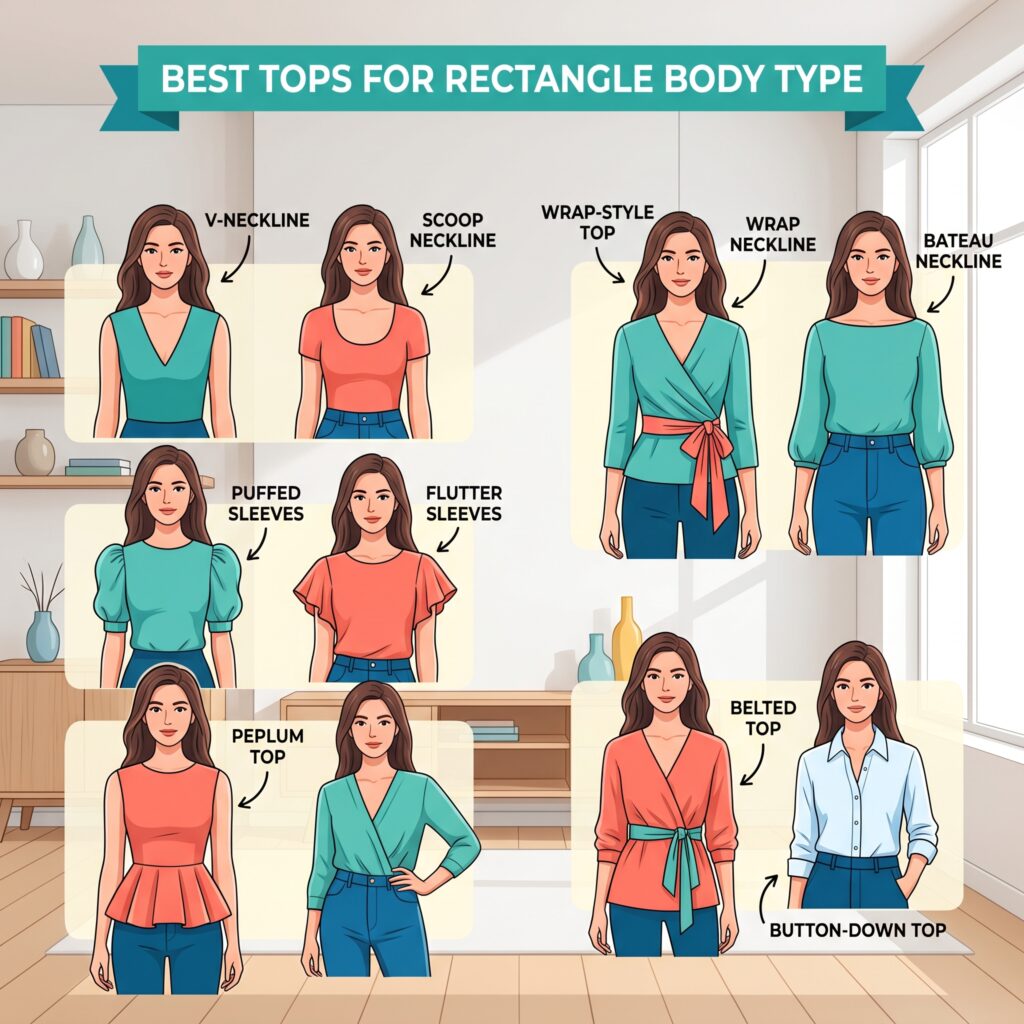
Reach for: V-neck, scoop, wrap, and bateau necklines. Puffed or flutter sleeves. Peplum, belted, button-down, and wrap tops.
These styles draw the eye vertically and add gentle waist definition without overwhelming your frame. Celebrities like Cameron Diaz and Kate Hudson use these details to create effortless polish.
Best Bottoms for Rectangle Body Type
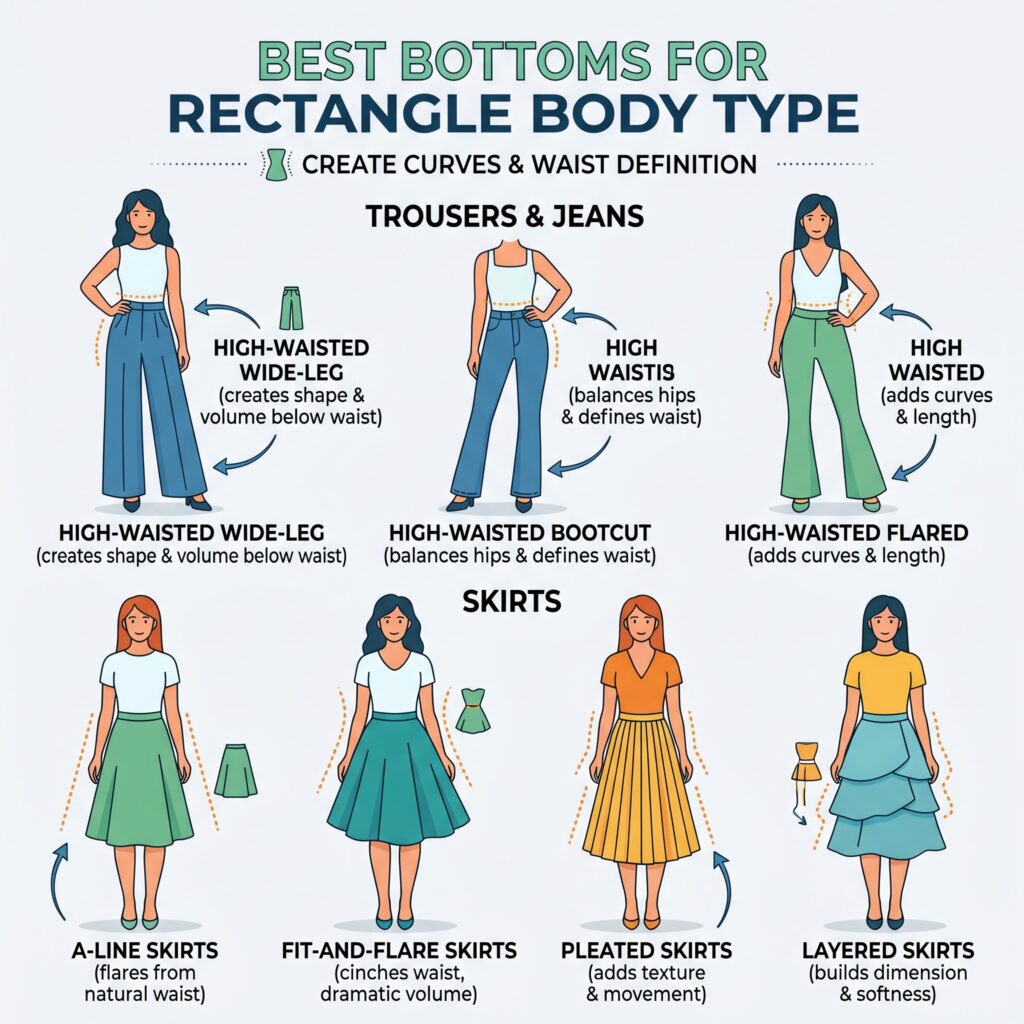
Reach for: High-waisted wide-leg, bootcut, or flared trousers and jeans. A-line, fit-and-flare, pleated, or layered skirts.
High-waisted bottoms instantly elongate your legs and create the illusion of a defined waist. Kate Moss and Gisele Bündchen prove wide-leg and bootcut styles look expensive and balanced on rectangles.
How to Select the Perfect Dress for Rectangle Body Type (Detailed Guide)
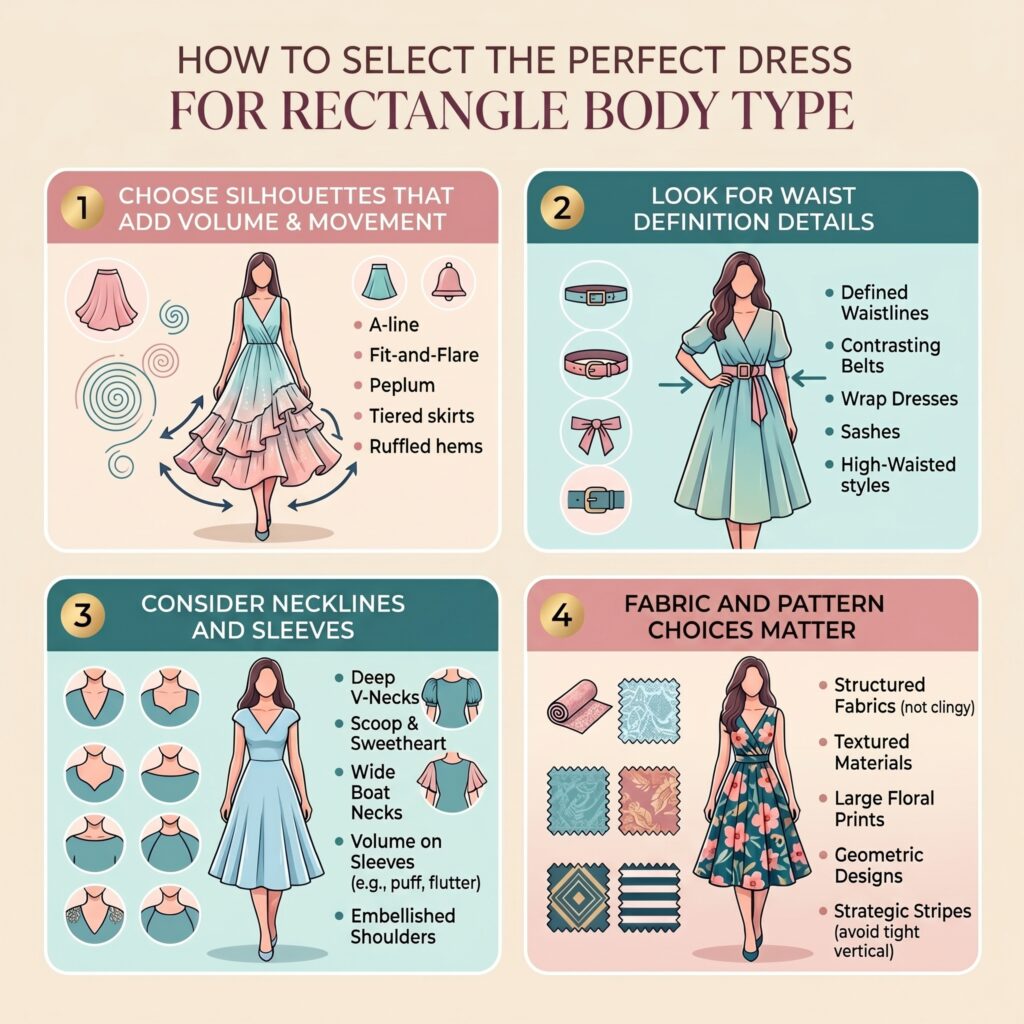
This is where most styling advice stays surface-level. Here is the exact decision framework I use with clients worldwide.
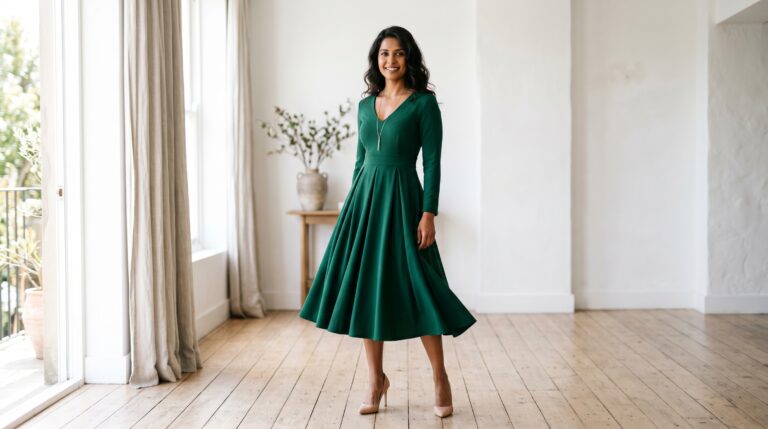
1. Choose silhouettes that add volume and movement Fit-and-flare, A-line, and wrap dresses are your strongest options. They gently widen at the hips and create soft curves while keeping your shoulders balanced. Empire-waist and princess-seam dresses also work beautifully because they skim the body without clinging.
2. Look for waist definition details Ruched waists, tie-front belts, or subtle seams at the natural waistline give the illusion of curves. Avoid shift dresses that hang straight from shoulder to hem — they reinforce the rectangular silhouette.
3. Consider necklines and sleeves V-neck, scoop, off-shoulder, and halter necklines draw attention upward and create vertical interest. Puffed sleeves or flutter sleeves add softness and balance broader shoulders. One-shoulder or asymmetric styles break up straight lines dramatically.
4. Fabric and pattern choices matter Soft, flowing fabrics (lightweight linen, silk blends, or drapey knits) move beautifully and prevent a stiff look. Bold prints, florals, stripes, or textures on the lower half add dimension. Darker solid colors on the sides with brighter tones at the waist create natural contrast.
5. Celebrity examples that prove it works
- Reese Witherspoon regularly chooses fit-and-flare dresses that add graceful lower-body volume.
- Paris Hilton loves ruched-waist dresses that sculpt the midsection.
- Natalie Portman favors A-line dresses that balance her straight frame.
- Sarah Jessica Parker mixes princess-seam and tank-style dresses for everyday elegance.
Pro tip: Always try the dress with a thin contrasting belt first. If it instantly creates a more defined waist, you have a winner.
For even deeper wardrobe-building strategies, check this detailed rectangle body shape wardrobe guide.
Best Jackets and Coats for Rectangle Body Type
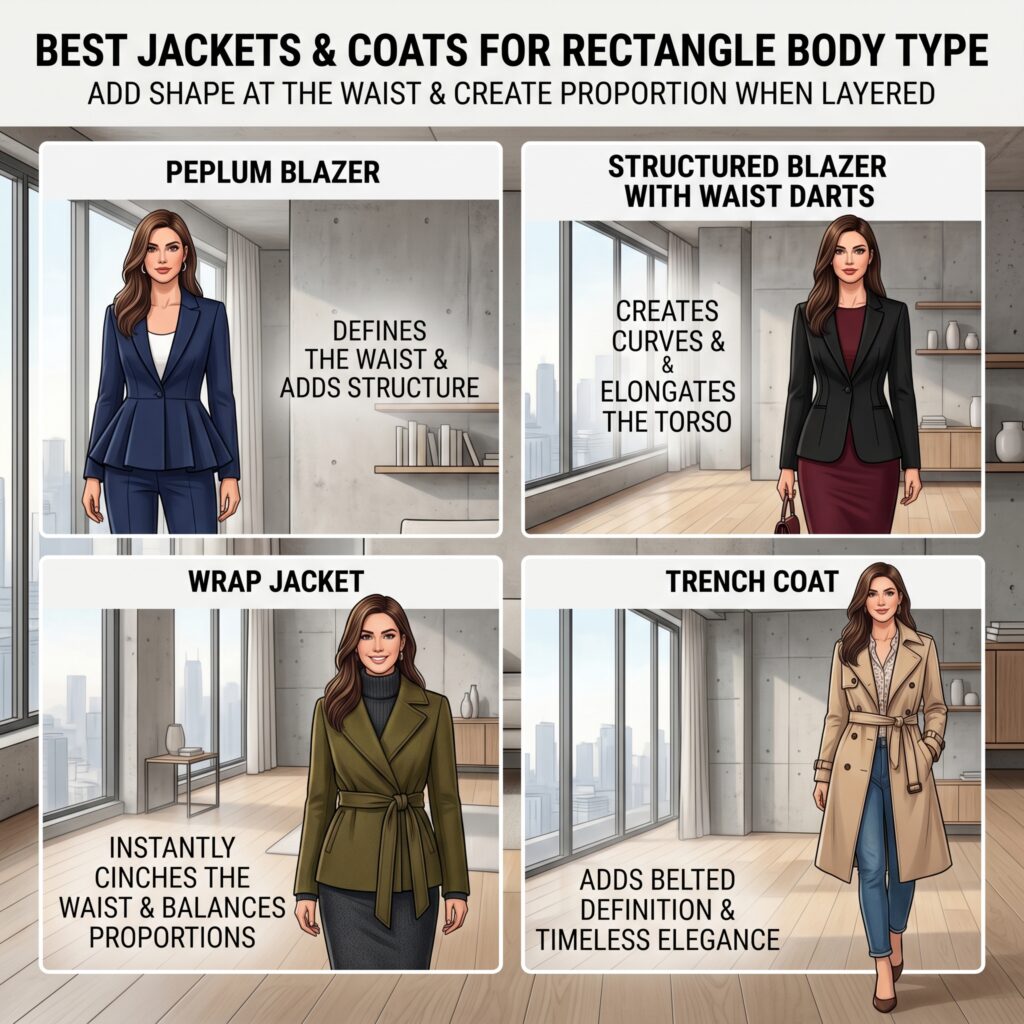
Reach for: Peplum blazers, structured blazers with waist darts, wrap jackets, and trenches. These pieces add shape at the waist and create beautiful proportion when layered.
The Best Swimsuits for Rectangle Body Types
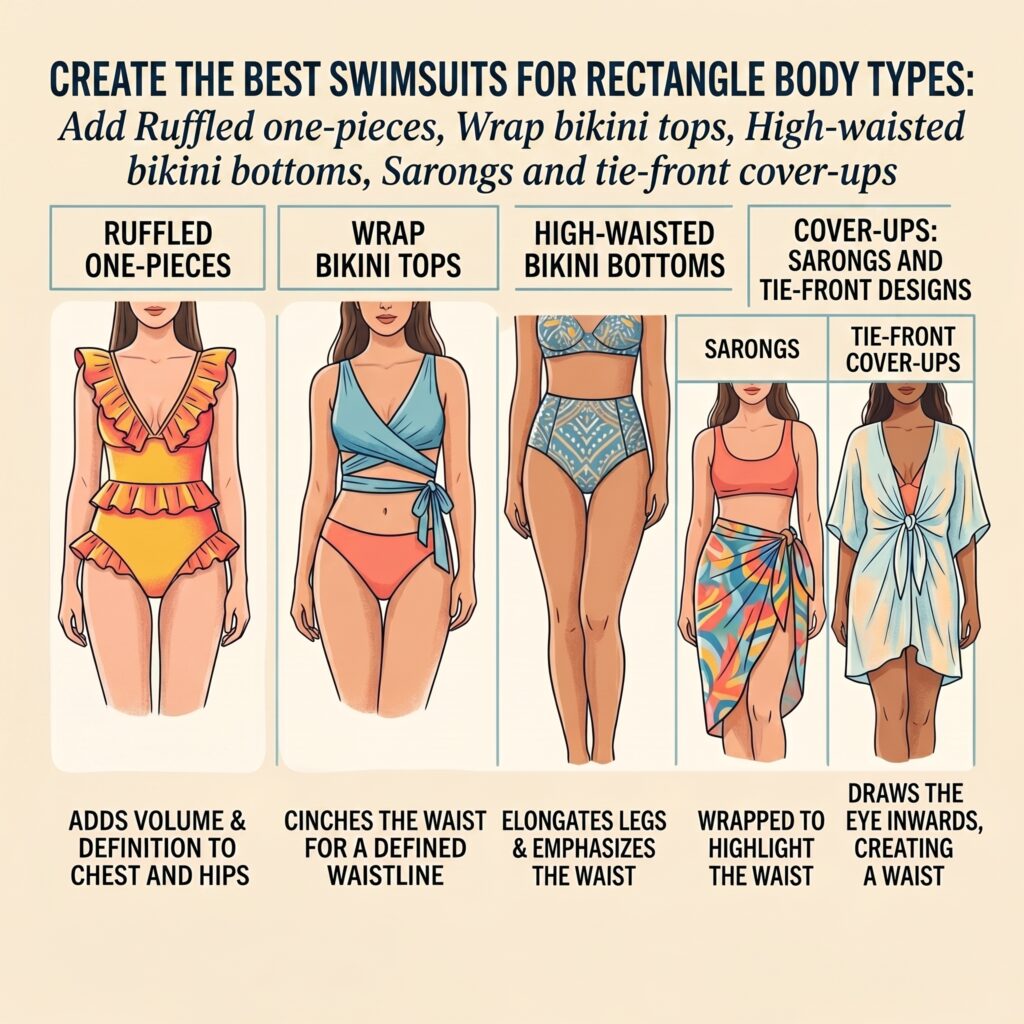
Swimwear follows the same principles as clothing: create waist definition and add visual dimension to bust and hip areas.
Ruffled one-pieces add texture and volume across the bust and hip. Wrap bikini tops create a defined neckline with visual depth. High-waisted bikini bottoms with detailing at the hip add volume. Sarongs and tie-front cover-ups create that all-important waist definition even at the beach.
Solid colors across the entire suit can accentuate the rectangle proportion. Try color-blocking—a darker center panel with lighter sides, or a contrasting color at the hip—to create visual curves through design rather than just fit.
Rectangle Body Type Accessories: The Styling Details Nobody Talks About
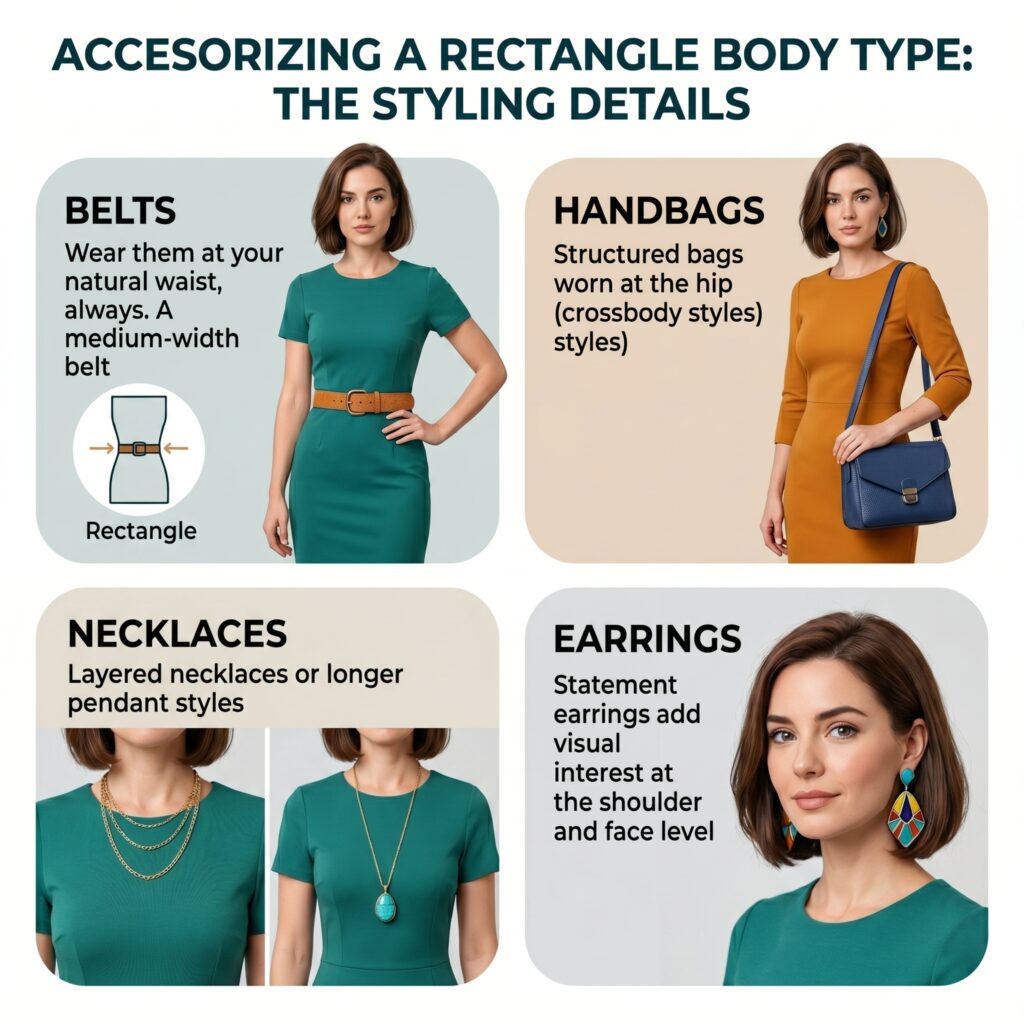
Accessories deserve their own section because they are dramatically underused in body type styling guides.
Belts: Wear them at your natural waist, always. A medium-width belt (about 1.5 to 2 inches) in a contrasting color or texture creates a strong waist definition line. Cinch a loose blazer, define a slip dress, or add a belt over a cardigan—each creates the visual contrast that rectangle shapes benefit from.
Handbags: Structured bags worn at the hip (crossbody styles) add visual width at the hip and create proportion. Clutches worn at the chest add interest in the bust area. Both strategies serve the goal of creating visual dimension across the body.
Necklaces: Layered necklaces or longer pendant styles create a vertical line down the front, which adds the illusion of more defined torso length. V-shaped necklaces emphasize the V-neckline effect.
Earrings: Statement earrings add visual interest at the shoulder and face level, broadening the upper body visually and drawing attention upward.
Outfit Formulas That Work Anywhere in the World
Everyday Look:

High-waisted trousers + peplum blouse + lightweight cardigan.
Sophisticated Office Look:

Tailored trousers + belted blouse + structured blazer.
Evening or Party Look:
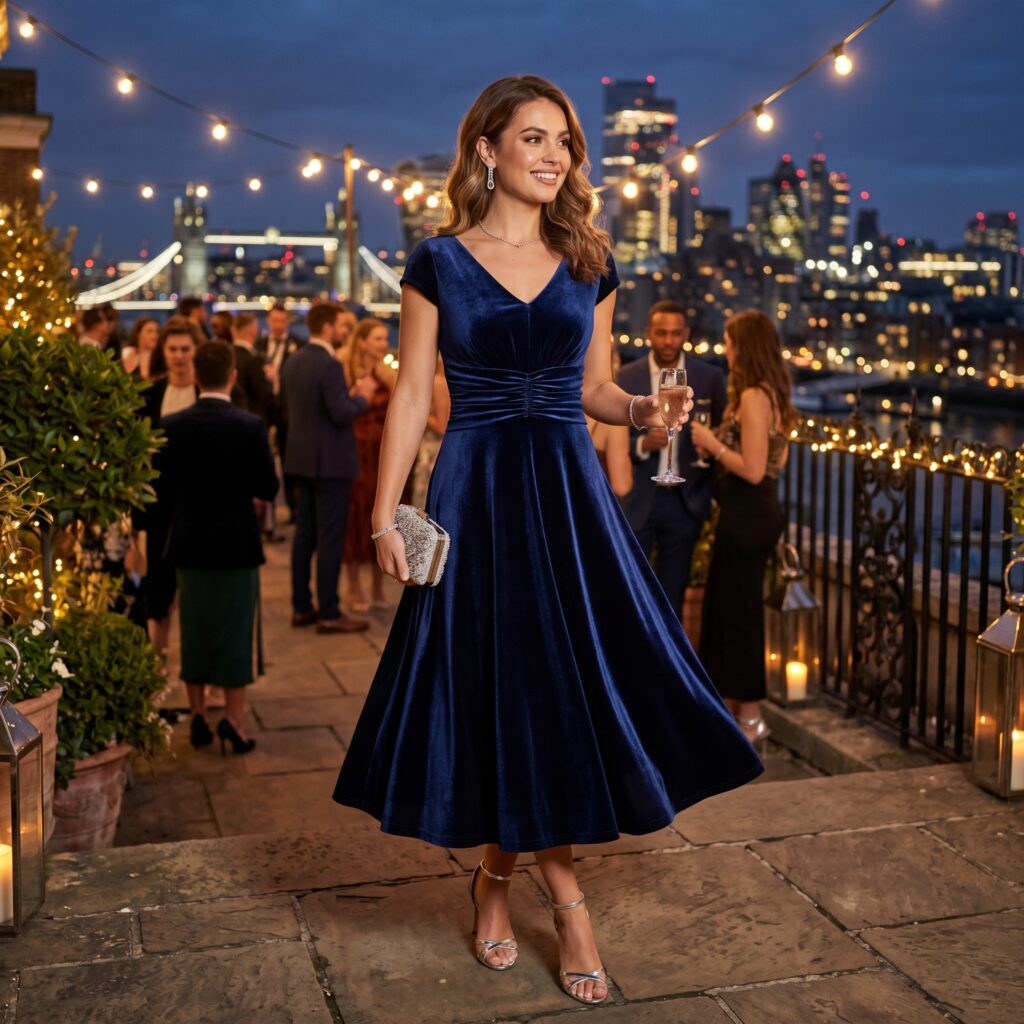
Fit-and-flare midi dress with a ruched waist or subtle belt.
Weekend Casual Look:
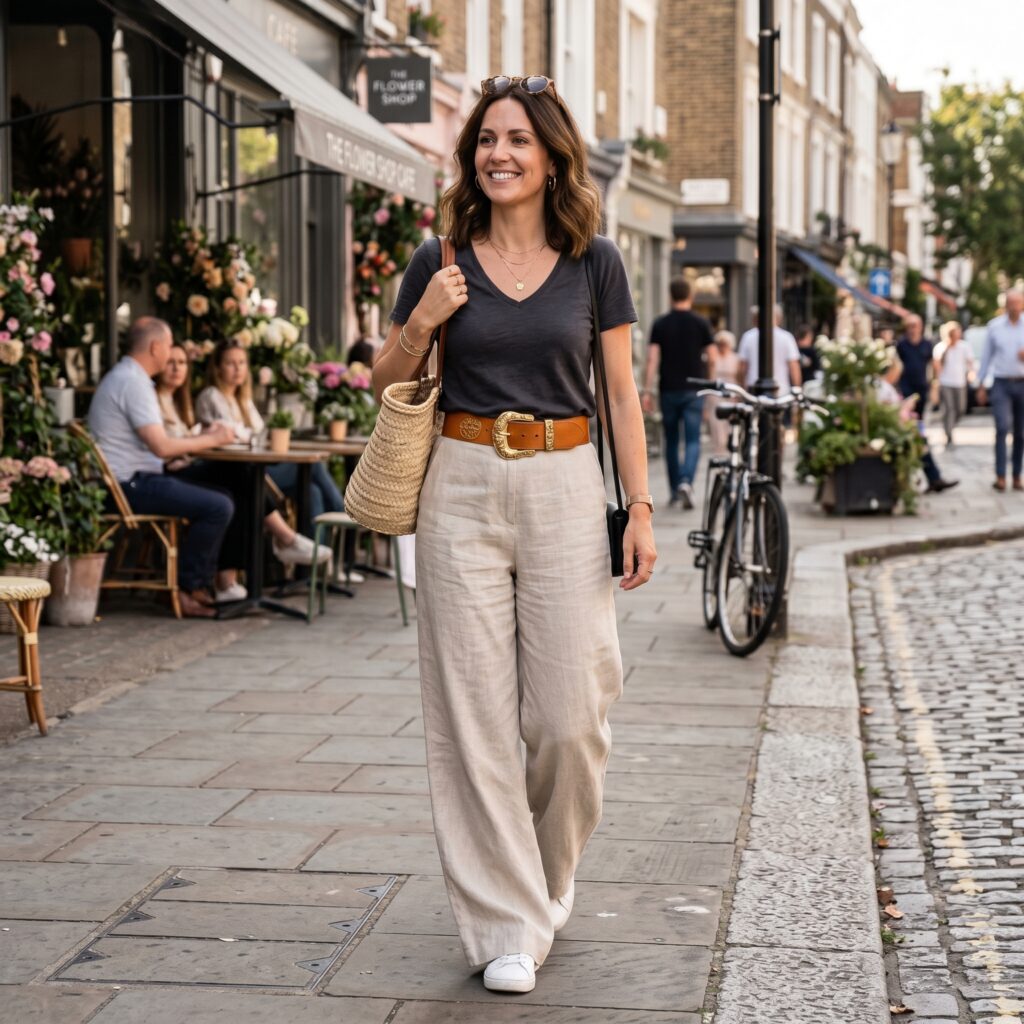
Wide-leg pants + fitted V-neck tee + statement belt.
Do’s and Don’ts for Rectangle Body Type
Do
- Accentuate your waist with belts and high-waisted pieces
- Create balance by adding volume to the lower half
- Use color contrast between top and bottom
- Play with different pant silhouettes and textures
Don’t
- Wear oversized or boxy tops that hide your frame
- Choose low-rise bottoms that shorten your torso
- Avoid all waist definition
- Overload on horizontal stripes across the entire body
How the 2026 Body Type Calculator Makes Styling Effortless
Visit the free Body Type Calculator. Enter your measurements once and receive your rectangle confirmation plus personalized outfit suggestions, Kibbe match, and somatotype styling notes. Bookmark the result — it becomes your forever style reference.
Frequently Asked Questions
What is the rectangle body type?
The rectangle body type is defined by shoulders, waist, and hips that are roughly equal in width — usually within 5 to 8 cm (2 to 3 inches) of each other. There is little natural definition at the waist, giving the silhouette a straight, architectural appearance. The rectangle shape is also sometimes called the “straight” or “athletic” body type.
What measurements define a rectangle body shape?
You have a rectangle body shape when your bust, waist, and hip measurements fall within approximately 5 cm (2 inches) of each other, and your waist is less than 9 inches narrower than either your bust or hips. Use our free body shape calculator to check your measurements against all five body shape categories at once.
Is the rectangle body type the same as the athletic body type?
They largely overlap. “Athletic body type” is an informal term often used to describe a rectangle frame with visible muscle definition — the same even proportions, but with more muscle tone. From a shape-classification perspective, both fall into the rectangle category. The styling principles for both are identical: creating waist definition and strategic volume.
What is the difference between a rectangle and hourglass body shape?
The key difference is waist definition. An hourglass shape has a bust and hips that are roughly equal and a waist that is 9 or more inches narrower — creating a dramatic curve. A rectangle shape has all three measurements (bust, waist, hips) within a few inches of each other, with minimal waist definition. The styling goal for rectangles is to create the illusion of that waist contrast that hourglasses have naturally.
What is the best dress for a rectangle body type?
The best dresses for a rectangle body type are fit-and-flare, A-line, and wrap dresses — all of which add volume at the hip or define the waist. Look for dresses with ruched waists, tie-front belts, or empire-waist seams that create the visual contrast a rectangle frame lacks naturally. Avoid shift dresses that hang straight from shoulder to hem with no waist definition whatsoever.
What tops suit a rectangle body type?
V-neck, scoop, wrap, and bateau necklines work best for rectangle body types as they draw the eye vertically and add gentle upper-body interest. Peplum tops, belted blouses, and tops with puffed or flutter sleeves all create waist definition and add gentle dimension. Wrap tops are particularly effective because they tie at the waist, creating instant shape.
What trousers and jeans are best for a rectangle body shape?
High-waisted wide-leg trousers, bootcut jeans, and flared pants are the best choices for a rectangle body type. High-waisted styles elongate the legs and create the impression of a more defined waist. Wide-leg and bootcut silhouettes add gentle volume at the hem, creating proportion. Pair with a tucked top to build the waist contrast that the rectangle silhouette doesn’t have naturally.
Should a rectangle body type wear a belt?
Yes — wearing a belt at the natural waist is the single most effective styling strategy for a rectangle body type. A medium-width belt (about 1.5 to 2 inches) in a contrasting color or texture creates a strong waist definition line that the straight frame doesn’t have on its own. Wear it at or just above the narrowest part of your torso, not at the hips.
What swimwear suits a rectangle body type?
Ruffled one-pieces, wrap bikini tops, and high-waisted bikini bottoms with hip detailing work best for rectangle body types. These styles add texture and volume across the bust and hip areas, creating visual curves. Color-blocking — a darker center panel with lighter sides, or a contrasting color at the hip — also creates shape through design rather than fit alone.
Which celebrities have a rectangle body type?
Many well-known celebrities have a rectangle body shape, including Cameron Diaz, Kate Moss, Natalie Portman, and Gisele Bündchen. They regularly demonstrate that the rectangle silhouette is naturally suited to tailored, structured clothing and looks effortlessly polished in wide-leg trousers, fit-and-flare dresses, and belted styles.
What is the best workout for a rectangle body type?
For a rectangle body type, the most effective workouts combine exercises that build the shoulder and hip muscles to create visual width at both ends of the frame — which then makes the waist appear more defined by contrast. Exercises like lateral shoulder raises, hip thrusts, and glute work help build the curves that styling alone can only suggest. Use our somatotype calculator to find your natural body type for more tailored fitness guidance.
Can a rectangle body type become an hourglass?
Your bone structure — which determines the width of your shoulders, ribcage, and hips — cannot change. However, with targeted strength training to build the shoulder and glute muscles, and with consistent nutrition, many rectangle-framed people develop more visible curves that push their silhouette toward an hourglass appearance. This is a change in muscle and fat distribution, not in the underlying frame.
What Kibbe type is a rectangle body shape?
A rectangle body shape can correspond to several Kibbe image identities, most commonly Dramatic Classic, Flamboyant Natural, or Soft Natural — depending on your overall bone quality (sharp vs. blunt), height, and flesh distribution. The Kibbe system looks beyond simple measurements, so a rectangle shape measurement result doesn’t automatically map to a single Kibbe type. Try our Kibbe Body Type Calculator alongside the shape calculator for a complete picture.
Ready to Dress Your Rectangle Body Type With Confidence?
You now have the complete 2026 playbook — including the detailed dress selection framework most guides skip entirely.
If You Need More Guidance read this article for more accurate results 2026 Body Type Calculator: Unlock Your Signature Style, and try one new outfit formula this week.
Then come back and tell me in the comments: What was your biggest “aha” moment when choosing dresses? Which piece are you most excited to wear?
Your straight silhouette is not a limitation. It is your signature strength.
Dress it like the architectural masterpiece it truly is.