Female Body Shape Guide: Find Yours and Dress for It
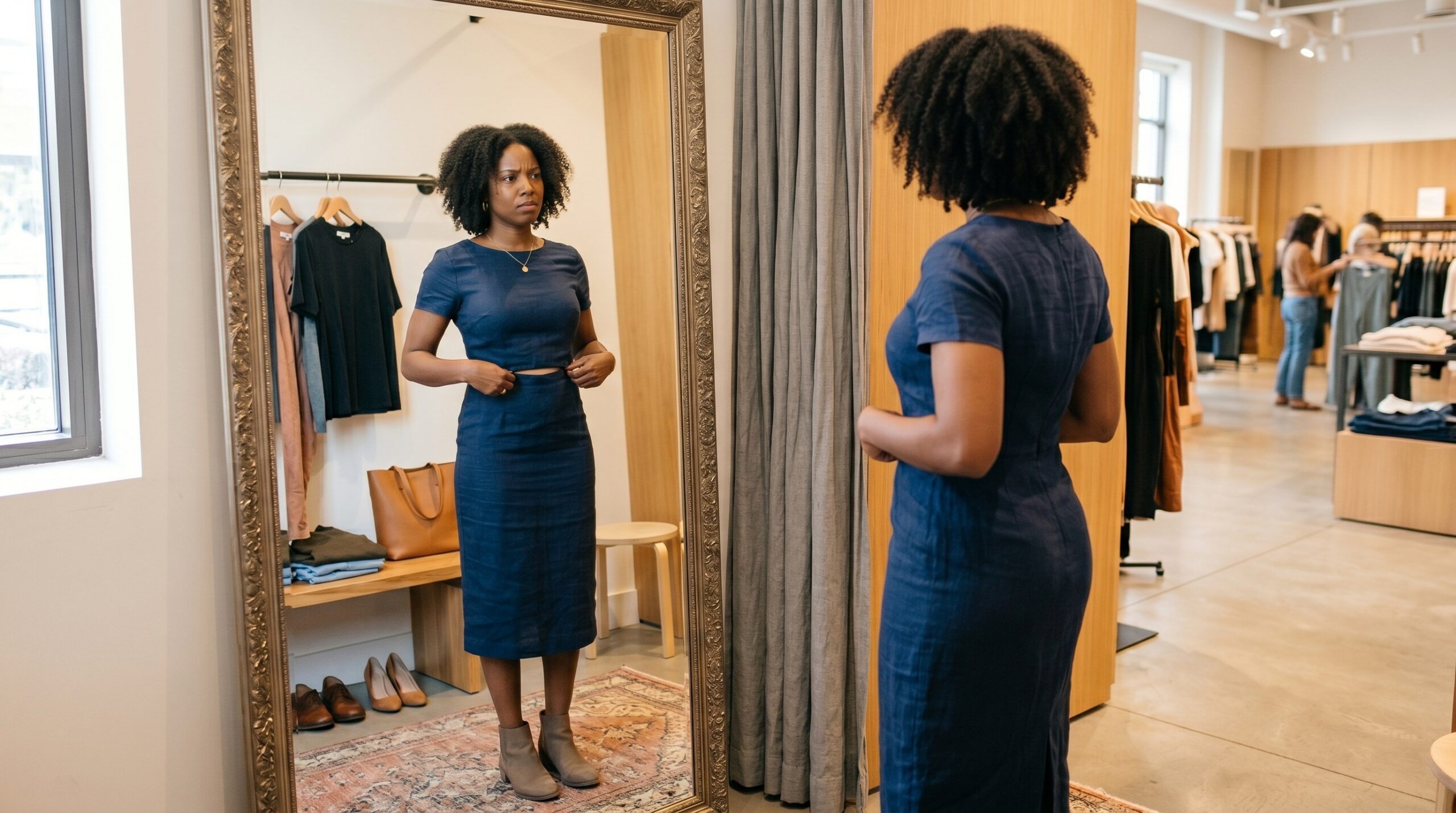
You have probably stood in a fitting room, tried on something that looked great on the hanger, and thought: why does this look nothing like it did two minutes ago? The top pulls across the shoulders. The jeans fit perfectly at the hips but gap at the waist. The dress sits beautifully on someone online but bunches in all the wrong places on you.
This is not a you problem. It is a proportion problem — and it is completely fixable once you understand your female body shape.
Body shape is one of those concepts that gets thrown around constantly in fashion but rarely gets explained in a way that is actually useful. This guide changes that. You will learn how to identify your shape from your own measurements, what each shape type means for how clothes fit and sit on your body, and the specific styling choices that work with your proportions rather than against them.
No fluff. No “rules” you have to follow. Just practical, honest guidance you can use the next time you open your wardrobe or walk into a shop.
What Female Body Shape Actually Means
Shape, Size, and Proportion Are Three Different Things
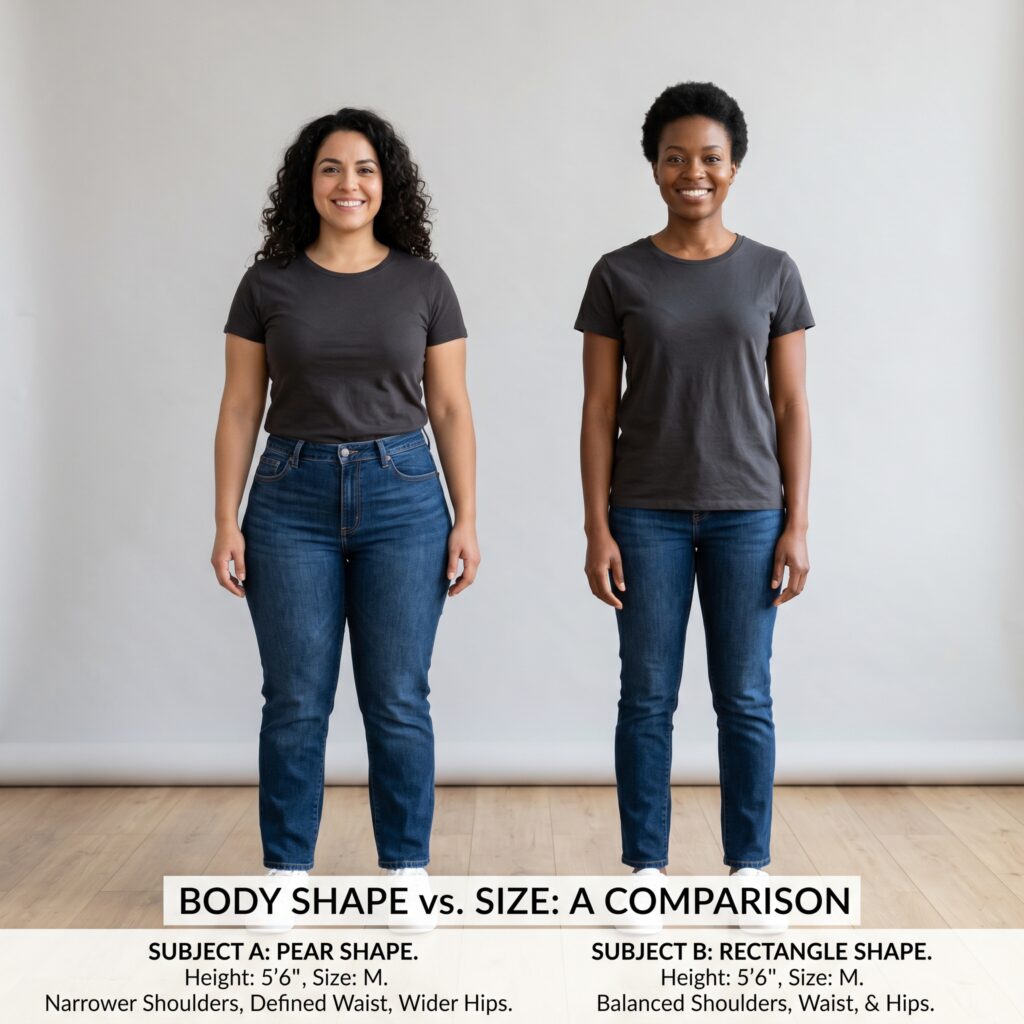
Here is something most people get wrong from the start: body shape is not about your weight, your clothing size, or how you look compared to anyone else. It is purely about proportions — the relationship between your shoulder width, bust, waist, and hip measurements and how they compare to each other.
Two women can wear an identical size 12 and have completely different body shapes. One might have hips significantly wider than her shoulders. The other might carry her width more evenly across the whole body. The number on the label is the same. The shape is entirely different. And that means the clothes that fit each of them best are also entirely different.
Your bone structure plays a big role here. The width of your hip bones, the breadth of your rib cage, and the span of your shoulders are all set by your skeleton — they do not change with weight. Your fat distribution and muscle tone shift the measurements on top of that foundation, but the structural proportions remain relatively constant through most of adult life.
Understanding this distinction is the starting point for everything else. Shape is the framework. Fit is what you build on top of it.
Why Body Shape Matters for Style
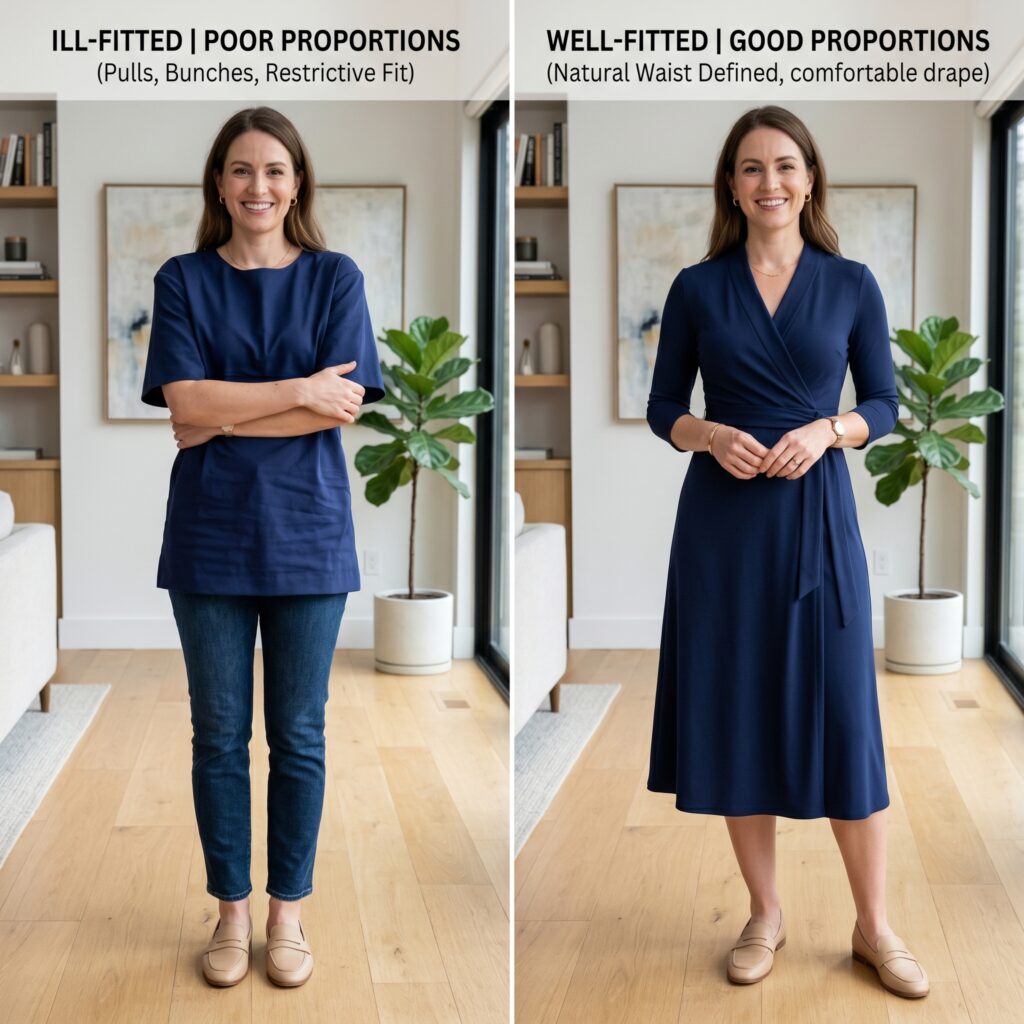
Knowing your shape does not tell you what to wear or what to avoid. What it does is tell you why certain clothes feel like they were made for you and others feel perpetually off, regardless of size or price.
When a garment is cut with proportions that match your frame — waistline placement, shoulder seam position, where a skirt flares — it sits correctly without tugging, pulling, or needing constant adjustment. When it is cut for a different set of proportions, no size adjustment in the world will make it feel right.
Common style goals like defining the waist, balancing wider hips with the upper body, or softening broad shoulders all become straightforward once you know which goal applies to your specific proportions. Shape knowledge converts vague style frustration into a clear, solvable problem.
The goal here is not to chase a particular silhouette or change how your body looks. It is simply to find clothes that fit well and feel comfortable — which, frankly, is what most people actually want.
How to Identify Your Female Body Shape at Home
Take Your Measurements First
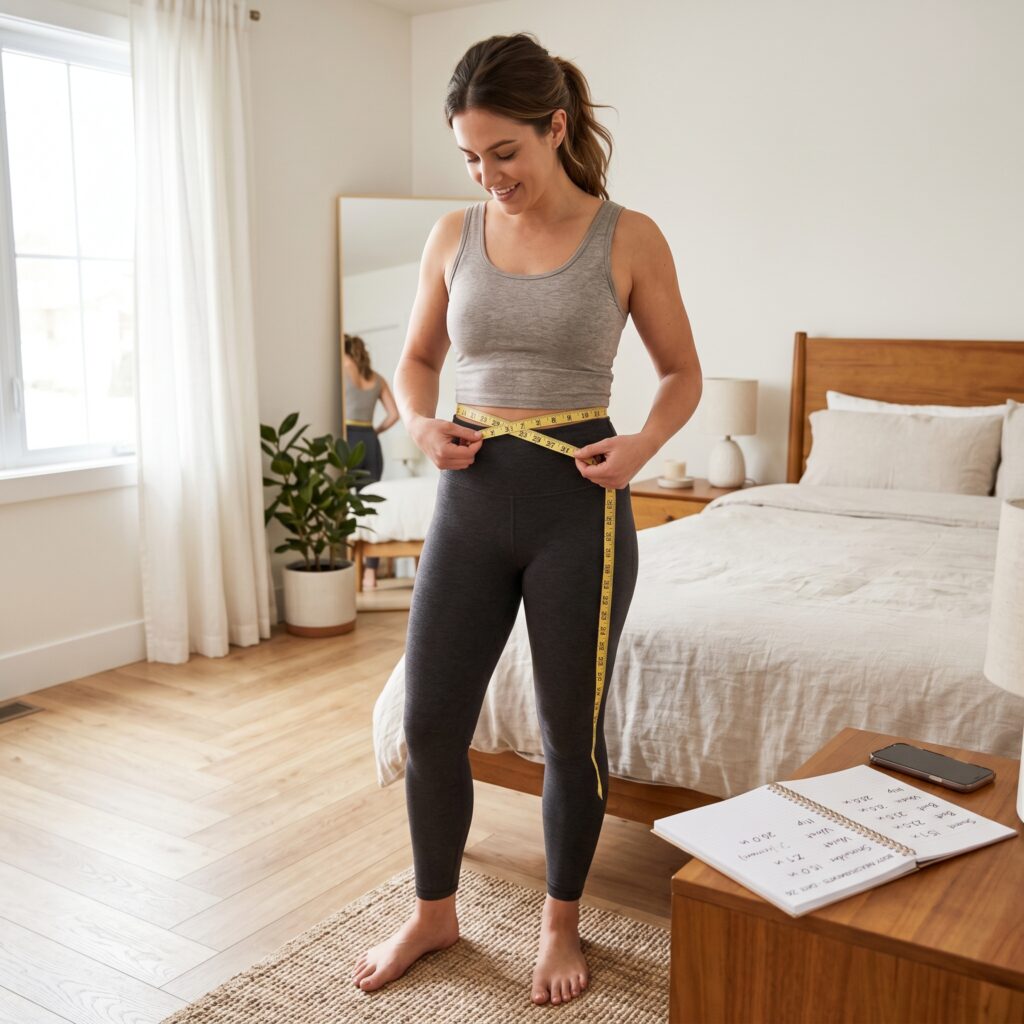
The most reliable method is also the most straightforward. All you need is a soft fabric measuring tape — the kind used for sewing — and about five minutes.
Take four measurements, always in a relaxed upright posture with your feet together and wearing close-fitting clothing:
- Shoulders: Across the back from the outer edge of one shoulder to the outer edge of the other
- Bust: Around the fullest part of the chest, keeping the tape parallel to the floor
- Waist: Around the narrowest part of your torso — this sits about one to two inches above your navel, not at it. Bend gently to the side to find the natural crease; that is your true waist
- Hips: Around the fullest part of your hips and seat, usually 7 to 9 inches below your waist
Write down each number and note which measurements are widest and which are narrowest. The comparison between these four figures is what identifies your shape — not the absolute numbers themselves.
For a full step-by-step visual guide: How to Measure Your Body →
Check Your Proportions in a Mirror
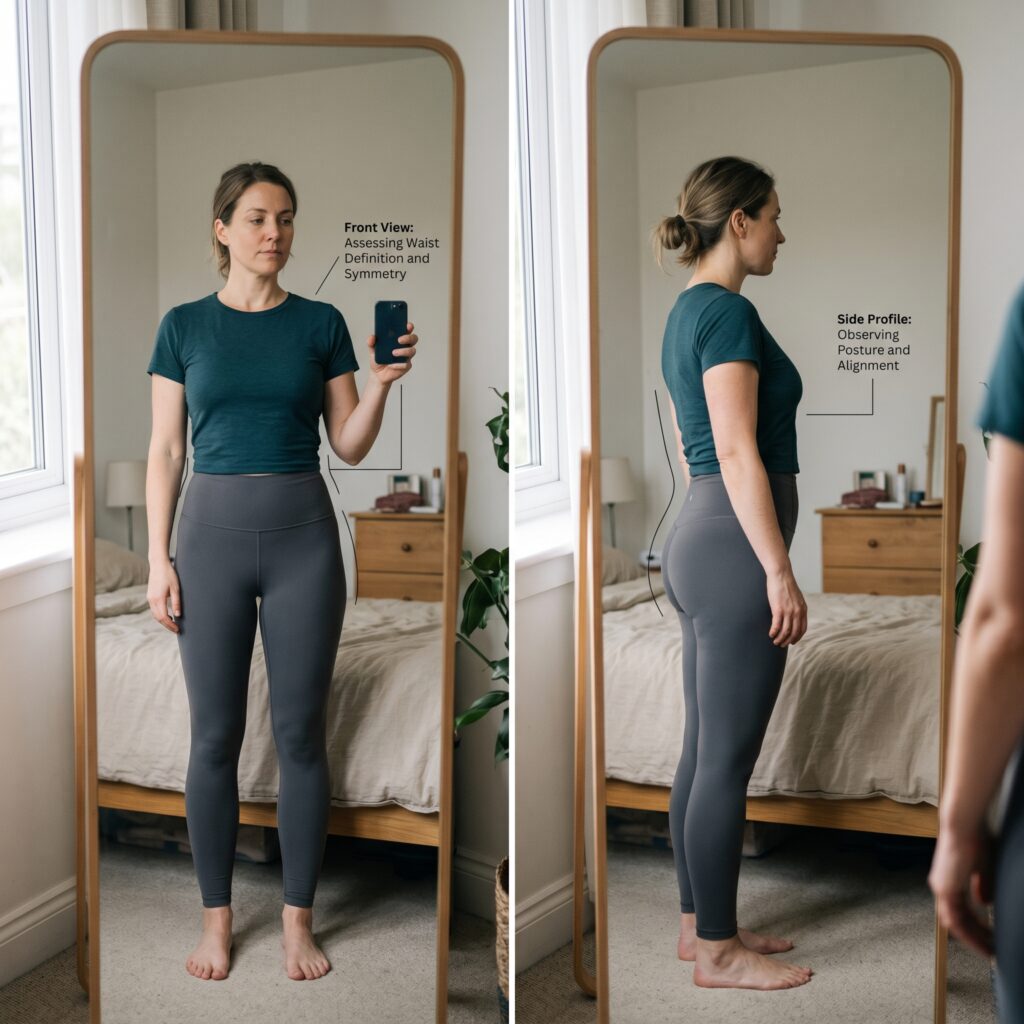
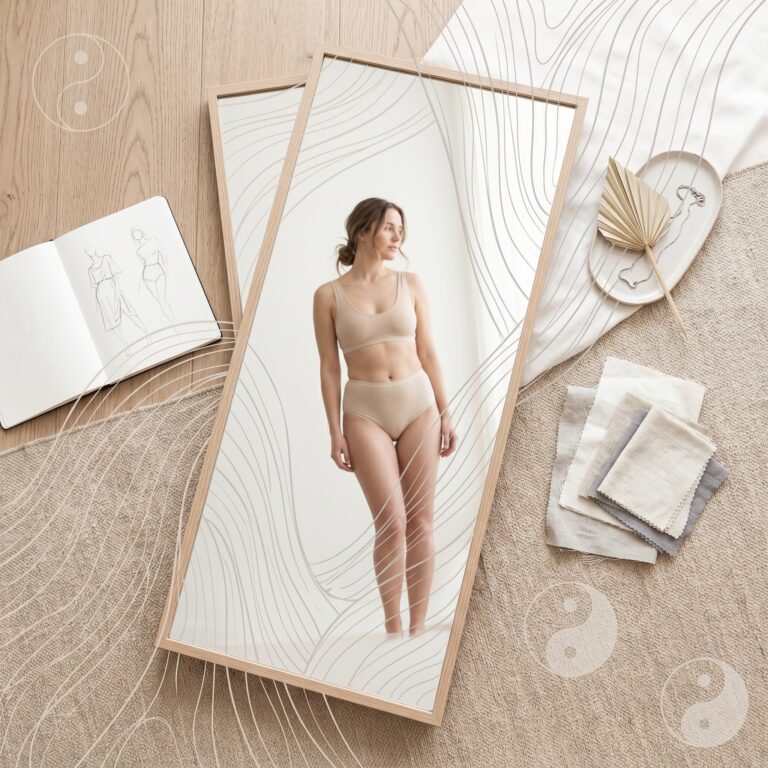
Measurements give you numbers. A full-length mirror gives you context. Stand in front of one in a fitted top and underwear or leggings and look at your outline from the front, then from the side.
Ask yourself three questions: Where is the widest point on my body — shoulders, hips, or middle? Is there a noticeable narrowing at the waist, or does the torso run fairly straight? Are my shoulders and hips roughly even in width, or does one clearly dominate?
You are looking at proportions, not at weight or any other judgement. The outline is the information.
Use Photos to Spot Patterns
A photograph is surprisingly useful for body shape identification because it removes the distortions that mirrors can create when you are standing close to them. Stand straight in a fitted outfit, take a full-length photo in good lighting, and look at the outline of your silhouette.
Focus entirely on the shape of the edges — where the body widens, where it narrows, where the shoulder line sits relative to the hip line. Treat this as neutral visual data, the same way you would look at a sketch of a garment.
A Note on Body Shape Charts
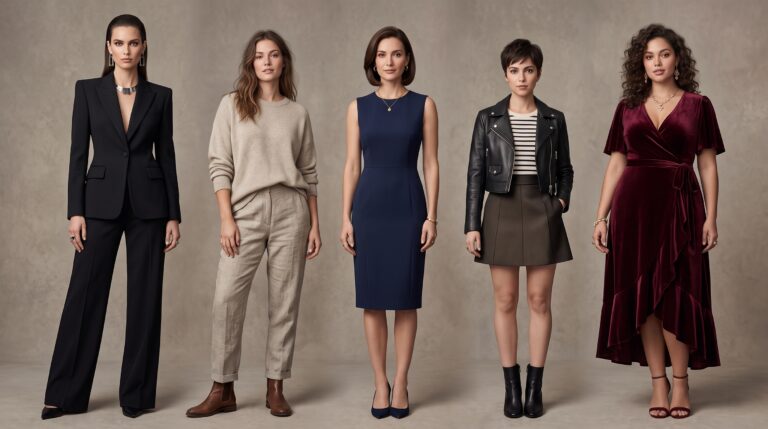
Charts that categorise body shapes by proportion are a useful starting point, but they have one important limitation: they group a continuous spectrum of human proportions into a handful of discrete categories. In real life, many women sit close to the boundary between two shapes, and the styling guidance for both applies to them.
Your shape can also shift meaningfully over time — with strength training, significant weight changes, pregnancy, or the hormonal changes of menopause. The categories are descriptions of where your measurements currently sit, not permanent labels.
The fastest way to identify your shape: enter your three measurements into the free female body shape calculator and get your result in seconds — no chart comparison required.
The Main Female Body Shapes
There are five well-established female body shape categories, plus a diamond shape that is widely recognised in fashion contexts. Here is what each one means and what it means for how clothes fit.
Hourglass Body Shape
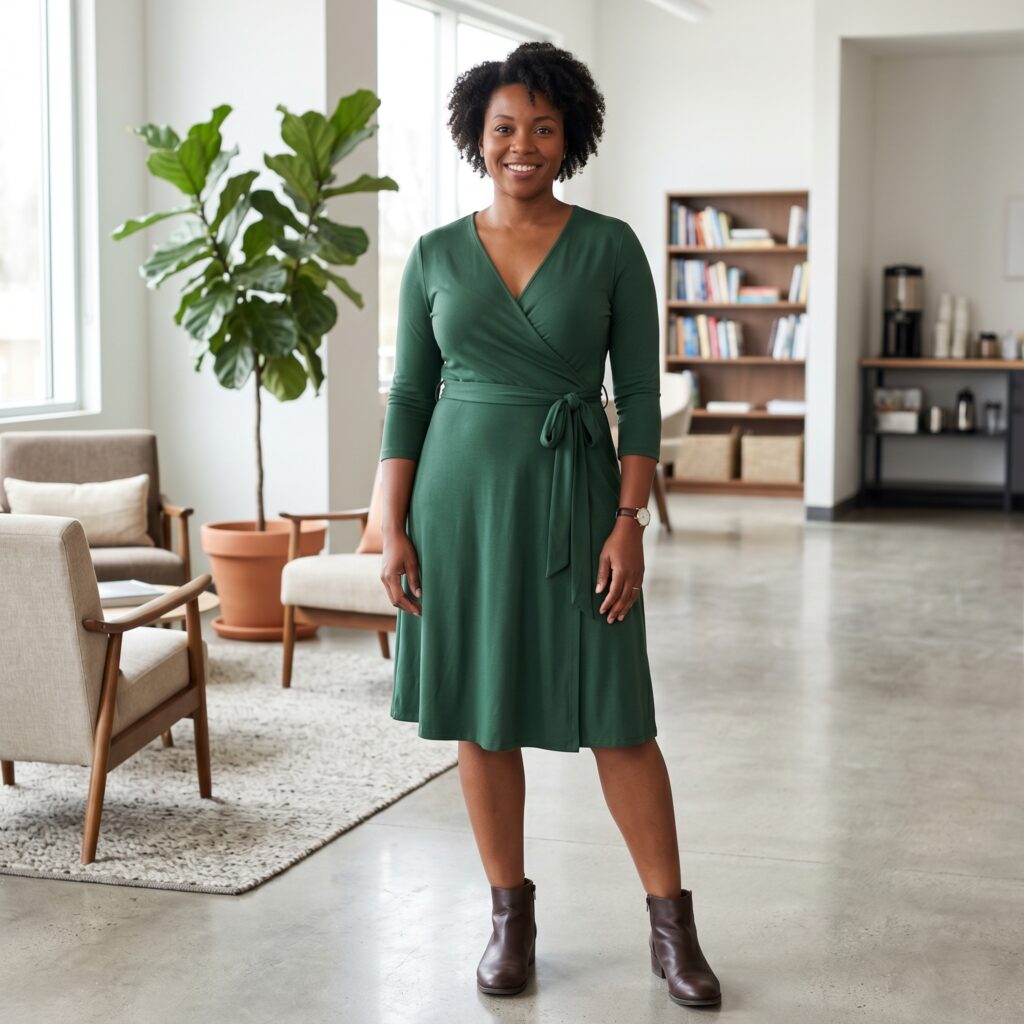
The hourglass shape has shoulders and hips that are roughly equal in width, with a waist that curves in significantly between them — typically 9 or more inches narrower than both. The result is a balanced, symmetrical silhouette where neither the upper nor lower half dominates.
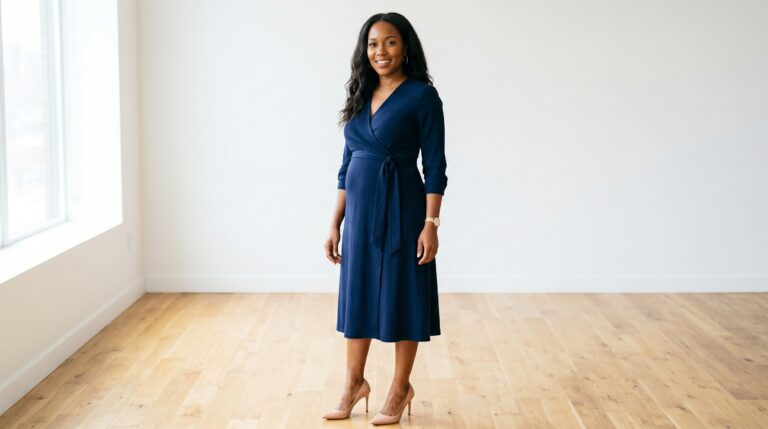
The styling goal for this shape is simple: work with the natural definition rather than hide it. Garments that follow the body’s contour — wrap dresses, belted styles, anything that sits at the natural waist — tend to look polished immediately. The one thing that consistently works against this shape is boxy, oversized silhouettes that obscure the waist entirely. That is the one feature worth keeping visible.
Pear Body Shape
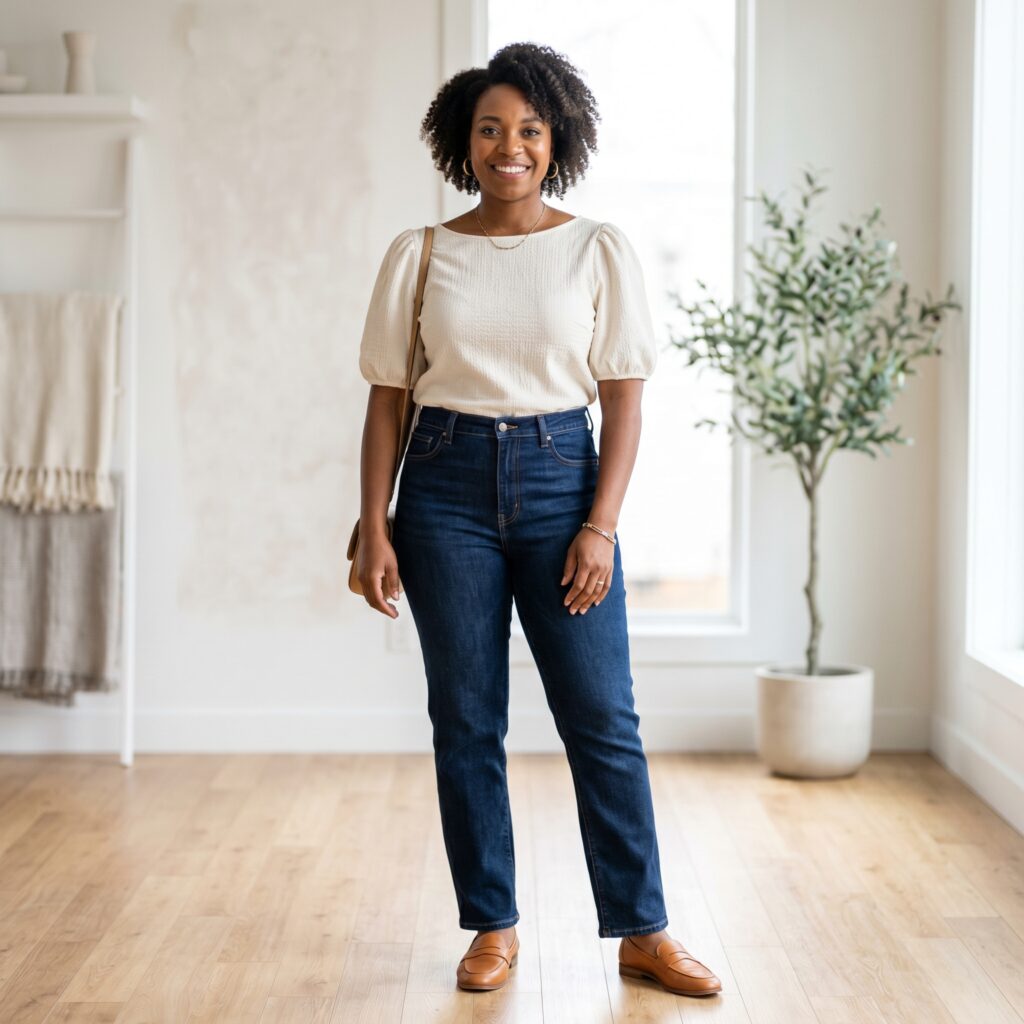
The pear shape has hips that are noticeably wider than the shoulders and bust, with a clearly defined waist and a lower body that carries more volume. Jeans and trousers are the classic battleground: they fit beautifully around the hips but gap at the waist, requiring alterations or a different cut entirely.
The primary styling strategy is building visual balance between the narrower upper body and the fuller lower half. This means adding width, structure, or detail to the top — boat-neck tops, puff sleeves, structured blazers, bold necklines — while keeping the lower half in cleaner, less embellished styles. The goal is not to minimise the hips but to bring the visual weight of the upper body up to meet them.
Full Pear Body Shape Guide → Every clothing category covered in detail — dresses, tops, jeans, swimwear, and occasion wear.
Apple Body Shape
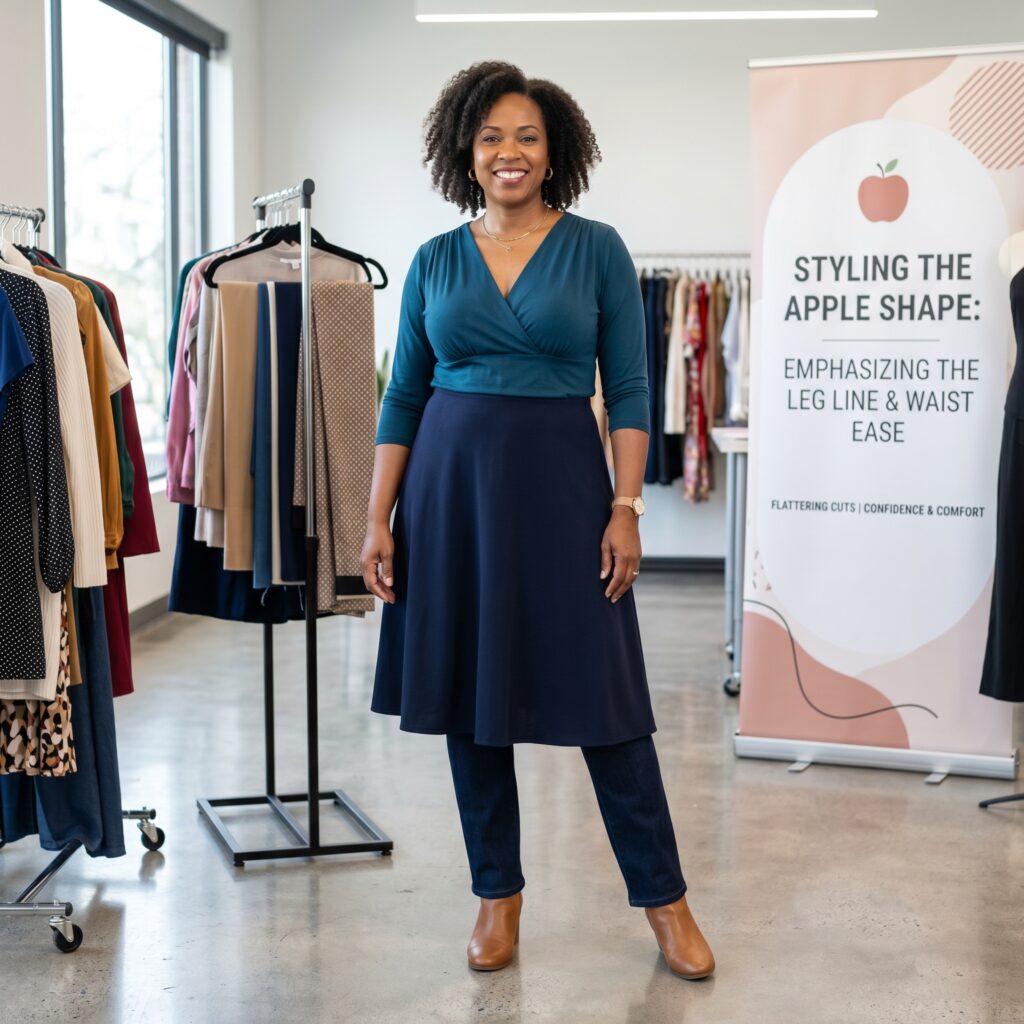
The apple shape has a fuller midsection relative to the bust and hips. The waist is the widest or near-widest point of the body, and most of the visual weight sits in the torso rather than the lower half. The legs are often one of the slimmest, most proportional parts of the frame.
Fits that feel better around the middle tend to have ease built in at the stomach — empire-waist styles that sit just below the bust and fall loosely, wrap styles that tie above the widest point, and A-line silhouettes that skim rather than cling through the midsection. V-necklines and deep scoop necks create a vertical visual line from the face downward, which draws the eye away from the widest part of the torso.
The legs being a strong feature here is worth leaning into. Shorter hemlines and well-fitted trousers in a clean straight or wide-leg cut shift the focus to a proportionally strong area of the frame.
Rectangle Body Shape

The rectangle shape has shoulders, waist, and hips that measure within roughly five inches of each other, with no dramatic narrowing at the waist. The silhouette is straight and even — architecturally clean, without the natural curves that other shapes have built in.
What this shape does exceptionally well is carry structure. Tailored pieces, sharp blazers, wide-leg trousers, and clean-lined dresses sit on this frame without any one measurement pulling against another. The styling goal, when it matters, is adding the impression of waist definition — through belted styles, wrap tops, ruched fabric, or seaming at the waist rather than through shaping seams alone.
Full Rectangle Body Type Guide → Includes outfit formulas, wardrobe essentials, and how to dress with Somatotype and Kibbe layering.
Inverted Triangle Body Shape

The inverted triangle shape has shoulders or bust that are noticeably wider than the hips, with a lower body that is proportionally narrower. The silhouette tapers from top to bottom — the mirror image of the pear shape.
Fit concerns tend to cluster around the upper body: jackets and structured tops need to accommodate the broader shoulders without adding additional width, while the lower half is often quite easy to fit. Necklines that create a downward visual line — V-necks, scoop necks, and raglan sleeves — soften the horizontal width of the shoulder line. Adding volume to the lower body through full skirts, wide-leg trousers, and peplum tops creates balance between the two halves.
Diamond Body Shape

The diamond shape is broader through the middle — the waist and torso are the widest point — with both the shoulders and hips narrower in comparison. It shares some characteristics with the apple but with a more specific narrowing at the hip that makes the widest point appear even more centred.
Clean structure tends to work better here than very fitted or very flowing styles. Garments with vertical interest — longline blazers, straight-cut dresses, trousers with a clean drape — draw the eye up and down rather than across the widest point. Empire-waist styles and V-necklines do the same work here as they do for the apple shape.
Mixed or In-Between Body Shapes
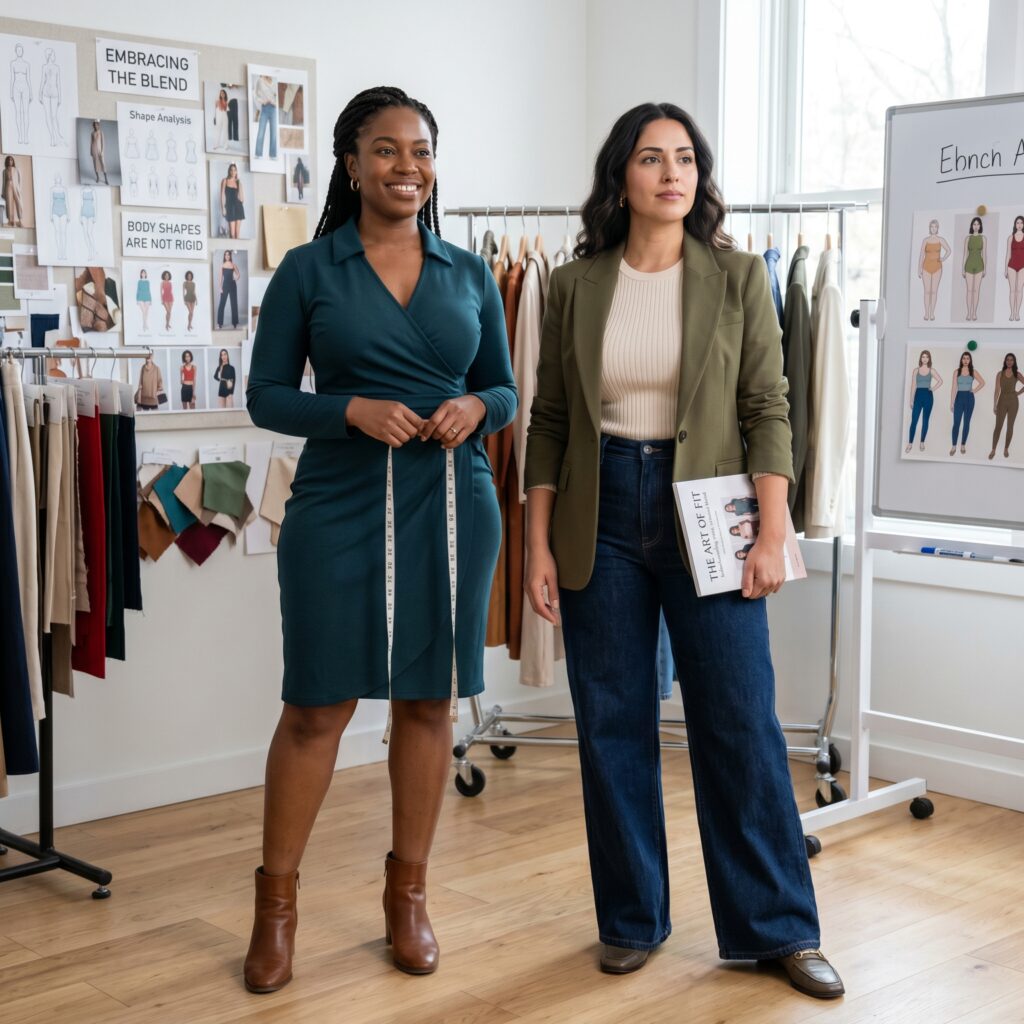
This is worth saying clearly: most women do not fit cleanly into one category. You might have pear proportions overall but with a waist that is closer to rectangle measurements. Or hourglass proportions that lean toward the top hourglass or bottom hourglass variants depending on whether your bust or hips are the slightly wider measurement.
This is not a classification failure — it is just reality. When your measurements sit on a boundary between two shapes, the styling advice for both applies. Use what works from each and ignore what does not.
Common Body Shape Styling Mistakes
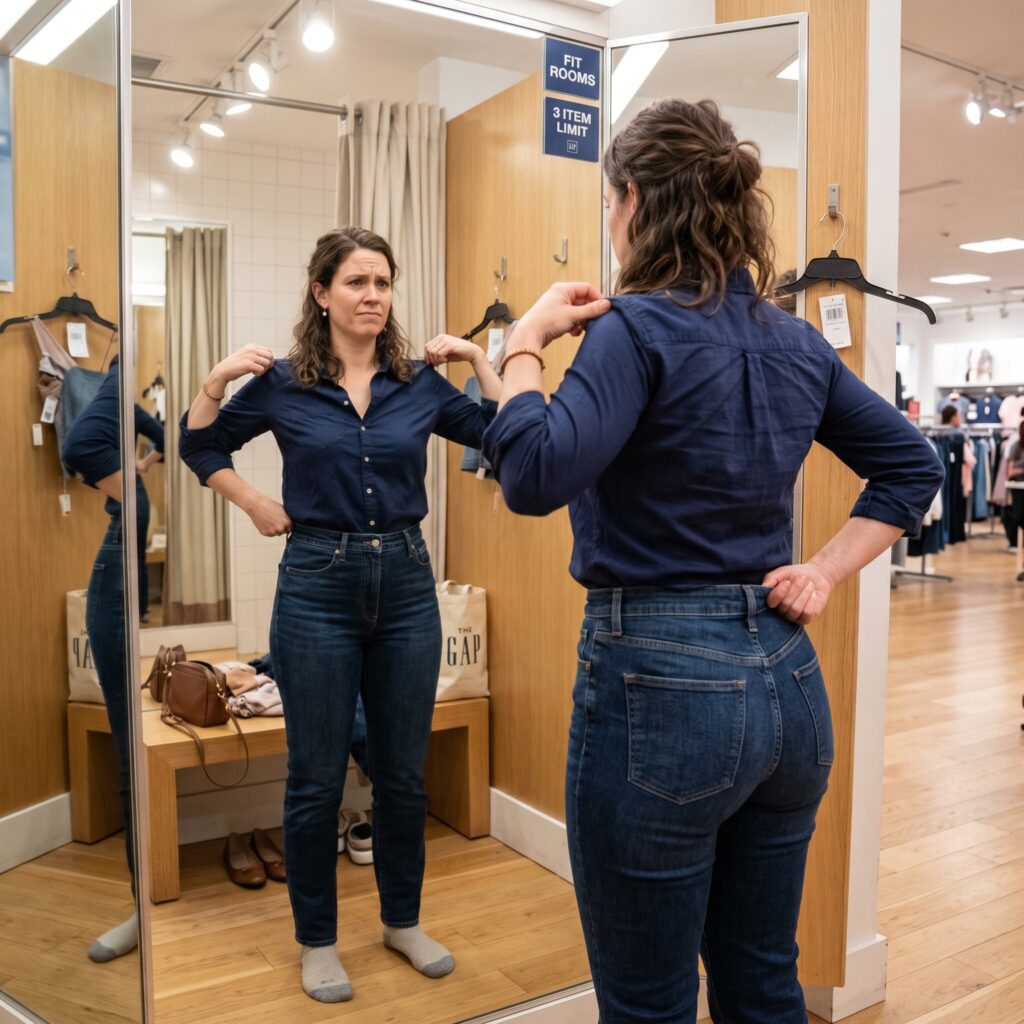
Wearing the Wrong Fit for Your Frame
Fit is the single most common problem in most women’s wardrobes — and it rarely gets enough attention. Clothes that are technically the right size can still fit badly if they are cut for different proportions than yours.
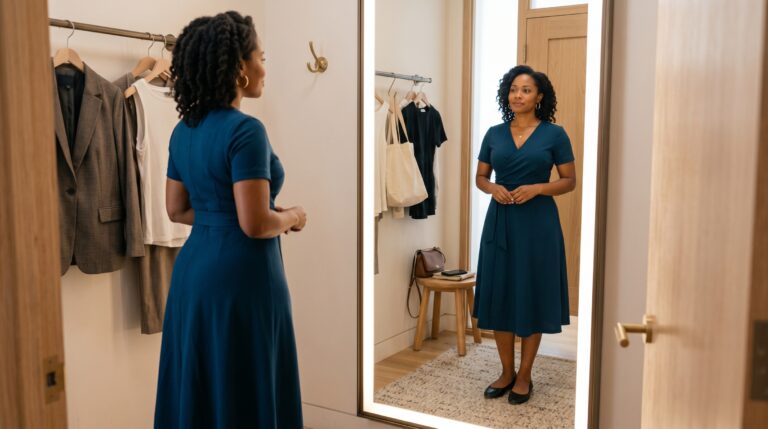
The warning signs are reliable: a top that pulls across the shoulders means the shoulder seam is too narrow for your frame. Trousers that gap at the waist but fit at the hip mean the rise and waist-to-hip ratio do not match your proportions. A dress that bunches at the waist means the waist seam placement and your natural waist are in different places.
The fix is not always a different size. Sometimes it is a different cut — a different rise, shoulder seam placement, or silhouette style — that accommodates your specific proportions rather than fighting them.
Picking Trends Without Checking Proportion
Trends are tested on a narrow range of bodies and photographed in controlled conditions. A trend that photographs beautifully on one frame can do the opposite on another — not because the trend is wrong or the body is wrong, but because the proportions involved are different.
Oversized blazers add width at the shoulder and hip simultaneously. On an inverted triangle, that extra shoulder width can read as very large. On a pear, the added shoulder width actually helps with balance. Low-rise jeans sit at the widest hip point on a pear shape and narrow the visual torso at the same time. Boxy crop tops end at the natural waist on a rectangle and add a clean visual break; on an apple shape they expose the midsection in an unflattering way.
The question to ask before trying a trend is not “is this fashionable?” but “where does this trend add and remove visual weight, and does that match what I am trying to do with my proportions?”
Focusing Only on Size Labels
Sizing is inconsistent across brands, countries, and garment types. A size 10 in one brand is a size 14 in another. A size medium in a fitted style might be a size small in a relaxed one. The label tells you where to start on the rack, not whether the garment will fit your proportions once it is on your body.
The habit of buying the size you “should be” and making it work is expensive and frustrating. Trying a size up or down and checking the fit of the actual garment — rather than the number on the tag — is the more useful approach. Alterations exist for this reason.
Ignoring Fabric and Structure
The same silhouette in two different fabrics can produce completely different results on the body. A wrap dress in a stiff, structured fabric holds a shape regardless of what is underneath it. The same wrap dress in a very thin, drapey fabric follows every contour closely and moves differently as you do.
Heavy fabrics add visual bulk wherever they sit on the body. Very light fabrics cling to contours. Structured fabrics hold their own line. Understanding how the weight and behaviour of a fabric interacts with your specific proportions is as important as understanding silhouette.
How to Shop Smarter for Your Body Shape

Build a Fit-First Shopping Plan
Most wardrobe frustration comes from shopping without a clear priority. Buying things that look good on a website or in a shop without asking “will this actually fit the way I need it to” leads to a wardrobe full of things that technically belong to you but never get worn.
Start with the pieces you wear most often: jeans or trousers, a going-out top, a work blouse, a casual dress, a blazer. Identify the one or two that never sit right on your body. Those are your highest-priority fit problems — solve them first, before buying anything new.
Read Product Photos and Size Charts With More Care
When shopping online, product photos are your only fitting room. Look for any available information about the model’s height and measurements if the brand provides them. Look at where the hem hits, where the waist seam falls, and how the shoulders sit.
Size charts that include actual garment measurements — not just body measurements — are the most useful. Compare the chest width, waist, and hip measurements of the garment against your own. A garment with 2–3 inches of ease at the waist will sit differently than one with 5 inches.
Try Clothes With Movement in Mind
A garment that fits correctly when you are standing still will fit correctly when you are moving — sitting at a desk, reaching for something on a shelf, or walking quickly. A garment that fits only in a still, upright position is a garment that will feel restrictive all day.
When trying something on, sit down fully. Raise your arms. Walk a few paces. Turn around. If it pulls, twists, rides up, or gaps after any of those movements, the fit problem will only get worse after a full day of wear.
Know When Tailoring Is Worth It
Some fit issues are architectural — they happen because the garment was cut for a different set of proportions than yours, and no amount of size adjustment will change the underlying cut. These are the issues tailoring solves.
Hemming trouser legs, taking in a waist, adjusting strap length, or narrowing a shoulder seam are all relatively low-cost alterations that can transform an almost-right garment into a genuinely great one. The pieces most worth tailoring are the ones you wear most often and the ones you spent the most on — quality trousers, blazers, and dresses that fit in all the right places except one.
Build a Closet Around Repeatable Formulas
Once you know which silhouettes consistently work for your shape, the most practical thing you can do is stop treating each season as a fresh start and lean into the formulas that work. A pear-shaped woman who always looks great in a wide-leg trouser and structured blazer combination does not need to reinvent her wardrobe when bootcut jeans are trending. She needs to find the best wide-leg trouser in the season’s colours and fabrics.
The same applies to every shape. Identify two or three outfit formulas that consistently feel right on your body — fitted top plus wide-leg pants, wrap dress plus ankle boots, straight-cut trouser plus tucked blouse — and build around them. It saves time, saves money, and produces better results than starting over every six months.
Body Shape and Confidence
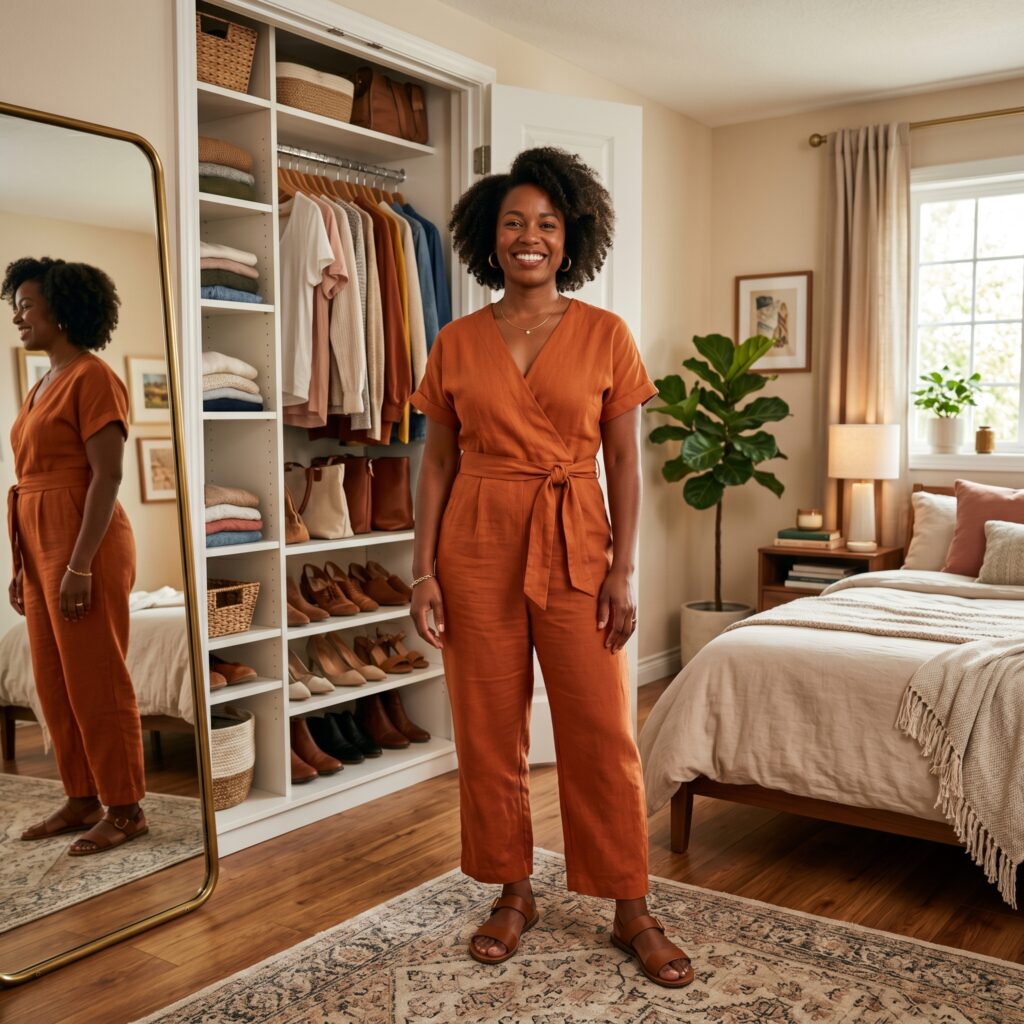
Focus on Fit, Not on Fixing
The entire point of understanding your body shape is to make getting dressed easier and more successful — not to identify what is wrong with your body and correct it with clothing. These are meaningfully different goals, and they produce different wardrobe outcomes.
Approaching body shape as a practical framework for better fit reduces frustration, saves money, and makes shopping a much less charged experience. There is no ideal shape to aspire to. There are shapes that different clothes were designed for, and there is your shape. The goal is matching the two.
Use Style to Highlight What You Actually Like
Body shape guidance tells you what tends to create visual balance. It does not tell you what you should emphasise. That choice belongs entirely to you.
If you love your legs, wear hemlines that show them — regardless of what conventional pear-shape advice says about keeping the focus on the upper body. If you like your shoulders, wear styles that frame them. If your waist is a feature you enjoy, put a belt on it. Style is a tool for expressing what you want to express, not a set of rules for concealing what others have decided is less ideal.
Dress for the Setting, Then for the Shape
The most beautifully proportioned outfit in the world is a failure if it is wrong for what you are doing that day. A formal wrap dress is not a useful choice for a day that involves five meetings, a walk to lunch, and a train commute. An oversized hoodie is not the best fit solution for a job interview, regardless of how comfortably it sits on your frame.
Dress for the day first. Then apply your shape knowledge within that context. Comfort and practicality are styling factors, not afterthoughts.
Build a Simple Personal Style Plan
At the end of each season, spend 20 minutes with your wardrobe. Try on the pieces you never reached for. Ask yourself honestly whether they fit well and whether you actually like them. If the answer to either is no, removing them creates space — physical and mental — for things that genuinely work.
Keep a short list of the outfit combinations that felt right, looked right, and got the most use. These are your personal formula. Buy more in that direction next season, less in any other.
Frequently Asked Questions
What is the most common female body shape?
Research consistently identifies the pear (triangle) and rectangle as the most common female body shapes globally. Pear shapes — where the hips are wider than the shoulders and bust — are particularly prevalent in South Asian and South American populations. Rectangle shapes — where bust, waist, and hips are within a few inches of each other — are most common in Northern European populations. The hourglass, despite its cultural prominence, is statistically less common than both.
How do I know my body shape without taking measurements?
Stand in front of a full-length mirror in fitted clothing and look at your outline from the front. Note where the widest points are — shoulders, hips, or middle — and whether your waist pulls in noticeably between them. Compare shoulder width with hip width. A side view also helps — it shows how much the stomach and seat project relative to the overall silhouette. Measurements give you more precision, but the mirror method gives you a working answer in about two minutes. For the most accurate result, use the free female body shape calculator.
Can my body shape change over time?
Yes, meaningfully. Your bone structure — the width of your hip bones, shoulder bones, and rib cage — is permanent from skeletal maturity. But the distribution of fat and muscle across your body changes with age, hormonal shifts, pregnancy, and consistent training. The most common age-related change is fat redistributing from the lower body toward the midsection as oestrogen levels decline during perimenopause and menopause, which can shift a pear or hourglass result toward apple or rectangle. Recalculating your shape every 6 to 12 months gives you an accurate current picture.
Is body shape the same as body size?
No — these are entirely different things. Body size refers to your overall dimensions and how they correspond to clothing size labels. Body shape refers to the proportional relationship between specific measurements — bust, waist, and hips — regardless of their absolute values. Two women with identical dress sizes can have completely different body shapes. Two women with the same body shape can differ by several dress sizes. Size labels tell you where to start on the rack; shape tells you which cut of garment will fit your proportions once it is on your body.
Can someone have more than one body shape?
Within any single classification system, you have one primary result — though you may sit close to the boundary between two adjacent categories. In practice, this means the styling guidance for both applies to you, and you can draw on advice from whichever category is most relevant to the specific piece of clothing you are trying to fit. The categories describe a continuous spectrum of proportions, and many women find they relate to elements of two shapes. When that happens, use both — there is no need to force yourself into a single category if two resonate.
Do body shape charts really work?
They work well as a starting point but have real limitations as a standalone tool. Charts group a continuous range of human proportions into a handful of discrete categories, which means they handle boundary cases poorly and cannot capture the full variation within any category. Their value is in giving you a consistent vocabulary for talking about proportions and a framework for thinking about which styling strategies to try. Used alongside your own trial and error — which silhouettes consistently feel right on your specific body — they are genuinely useful. Used as rigid rules to follow without feedback, they are much less so.
CONCLUSION
Body shape is a proportional map, not a set of rules. It tells you the relationship between your measurements so you can predict how clothes will sit on your body before you spend money finding out the hard way.
The practical takeaway from this guide is simple: measure your bust, waist, and hips, identify your shape using the criteria above or the free calculator, and pay attention to fit first in everything you buy. Shape knowledge is only useful when it is applied — in the fitting room, in the size chart, and in the honest assessment of whether something actually fits the way you need it to.
From there, build slowly. Identify the two or three outfit formulas that consistently feel good on your body and work well for how you actually live. Lean into those. And stop treating each new season as a problem to solve from scratch.
Your body shape is not something to correct or work around. It is the starting point for finding clothes that genuinely fit.
Start here: Take 5 minutes to measure and use the female body shape calculator — then read the dedicated full guide for your specific shape:
→ Pear Body Shape: Best Clothes and Outfits
→ Rectangle Body Type: How to Dress
→ Complete Body Type Calculator Guide
→ Kibbe Body Type Test