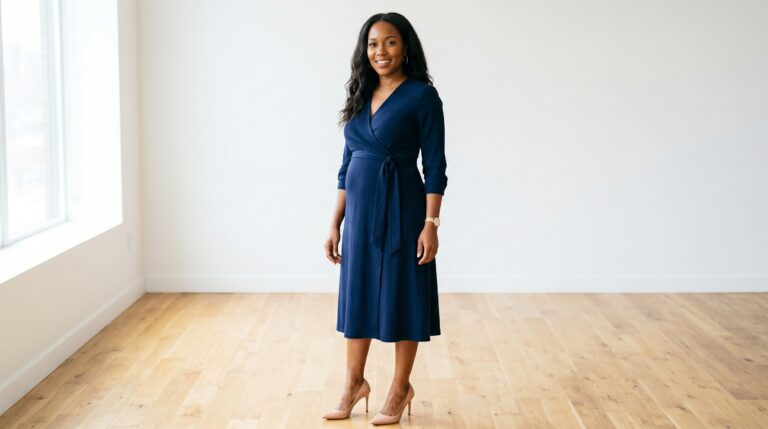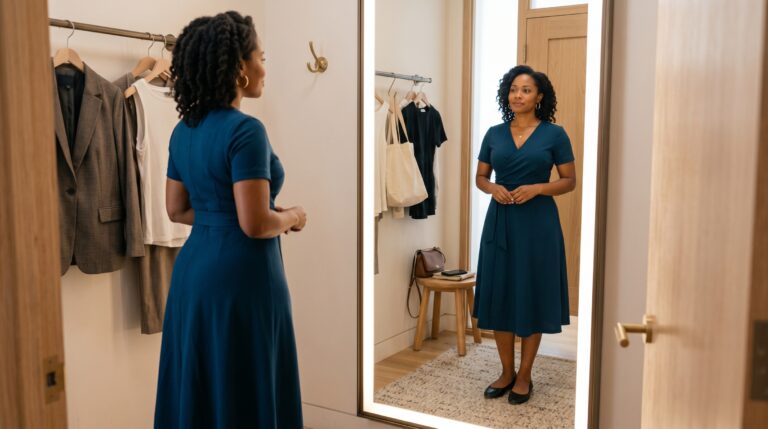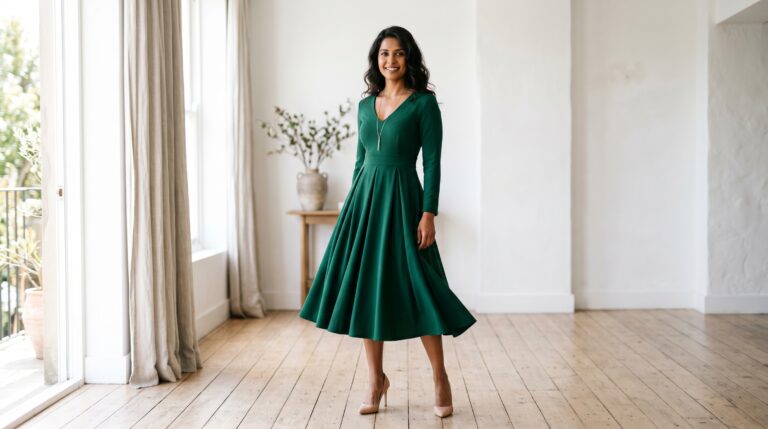
Kibbe Body Type Test: Find Your Image Identity
The Kibbe Body Type Test is a style system created by David Kibbe that categorizes people into 10 image identities based on bone structure, body flesh, and facial features — not measurements. Taking the test helps you understand your natural lines so you can dress in a way that genuinely flatters your body, rather than chasing generic fashion rules that were never designed for you.
You’ve Been Dressing for the Wrong Body
Most of us have spent years trying to dress for a body we wished we had. We follow the rules — “if you’re pear-shaped, wear A-line skirts” — buy the recommended pieces, and still end up standing in front of the mirror wondering why nothing looks quite right.
That’s where Kibbe comes in. Instead of asking “what shape is your body?” it asks something more interesting: what are the natural lines your body already has? And then: what if you dressed to work with those, instead of against them?
This system was created in 1987 by a Broadway stylist named David Kibbe, and it has quietly become one of the most discussed style frameworks on the internet — for good reason. In January 2025, Kibbe published a new book, The Power of Style, that updated parts of his original methodology. This guide reflects his current thinking.
Try our free Kibbe Body Type Calculator right here for instant results.
Here’s what we’re covering: what Kibbe actually is, how to take the test properly, what all 10 types mean, what to wear once you know yours, and — crucially — why so many people keep getting the wrong result.
What Is the Kibbe System, Really?
It Has Nothing to Do with Measurements
That’s the first thing that surprises people. You don’t need a tape measure. There’s no bust-waist-hip ratio. Kibbe doesn’t care whether you’re a pear or an hourglass.
Unlike body shape systems that classify you based on simple geometry and measurements, Kibbe’s approach ignores numbers entirely. What it looks at instead is the quality of your lines — are your features angular or rounded? Sharp or soft? Long and elongated, or compact and small-scaled?
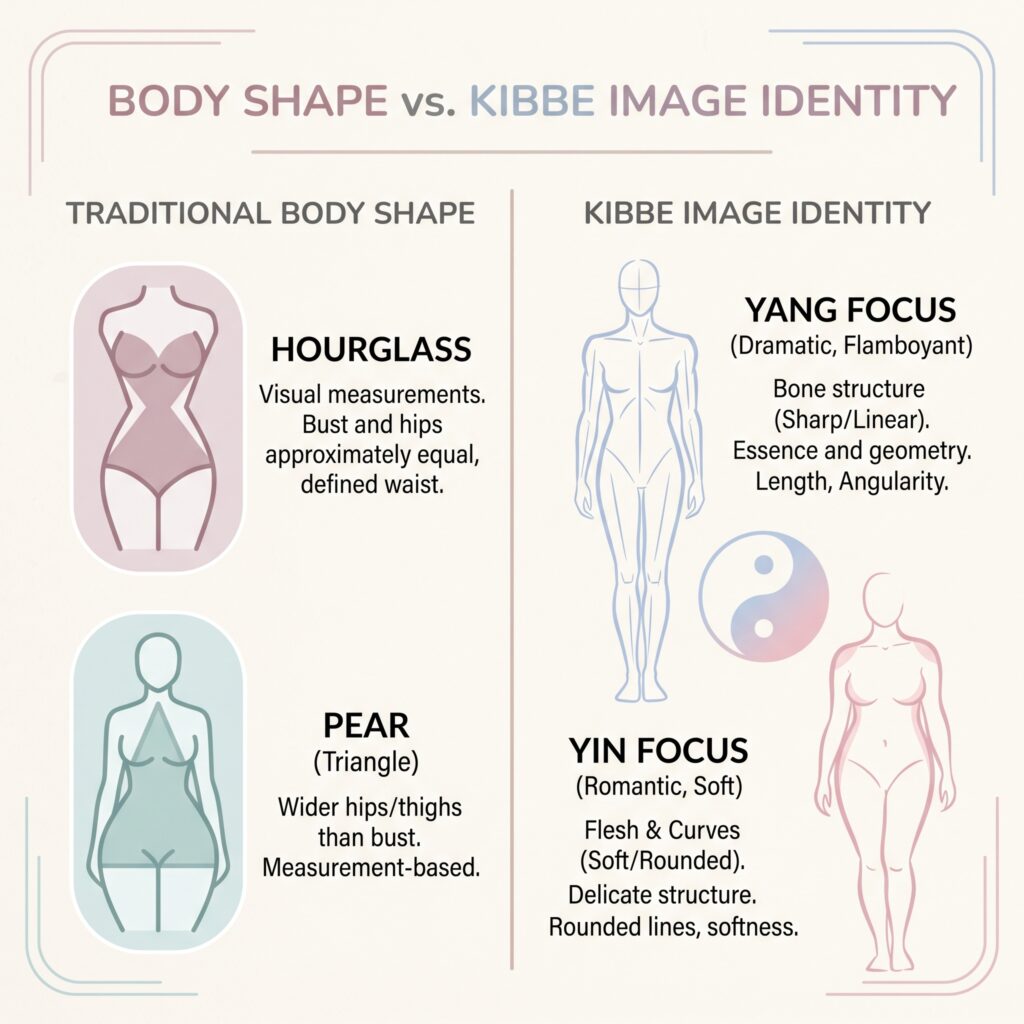
The Yin/Yang Framework (Simplified)
The whole system is built on yin and yang — but in a very specific, fashion-focused way. Yang means sharp, angular, and structured. Yin means soft, curved, and rounded. Every person is a unique blend of both.
A pure yang person would have sharp bone structure, lean flesh, and angular facial features. A pure yin person would have soft, round bones, curved flesh, and delicate rounded features. Most people sit somewhere in the middle — and that’s where the 10 types come from.
Not sure where you fit on the spectrum? Start with our Body Shape Calculator and then layer in Kibbe for deeper insight.
It’s Called an “Image Identity,” Not a Body Type
Technically, Kibbe doesn’t even call it a body type. He calls it an Image Identity (ID). That distinction matters because the system goes beyond just the shape of your torso — it extends to your hair, your makeup, your overall presence. It’s a full style language, not a clothing hack.
A Quick History Note
Kibbe published the original system in his 1987 book Metamorphosis. There were originally 13 types. Since then, he’s deprecated three of the “pure” types (Pure Natural, Pure Classic, and Pure Gamine), and in his 2025 book The Power of Style, he moved even further away from body-part checklists toward understanding what he calls your “personal line” — essentially, how fabric drapes and moves on your body as a whole. The quiz-based approach still works as a starting point, but the system is more nuanced now than the 1987 version.
Read the full updated philosophy in David Kibbe’s 2025 book → David Kibbe’s Power of Style on Amazon
The 10 Kibbe Image Identities Explained
You’ll often see “13 Kibbe types” mentioned online. That’s outdated. David Kibbe discontinued Pure Natural, Pure Classic, and Pure Gamine because he found most people in those categories actually fit better into one of the related subtypes. The current active system has 10 types. Both numbers are technically accurate depending on which era of the system you’re referencing — but if you’re trying to find your type today, work with the 10.
They’re organized into five families.
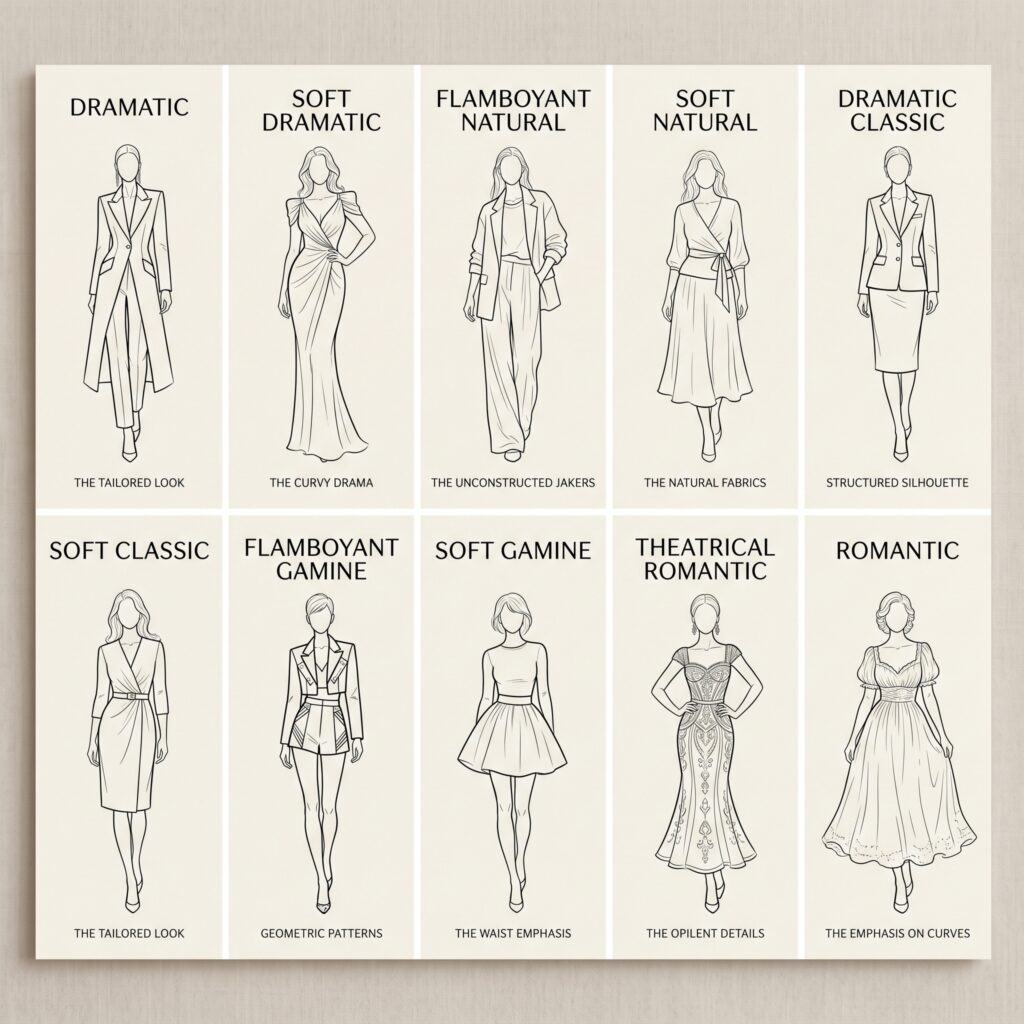
The Dramatic Family — Extreme Yang
Dramatic Tall, lean, and angular. Sharp bone structure throughout — think defined jaw, narrow frame, long limbs. The Dramatic type has a strong vertical presence that commands a room without trying to.
Best dressed in: elongated silhouettes, minimalist cuts, bold sharp lines. Nothing fussy or over-decorated. Celebrity examples: Tilda Swinton, Cate Blanchett
Soft Dramatic All the height and boldness of the Dramatic, but with a significant curve element added — fuller bust, rounder hips, more opulent flesh. It’s a striking combination: very tall, very curvy, very present.
Best dressed in: bold silhouettes that honor both the height and the curves. Think old Hollywood glamour. Celebrity examples: Sophia Loren, Beyoncé
The Natural Family — Soft Yang
Naturals are yang-dominant but with blunter, less sharp edges than Dramatics. There’s an athletic, effortless quality — wide shoulders, broad frame, but not angular or severe.
Flamboyant Natural The broader, more yang-leaning Natural. Typically tall with wide, slightly blunt shoulders and an athletic build.
Best dressed in: relaxed, oversized, effortless pieces. Stiff structure looks wrong. Flowing, unconstructed clothes look exactly right. Celebrity examples: Julia Roberts, Charlize Theron
Soft Natural Similar frame but with more yin blended in — softer edges, more curve, a gentler overall impression.
Best dressed in: flowing fabrics, open necklines, relaxed but feminine pieces. Avoid anything too rigid. Celebrity examples: Jennifer Aniston, Meghan Markle
The Classic Family — Balanced Yin/Yang
Classics are the most symmetrical types. Everything is proportioned, moderate, and harmonious. Neither overly angular nor overly soft. The challenge is that “balanced” can be hard to dress for — too much of anything throws it off.
Dramatic Classic Balanced, but tipping slightly toward yang — a touch more sharpness and structure than the Soft Classic.
Best dressed in: tailored, structured, polished. Quality matters more than trendiness. Celebrity examples: Grace Kelly, Michelle Obama
Soft Classic Balanced, but tipping slightly toward yin — symmetrical but with a softer, more feminine quality.
Best dressed in: draped fabrics, soft tailoring, subtle feminine details. Nothing extreme. Celebrity examples: Nicole Kidman, Kate Middleton
The Gamine Family — Yin/Yang Contrast
Gamines are different from the others. Instead of leaning one direction on the yin/yang spectrum, they’re a sharp mix of both — angular bones with delicate, petite flesh, or vice versa. The result is a look of high contrast and playful energy. Both types must be under 5’5″.
Flamboyant Gamine More yang in the mix. Think geometric, bold, high-contrast. Asymmetry works well.
Best dressed in: sharp geometric shapes, high contrast color blocking, cropped and structured pieces. Celebrity examples: Audrey Hepburn, Jean Seberg
Soft Gamine More yin in the mix. Smaller and more delicate than the Flamboyant Gamine, with a sweet, compact look.
Best dressed in: detailed, compact, charming silhouettes. Small scale everything. Celebrity examples: Octavia Spencer, Thandiwe Newton
The Romantic Family — Extreme Yin
The opposite end of the spectrum from Dramatic. Romantics have the most yin of any type — soft, round bone structure, lush curves, delicate and rounded facial features. Must be under 5’5″, because height would shift the dominant element away from curve.
Theatrical Romantic Romantic with slightly more contrast — all the curves of the Romantic, but with a touch of yang sharpness in the features.
Best dressed in: fitted, ornate, feminine pieces with interesting detail. Celebrity examples: Vivien Leigh, Halle Berry
Romantic Pure yin. Extremely curvy, soft, and rounded throughout. The classic hourglass.
Best dressed in: body-skimming fabrics, curved seams, soft and plush textures. Angular or boxy clothing fights the natural line entirely. Celebrity examples: Marilyn Monroe, H.E.R.
How to Take the Kibbe Test Accurately
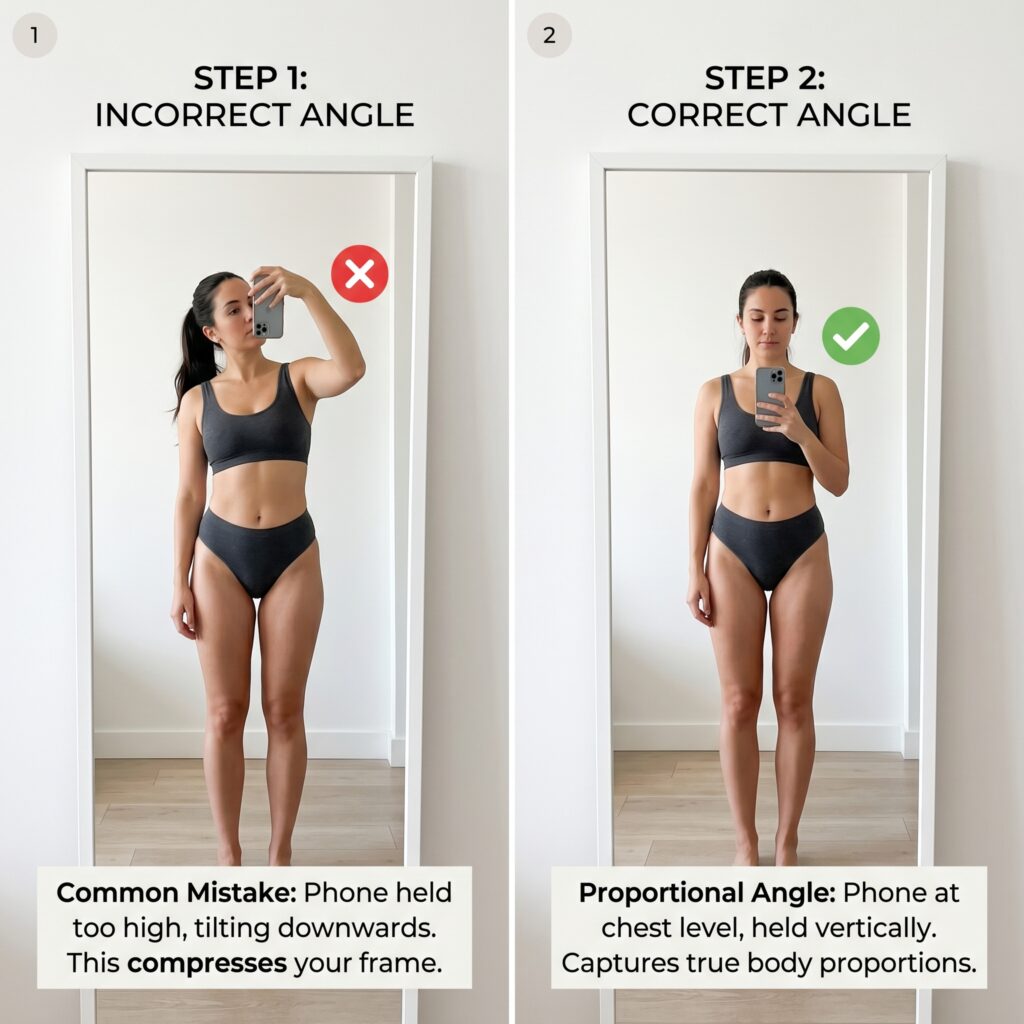
Here’s the thing nobody warns you about: most people get their first result wrong. Not because the system is flawed, but because self-assessment is genuinely hard. You’re trying to look at yourself objectively — without ego, without the body image baggage most of us carry, without seeing what you want to see instead of what’s actually there.
A few things that will make a real difference.
Before You Start
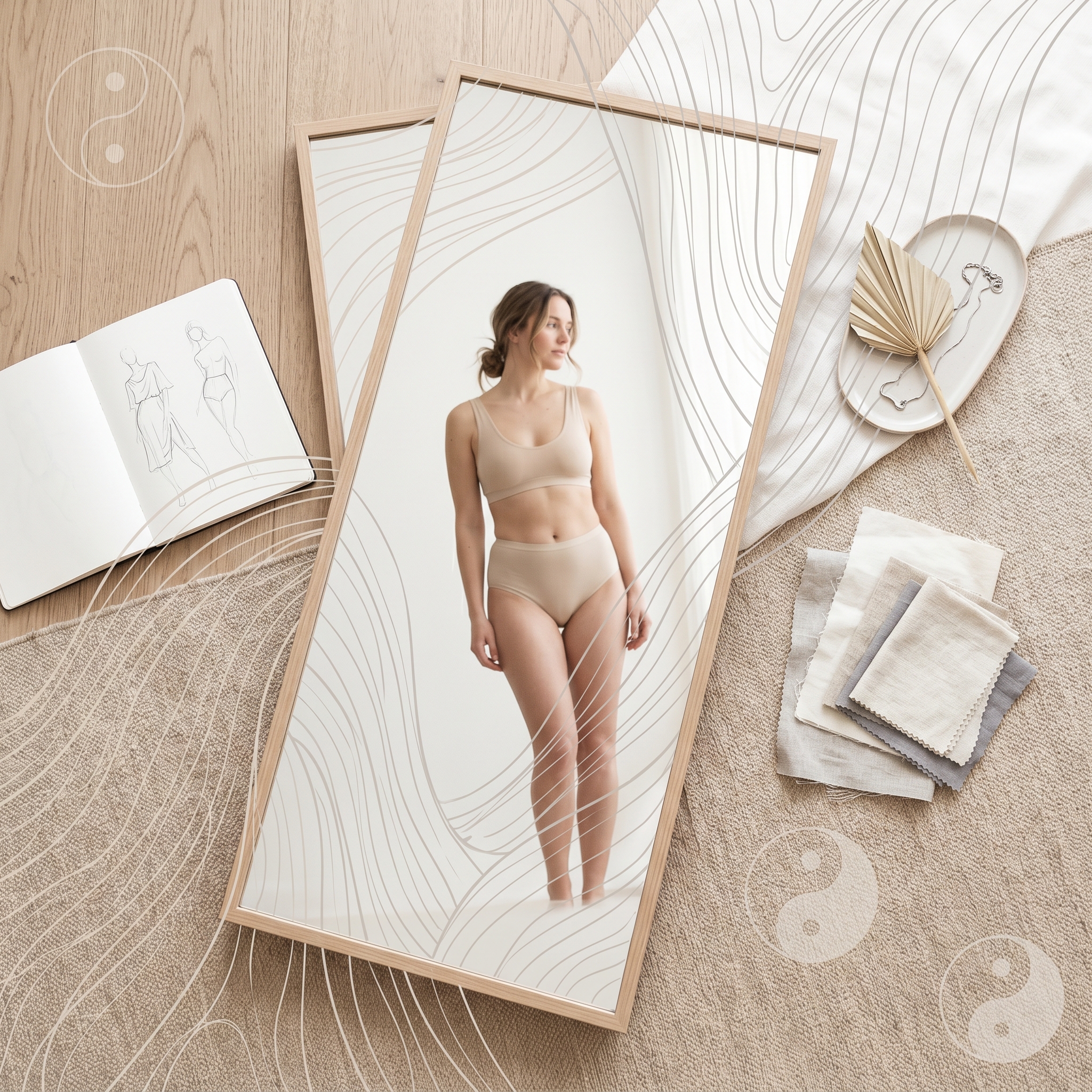
Dress for accuracy, not comfort. Wear underwear or a plain swimsuit with no pattern. No padded or underwired bras that change your silhouette. No shapewear. The goal is to see your natural lines.
Take a full-length photo. Photograph yourself from chest height, not from above. For even better results, print the photo and trace the outline of your body in a thin line — you’ll see your proportions far more clearly than you do in the mirror.
Check your mindset. Are you answering based on how you feel about your body, or what you see? A woman with sharp, angular bones might describe herself as soft because she has a gentle personality. That’s answering the wrong question. Kibbe measures physical lines, not who you are as a person. A warm, gentle person can absolutely have Dramatic bones.
Wait until after 25. Kibbe himself recommends this, because features and proportions settle more clearly in adulthood.
Part 1: Bone Structure — Start Here
This is the most important section. Your bone structure almost always determines your Kibbe type, because it’s what dictates how clothes physically hang on your body. And unlike flesh, it doesn’t change with your weight.
The mistake most people make here is assessing the padding on their bones instead of the bones themselves. To get this right, look at areas where bone is actually visible regardless of body fat: your wrists, knuckles, elbows, knees, and jaw.
Run your finger along your jawline. Is it angular and sharp, or soft and rounded? Look at your wrist bones. Do they protrude and look prominent, or are they small and smooth? Look at your knuckles — bony and defined, or neat and soft?
Also assess:
- Shoulders: are they wide and straight, narrow and sloped, or somewhere in between?
- Vertical impression: do you look elongated for your height, or compact and small-scaled?
- Overall frame: large-boned and broad, or small and delicate?
Answer key: A = Dramatic, B = Natural, C = Classic, D = Gamine, E = Romantic
Part 2: Body Flesh
This section is about the quality and distribution of your flesh — not the quantity. It doesn’t matter how much you weigh. What matters is whether your flesh is taut and lean, soft and rounded, muscular and defined, or lush and curvy.
This is where the second most common mistake happens: confusing extra weight with your natural flesh quality. Many people mistype themselves as Romantic or Soft types because they carry more weight, when their underlying bone structure actually points somewhere completely different. Ask yourself: what would the shape of your flesh look like if your weight were perfectly neutral? Taut? Soft? Muscular? Curvy?
Also: is there a clearly defined waist? Do your hips and bust create a prominent curve, or does your flesh lie fairly flat against your frame?
Part 3: Facial Features
Assess your face separately from your body — they can and often do have different yin/yang balances. That’s normal, and it’s actually what creates the interesting mixed types.
Look at your facial bone structure (jaw, cheekbones, nose bridge) — angular and defined, or soft and rounded? Then look at the flesh on your face — is it taut and lean, or soft with a slight cushion? Finally, what’s the overall impression of your face — sharp and striking, soft and approachable, balanced and symmetrical, or playfully mixed?
Reading Your Results
Tally your answers by section. The letter that appears most often in each section tells you the dominant quality in that area. If your answers are mostly A and B, you lean yang. Mostly D and E, you lean yin. Mostly C, you’re balanced.
If you get an even split between A/B and D/E answers — that’s Gamine. It’s not a confused result; it’s actually pointing directly at a specific type.
What if your sections disagree with each other? That’s useful too. A yang bone structure with more yin flesh is pointing toward a “Soft” subtype. Yang bones with yin facial features might indicate Dramatic Classic. The sections are meant to create nuance, not all point in the same direction.
The 5 Mistakes That Mess Up Your Result
1. Answering for your personality, not your body. This one comes up constantly. People with angular, sharp bone structure describe themselves as “soft” because they’re gentle people who love cozy things. That’s not what the question is asking. Your personality has nothing to do with your bone structure.
2. Confusing your flesh with your bones. The bone structure questions trip people up the most. If you answer based on how soft or large your body feels rather than what your actual skeleton looks like underneath, you’ll mistype almost every time. Go back to the visible bones — wrists, jaw, knuckles.
3. Typing yourself as the type you want to be. This is human nature and it’s extremely common. Many women want to be Romantic because it sounds beautiful, or want to avoid Dramatic because it sounds severe. The result you want has nothing to do with the result that’s actually true for you.
4. Treating it like a strict math formula. The Kibbe test is not a mathematical formula. It’s an observation practice. If you’re adding up letters like a scorecard and ignoring what you actually see in the mirror, you’re missing the point.
5. Trusting a quick quiz blindly. Here’s the honest version of this: David Kibbe himself has said not to use a quiz to type yourself, and that the only accurate result comes from an in-person consultation with him. Most people can’t do that — but it’s worth knowing that a quiz is a starting point, not a verdict. Use it to narrow down two or three likely types, then do the real work of observing yourself.
What to Do With Your Type — Actually Using It
Getting a result and then not knowing what to do with it is probably the most common frustration in the Kibbe community. Here’s how to make it practical.
The Echo Test
This is the simplest way to verify your result and start applying it at the same time. Put on an outfit that matches your type’s recommendations. Then put on something that contradicts it completely. Look at your face in both — not your body. Which version makes you look more awake, more alive, more like yourself?
The outfit that echoes your natural lines will make your face look better. The one that fights your lines will make you look tired or off somehow, even if you can’t pinpoint why. That feeling is information.
Quick Styling Principles by Family
Dramatic/Natural types (Yang): Long lines, relaxed structure, nothing fussy. Oversized and effortless for Naturals; sharp and elongated for Dramatics. Both types look wrong in overly delicate or dainty details.
Classic types (Balanced): The key word is moderation. Tailored, polished, nothing too extreme in any direction. Quality of fabric matters. Trendy statement pieces often fight Classic lines.
Gamine types (Contrast): Short to mid hemlines, high contrast, geometric shapes. Avoid anything that swamps your frame — long, flowing maxi dresses will typically overwhelm rather than flatter.
Romantic types (Yin): Body-conscious fits, curved seams, soft and plush fabrics. Angular, boxy, or rigidly structured clothing works directly against the natural curve of the body.
One principle that applies across all types: shoulders set the tone. Dramatic and Flamboyant Natural types look best in strong, straight shoulder lines. Romantic and Soft Classic types look best with gentle, sloped shoulders. Getting the shoulder right on a garment does more than almost any other single detail.
The Wardrobe Audit (Takes 10 Minutes)
Pull out five items you always reach for and feel genuinely good in. Write down what they have in common — the cut, the fabric, the length, the structure or lack of it.
Then pull out five items that sit in your closet unworn. Write down what those have in common.
Now map both lists against your type’s style recommendations. Most people find their instincts were already right all along — the clothes that weren’t working were fighting their lines, and the ones they loved were already honoring them.
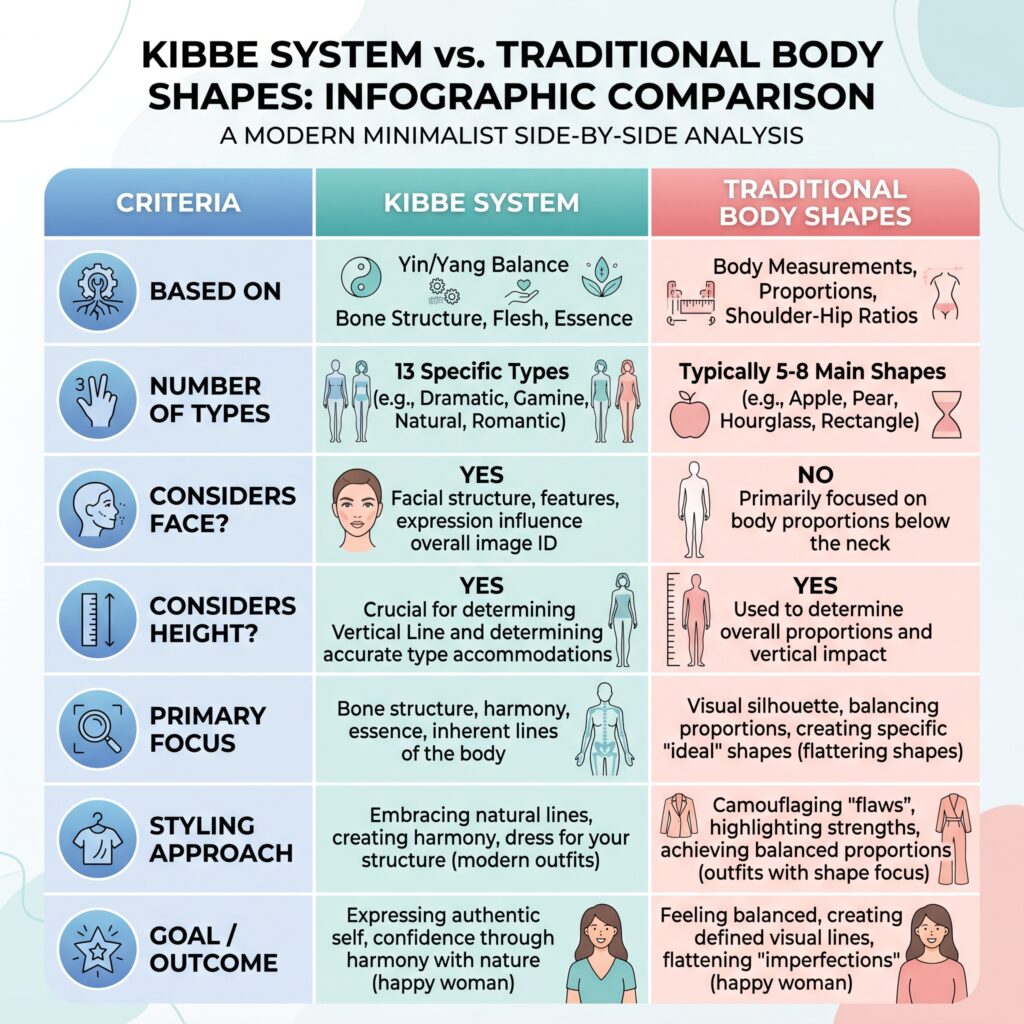
Kibbe vs. Traditional Body Shapes — What’s Actually Different?
| Factor | Kibbe System | Traditional Body Shapes |
|---|---|---|
| Based on | Bone structure, flesh, facial features | Bust/waist/hip measurements |
| Number of types | 10 (current) | 5–7 |
| Considers face? | Yes | No |
| Considers height? | Yes — critically | Rarely |
| Changes with weight? | No | Yes |
| Style depth | Full wardrobe + hair + makeup | Clothing only |
| Learning curve | Steeper | Easy |
| Practical accuracy | Higher | Lower |
The simple version: traditional body shape systems are quick and easy but blunt. They tell you “your hips are wider than your shoulders, so wear this.” Kibbe asks a more complex question and gives a more useful answer — but you have to put in more effort to understand it.
Resources Worth Your Time
David Kibbe’s The Power of Style (2025) — His most current thinking. If you’re serious about this system, this is the place to go. It reflects his evolved methodology, including the move away from body-part analysis.
David Kibbe’s Facebook community — The only online space where Kibbe himself is actively involved. Primary source for current guidance.
TheConceptWardrobe.com — The most thorough free written test available, with illustrated answers. Dense, but excellent.
GabrielleArruda.com — Picture-based quiz, more beginner-friendly. Good starting point.
Pinterest (search “[your type] Kibbe outfits”) — Visual reference is non-negotiable for this system. Looking at real outfit examples will teach you more than reading descriptions.
Recommended Videos:
Frequently Asked Questions
What is the Kibbe body type system?
The Kibbe body type system is a style framework created by Broadway stylist David Kibbe in 1987. It classifies people into image identities based on the quality of their bone structure, body flesh, and facial features — not on measurement ratios. The system uses a yin (soft, rounded) and yang (sharp, angular) framework to identify 10 style archetypes that guide clothing, hair, and overall personal aesthetic choices.
How many Kibbe types are there?
The current active Kibbe system has 10 types, organised into five families: Dramatic (Dramatic, Soft Dramatic), Natural (Flamboyant Natural, Soft Natural), Classic (Dramatic Classic, Soft Classic), Gamine (Flamboyant Gamine, Soft Gamine), and Romantic (Theatrical Romantic, Romantic). You may see “13 types” mentioned online — this refers to the original 1987 system, which included Pure Natural, Pure Classic, and Pure Gamine. David Kibbe later discontinued these three types.
What is the difference between the Kibbe system and body shape calculators?
Body shape calculators (like our free tool) classify your silhouette using bust, waist, and hip measurements. The Kibbe system ignores measurements entirely and instead looks at the quality of your lines — whether your bone structure is angular or rounded, whether your flesh is taut or soft, and whether your overall presence is elongated or compact. Kibbe also considers height and facial features, which body shape calculators do not.
Does the Kibbe type change if you gain or lose weight?
No. Your Kibbe type is based primarily on your bone structure, which does not change with weight fluctuations. The questions about body flesh can shift slightly with significant weight changes, but your underlying bone quality — sharp or blunt, wide or narrow, large or small-scaled — remains constant throughout your life. This is one of the key advantages of the Kibbe system over measurement-based tools.
What does yin and yang mean in the Kibbe system?
In the Kibbe system, yang refers to sharp, angular, and structured qualities — a defined jaw, prominent bone structure, lean flesh. Yin refers to soft, rounded, and curved qualities — delicate rounded bones, soft flesh, gentle facial features. Every person is a unique blend of both. Your Kibbe type is determined by how much of each you have and where those qualities appear — in your bones, flesh, and face separately.
What is the most common Kibbe type?
David Kibbe has suggested that Soft Natural and Natural types are among the most common, given that many people have moderate yang bone structure without extreme angles. Dramatic and Romantic types (the extremes of the spectrum) tend to be less common. However, there is no large-scale published data on Kibbe type frequency, and individual results vary significantly by population and region.
What is the Soft Dramatic Kibbe type?
The Soft Dramatic is a Kibbe type that combines the tall, elongated, yang bone structure of the Dramatic with significant yin curves — a fuller bust, rounder hips, and more opulent flesh. It is considered one of the most striking types: very tall, very curvy, and very present. Celebrity examples include Sophia Loren and Beyoncé. Best dressed in bold silhouettes that honor both the height and the curves — old Hollywood glamour is the archetype.
What is the Romantic Kibbe type?
The Romantic is the most yin of all Kibbe types — the opposite extreme from the Dramatic. Romantics have soft, rounded bone structure, lush curves, and delicate rounded facial features throughout. The type must be under 5’5″ because height would shift the dominant quality away from pure curve. Best dressed in body-skimming fabrics, curved seams, and soft textures. Celebrity examples include Marilyn Monroe.
What Kibbe type has an hourglass figure?
A classic hourglass measurement result most commonly corresponds to the Romantic or Theatrical Romantic Kibbe types — especially if the person is petite and under 5’5″ with very soft, rounded features. However, a taller hourglass with more dramatic features might be a Soft Dramatic. The Kibbe system separates measurement proportions from the quality of the lines, so the same hourglass measurements can lead to different Kibbe types depending on bone structure and facial features.
Can men use the Kibbe body type system?
The Kibbe system was originally developed for women and all 10 types use feminine descriptors. However, the underlying yin/yang framework of bone structure analysis applies to all body types regardless of gender. Many men use the system informally by identifying their dominant qualities (angular vs. rounded, elongated vs. compact) and applying the corresponding styling principles. For male-specific body type classification, use our male body type calculator.
Why do I keep getting different Kibbe results?
Getting inconsistent results is extremely common and happens for three main reasons: answering based on your personality rather than your physical features, confusing the softness of your flesh with the shape of your bones (which are separate questions), and using quick online quizzes that oversimplify the system. The most reliable approach is to focus exclusively on your bone structure first — wrists, jaw, knuckles, shoulder width — and treat that as the anchor of your result.
Can you be two Kibbe types at once?
No — you have one primary Kibbe image identity. However, many people find their results cluster closely around two related types (for example, between Soft Natural and Soft Classic), which is normal. In that case, Kibbe recommends examining which type’s styling recommendations actually make your face look more alive and energised — that is the defining test. The “Echo Test” described later in this guide is the practical way to make that determination.
What is the Kibbe “Echo Test”?
The Echo Test is a practical verification method for confirming your Kibbe type. Put on an outfit that matches your type’s recommendations, then put on something that completely contradicts it. Look at your face in both — not your body. The outfit that echoes your natural lines will make your face look more awake and alive. The one that fights your lines will make you look tired or slightly off, even if you can’t immediately identify why. That difference is your confirmation.
Is the Kibbe test accurate?
The Kibbe test is a useful starting point, not a scientifically validated measurement tool. David Kibbe himself has stated that the most accurate result comes from an in-person consultation rather than a self-administered quiz, because self-assessment is inherently difficult. That said, most people find that when they identify their correct type — usually after working through several attempts — the styling guidance genuinely explains why certain clothes have always worked or never worked for them.
What should I do after finding my Kibbe type?
Start with the wardrobe audit described later in this guide — pull five items you always reach for and map them against your type’s recommendations. Most people find their instincts were already pointing in the right direction. Then use our free Kibbe Body Type Calculator to get your full result with specific recommendations. For a complete style picture, pair your Kibbe result with your body shape and somatotype results.
The Bottom Line
The Kibbe Body Type Test is not a 90-second quiz. It’s a framework for understanding how your natural physical lines actually work — and then dressing to work with them instead of against them.
Once you know your type, something shifts. Shopping gets faster. Getting dressed gets easier. That nagging feeling that things “don’t look right” on you even though they look great on someone else finally makes sense — because they were made for different lines than yours.
The system has real limits. Self-typing is genuinely hard, the terminology has a learning curve, and no quiz fully replaces an experienced eye. But as a starting point for developing your personal style? It’s one of the most useful tools you can use.
One last thing: David Kibbe’s 2025 book reflects a meaningful evolution in his thinking — away from matching individual body parts to a checklist, and toward understanding your full personal line. If you find yourself deep in this rabbit hole (and many people do), the book is worth it.
Start with your bone structure. Be honest about what you see, not what you want to see. And resist the urge to pick the type you think sounds best. The one that actually fits will feel less like a label and more like recognition.
Ready to find your exact Image Identity?
→ Take the Full Kibbe Body Type Calculator Now (free, instant results)
Got your result? Drop it in the comments. And if you’re stuck between two types — tell us which ones. You’re almost certainly not the only one.