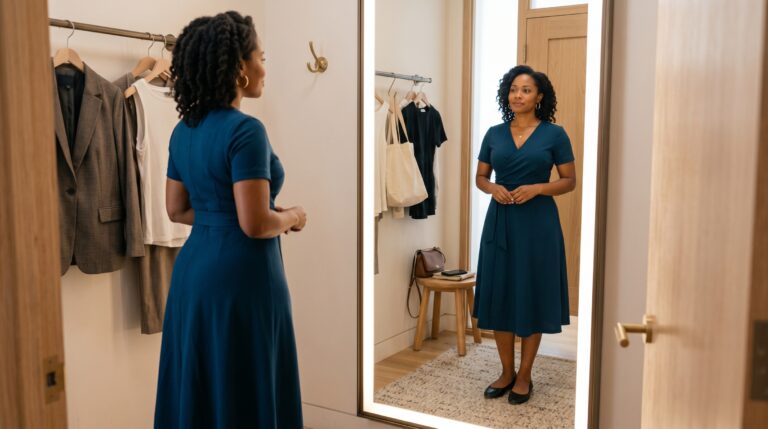
Inverted Triangle Body Shape: Complete Style Guide (Outfits, Tips & More)
If your shoulders are visibly wider than your hips and you have slim legs, narrow hips, and a relatively defined waist, you likely have an inverted triangle body shape. It’s sometimes called the “V” or “T” shape because of the way the body tapers from broad shoulders down to a narrower lower half.
This shape often gets called athletic or model-like for a reason — many top models and athletes have it. Styling it well, though, takes specific choices. Most clothing is designed for either an hourglass or rectangle silhouette, neither of which addresses the shoulder-to-hip imbalance.
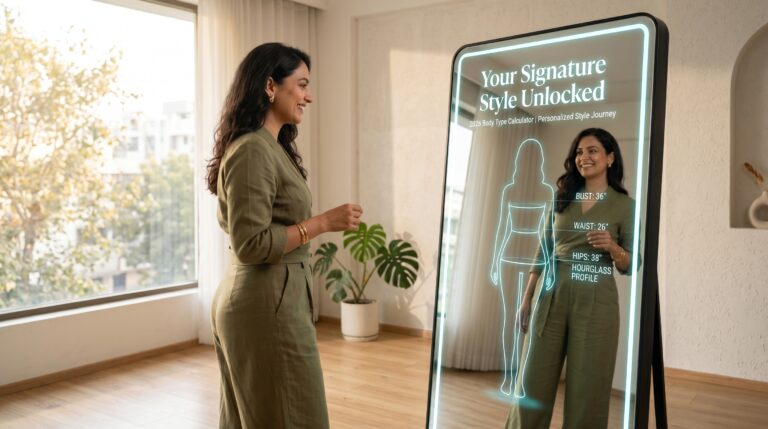
This guide covers what works, what doesn’t, and why — from everyday casual outfits to Indian ethnic wear, swimwear, accessories, and a complete capsule wardrobe.Not sure of your shape? Use the body shape calculator to confirm in under 2 minutes.
What is an inverted triangle body shape?
Key characteristics
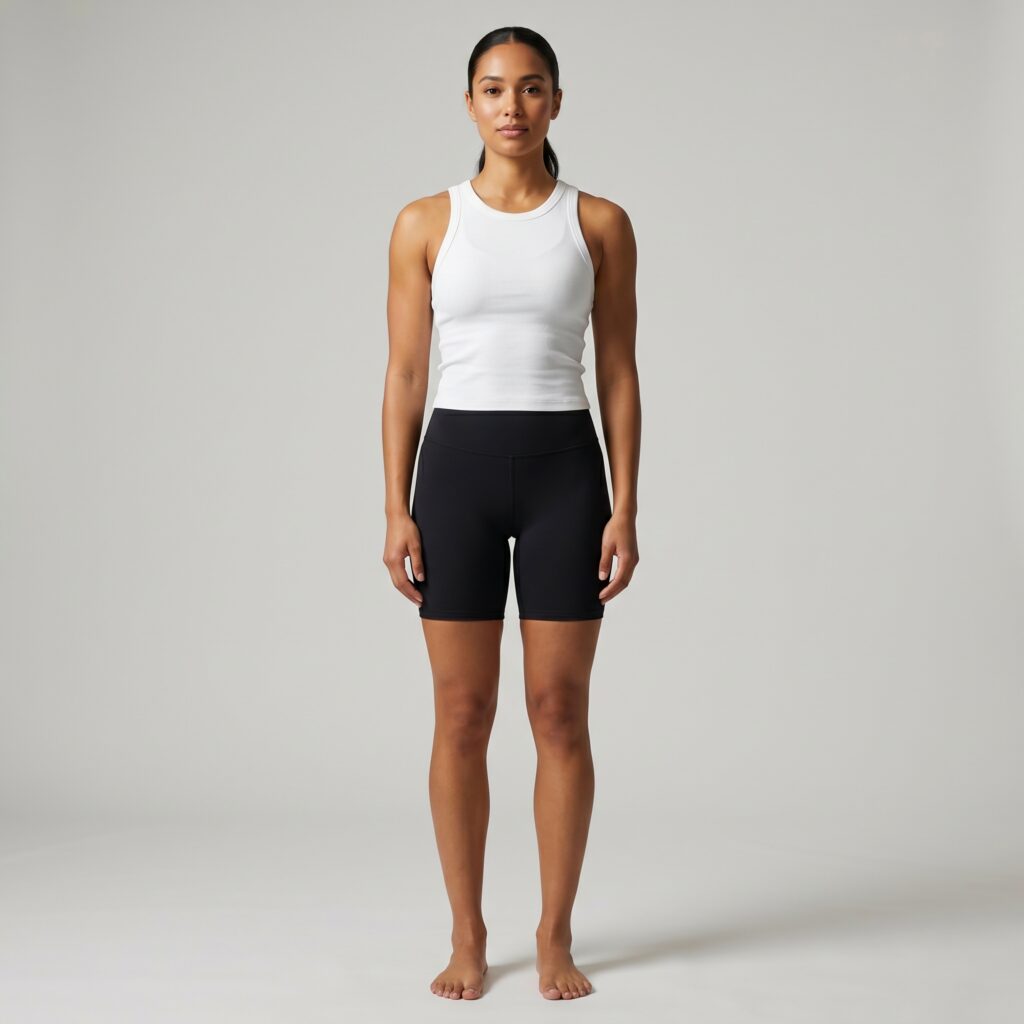
The inverted triangle shape has a clear set of features:
- Shoulders are wider than hips, usually by 5 cm (2 inches) or more
- Broad, often muscular-looking shoulders
- Bust is typically wider or equal in width to the shoulders
- Waist is defined but not dramatically narrower than the shoulders
- Hips are narrow with a flat seat
- Legs are slim and arms are often toned
The defining feature is the shoulder-to-hip ratio. Even at very different sizes, an inverted triangle’s silhouette stays consistent — the upper body dominates the lower body visually.
How to tell if you have an inverted triangle shape
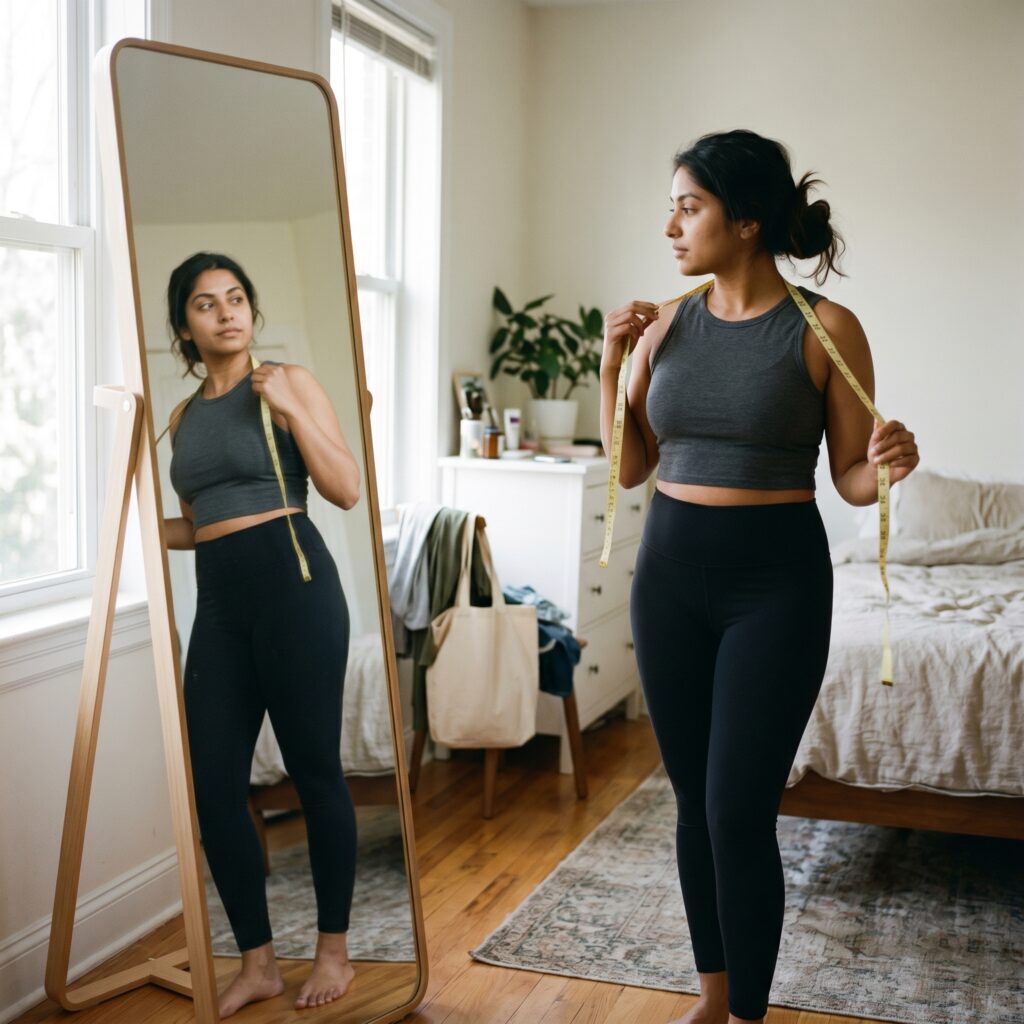
Take 3 measurements: shoulders (across the broadest point), waist, and hips.
If your shoulders measure more than 5 cm wider than your hips, you have an inverted triangle distribution. The mirror test is simpler — stand straight and look at where your body is widest. If the answer is at the shoulders or just below at the bust, the inverted triangle fits.
The female body shape calculator runs the numbers automatically.
Inverted triangle vs apple body shape
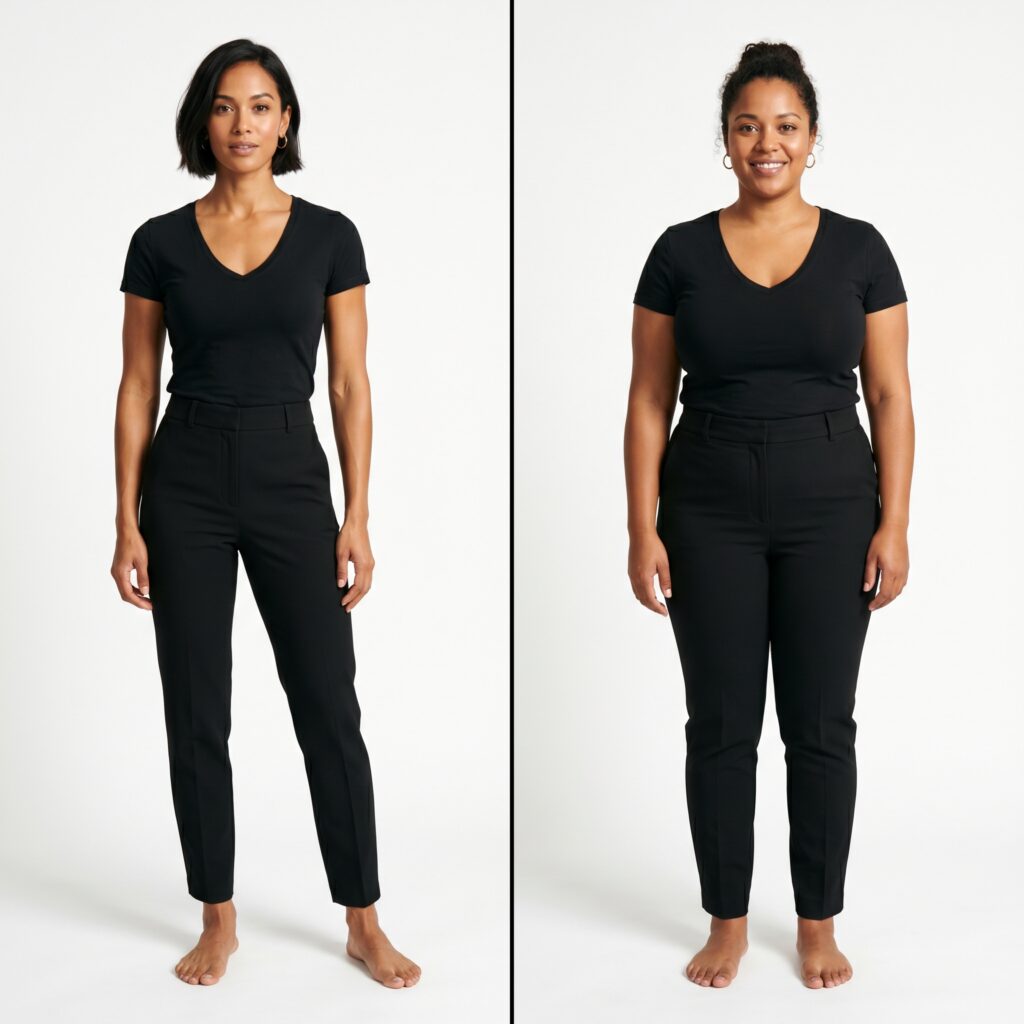
These two shapes share broad shoulders and narrow hips, which causes constant confusion. The difference is the waist:
| Feature | Inverted Triangle | Apple Body Shape |
|---|---|---|
| Shoulders | Broad, defined | Broad |
| Waist | Visible definition | Wider, undefined |
| Hips | Narrow | Narrow |
| Weight carries in | Upper body and shoulders | Midsection and stomach |
| Legs | Slim | Slim |
| Styling goal | Soften shoulders, add hip volume | Define waist, create hip volume |
Inverted triangles have a waist you can see. Apple shapes carry weight at the waist itself, so there’s no obvious narrowing. This single difference changes almost every styling decision. See the apple body shape guide for the full apple breakdown.
Variations of the inverted triangle shape
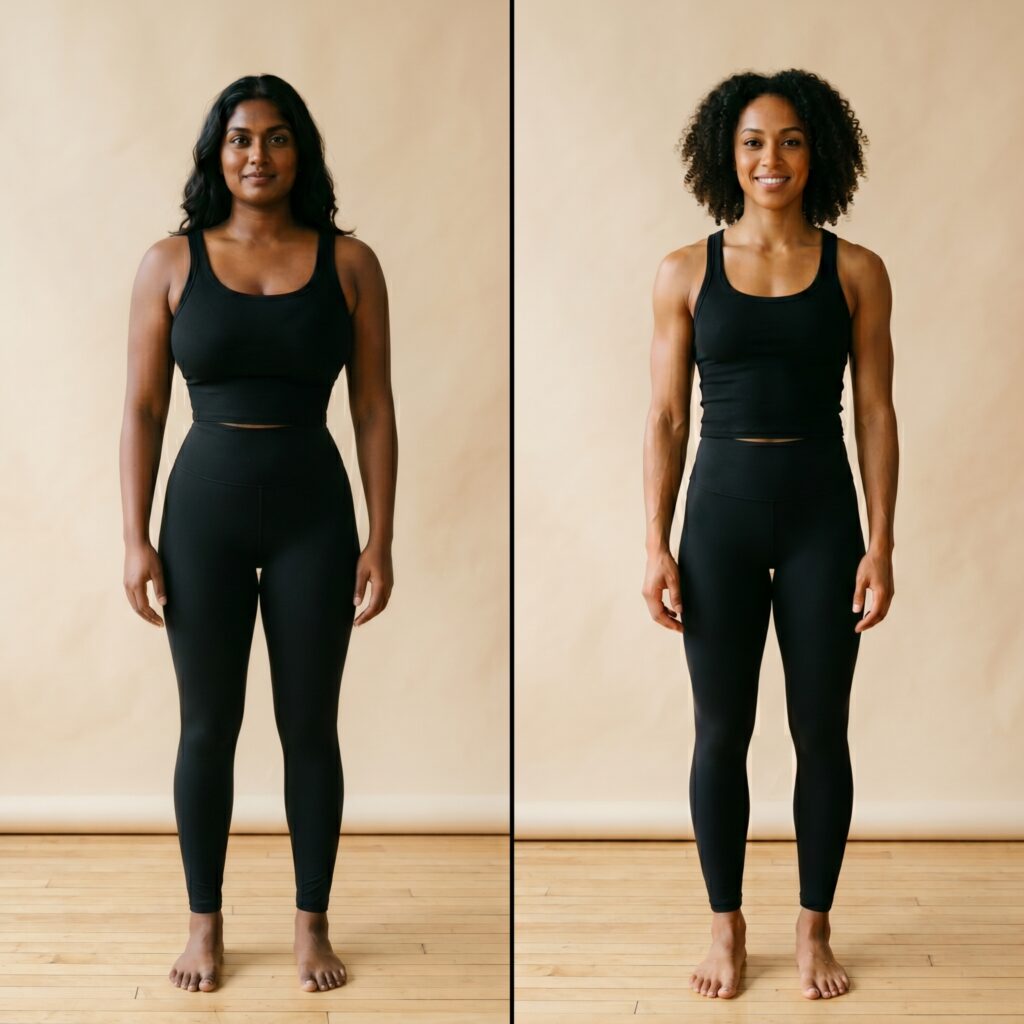
Two common variations are worth naming:
Wide inverted triangle: Very broad shoulders, very narrow hips, often with a fuller bust. The shoulder width is the dominant feature, and adding hip volume is the priority.
Athletic inverted triangle: Muscular shoulders and toned arms with minimal hip curve. Common in swimmers, dancers, and women who lift weights. The body looks lean and angular. Styling still focuses on softening the shoulder line and adding lower-body volume.
How to dress an inverted triangle body shape: core principles
Before getting into clothing categories, here are the 5 principles every styling decision flows from.
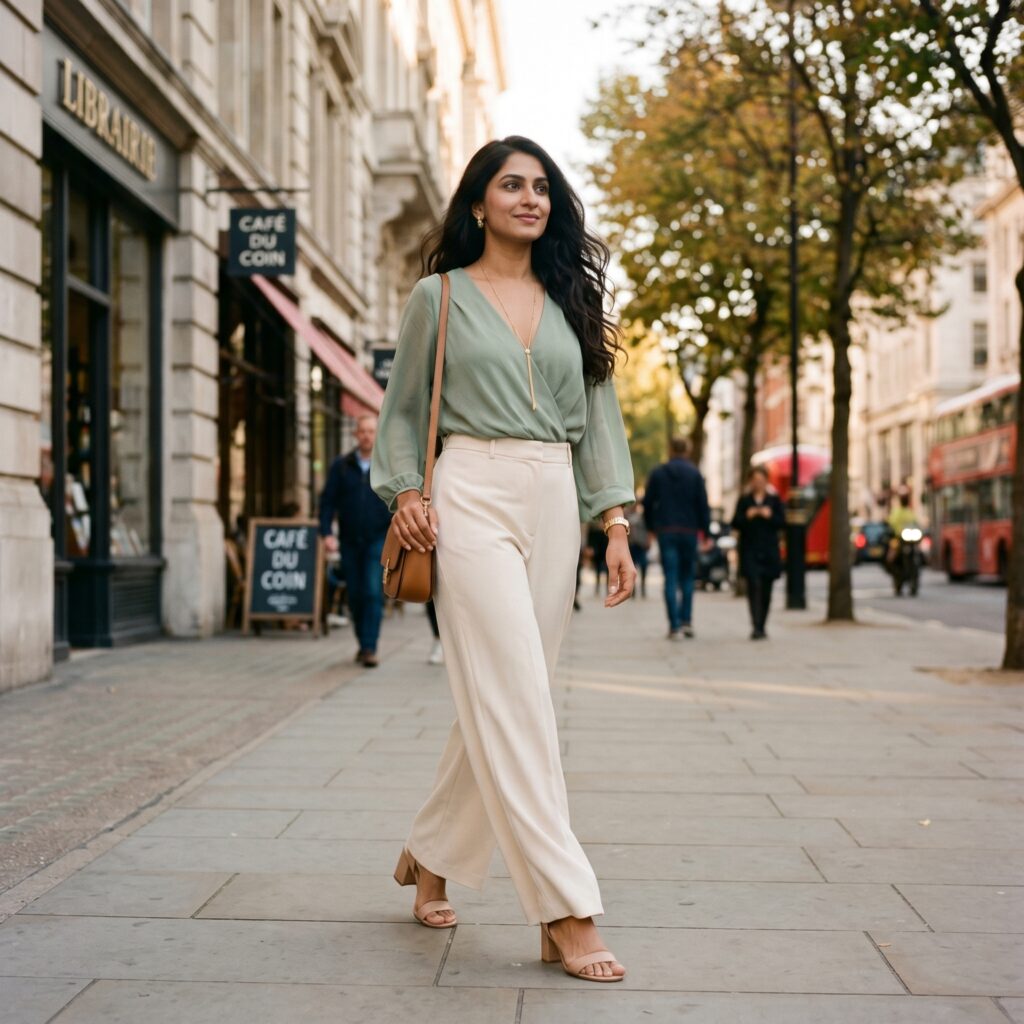
1. Soften the shoulder line
Structured shoulders, padded jackets, puff sleeves, and embellishment on the upper body all push the shoulder line wider. The goal is the opposite — soft fabrics, sloped seams, and necklines that draw the eye inward.
V-necks, scoop necks, halter necklines, and wrap tops all create vertical or diagonal lines through the chest. These pull attention inward and away from the shoulder edges.
2. Add volume at the hips
The inverted triangle’s main challenge is a narrower lower half. Creating visual width at the hip and thigh balances the silhouette.
Flared skirts, A-line cuts, wide-leg trousers, pleated bottoms, and peplum hems all add structural volume below the waist. Patterns and light colours on the bottom half add perceived volume too.
3. Direct the eye downward
Statement shoes, interesting hemlines, bold prints on bottoms, and bright colours below the waist all pull focus away from the shoulders.
The reverse is also worth following — keep the upper body simple, monochrome, and uncluttered. Heavy embellishment, large prints, and statement necklaces on the chest add visual weight where you don’t want it.
4. Use colours strategically
Dark or muted colours on top recede visually. Lighter, brighter, or patterned colours on the bottom advance and add volume.
Monochromatic dressing — one colour from top to bottom — also works well, particularly for tall inverted triangles. It creates a long vertical line that reduces emphasis on the shoulders.
5. Choose fabrics and cuts deliberately
Soft, draping fabrics on top: chiffon, georgette, silk, fine jersey. They skim the upper body without adding structure or bulk.
Structured fabrics on the bottom: denim, cotton twill, ponte, wool blends. They hold shape and create the volume you need at the hip.
Stiff, padded, or heavily textured fabrics on the upper body do the opposite — they add structure where you want softness.
Best tops for inverted triangle body shape
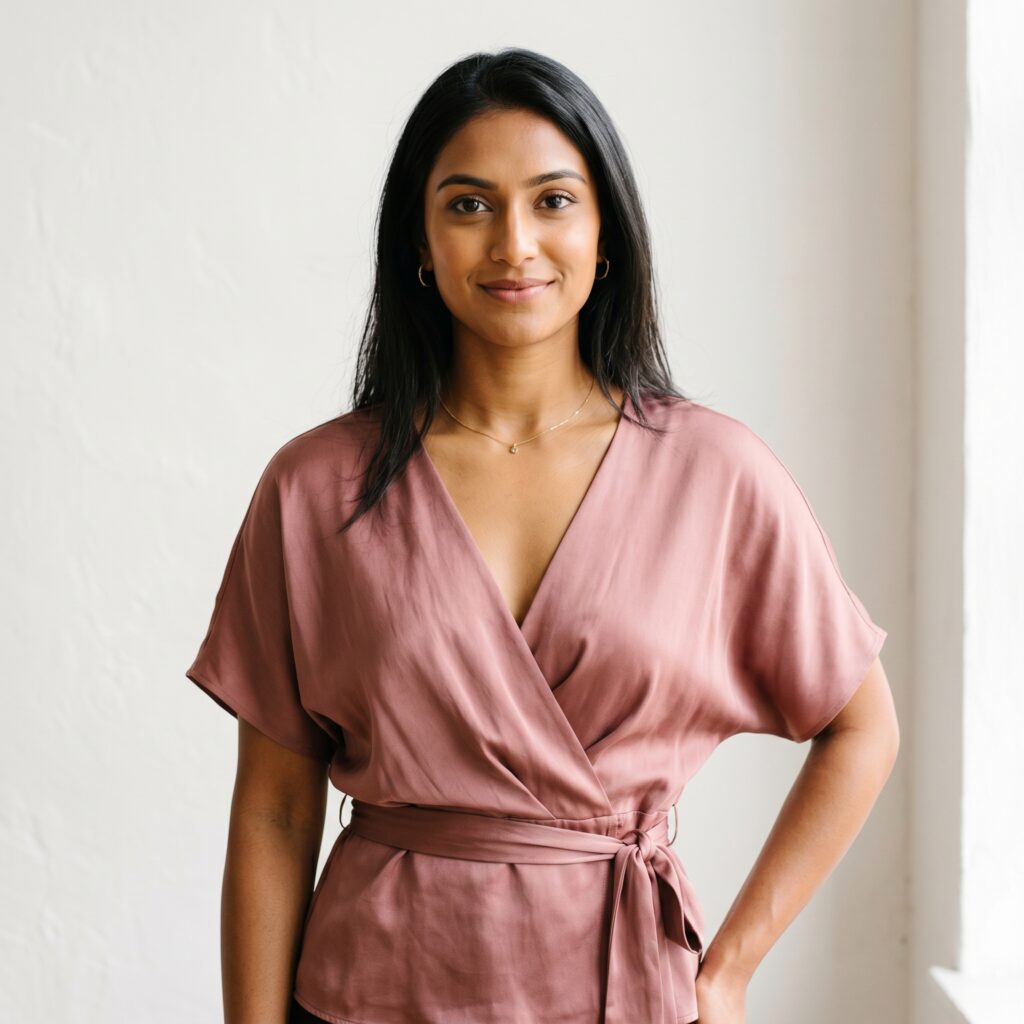
Necklines that flatter
V-neck: The most reliable neckline for an inverted triangle. It creates a vertical line through the chest, narrows the perceived shoulder width, and draws the eye downward.
Scoop neck: Softens the upper body without cutting horizontally across the shoulders.
Halter neckline: Pulls fabric inward from the shoulder edges to the centre of the neck. This visually narrows the shoulder line and emphasises the centre of the body.
Wrap neckline: Creates a diagonal line through the chest. The angled wrap slims the upper torso and works for casual and formal wear.
Necklines to avoid: boat neck, off-shoulder, square neck, and cold-shoulder cuts all draw a horizontal line across or near the shoulders, which makes them look broader.
Sleeve styles that work
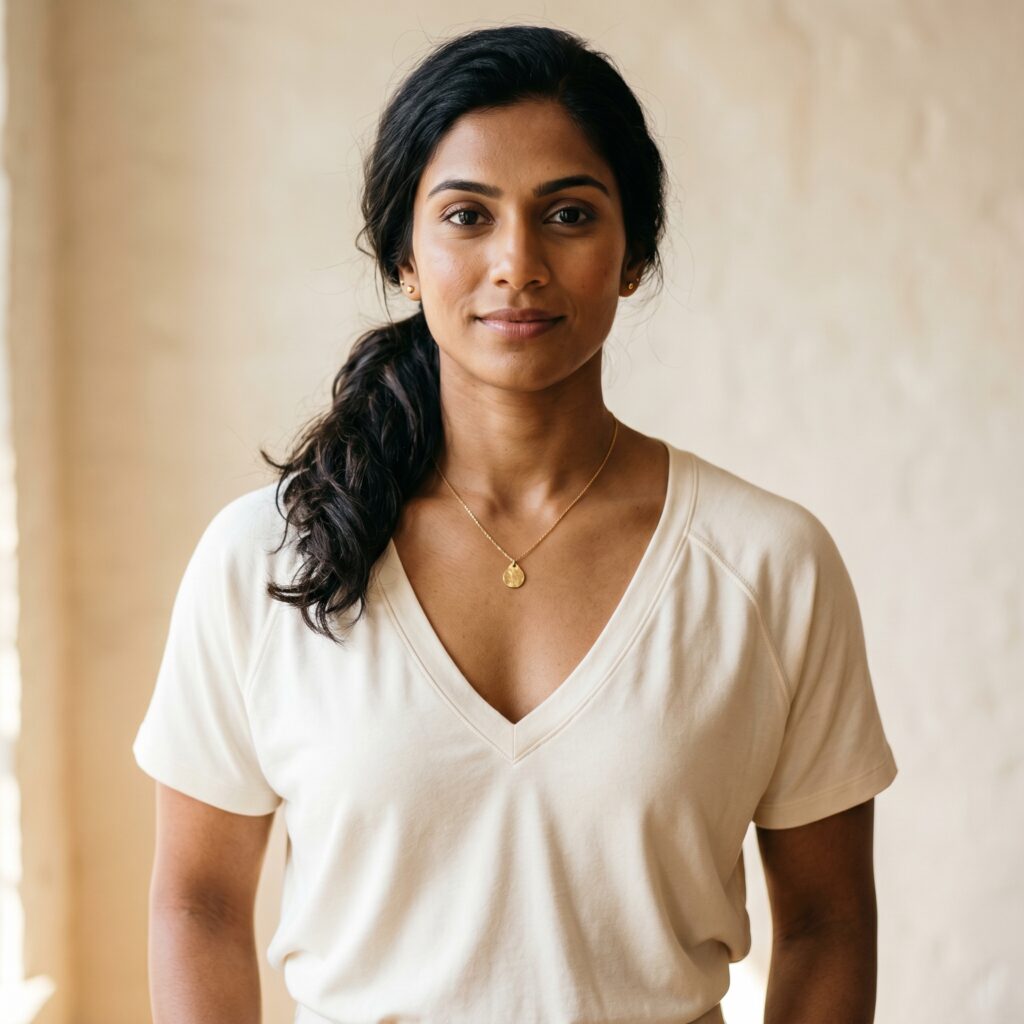
Raglan sleeves: The seam runs diagonally from the neckline to under the arm rather than across the top of the shoulder. This breaks up the shoulder line visually and reduces width.
Dolman sleeves: Wide at the armhole and tapering toward the wrist. They drape softly without structure.
Kimono sleeves: Fall directly from the shoulder with no built seam. Very flattering on broader shoulders.
Drop shoulder seams: The shoulder seam sits below the natural shoulder point, which softens the upper body line.
Butterfly sleeves: Loose, fluttery fabric that softens the arm and shoulder area without adding bulk.
Sleeves to avoid: cap sleeves, puff sleeves, and structured set-in sleeves with shoulder padding all add visible width to the shoulders.
Shirts, T-shirts and blouses
Wrap shirts: Create diagonal lines and waist definition. One of the strongest options for this shape.
Soft fabric shirts in chiffon or georgette: Skim the upper body, don’t structure it.
Fitted T-shirts in fine knit: Defined without bulk. V-neck or scoop neck versions work best.
Trapeze tops and flared-hem blouses: Widen at the hem, adding visual hip volume when worn untucked.
Knitwear
Fine-knit jumpers and slim-fitting sweaters work well. Chunky knits, cable knits, and oversized jumpers all add bulk to the upper body, which is the opposite of what you want.
V-neck and wrap-neck knits are the best options. Straight-cut sweaters in lightweight fabric also work for a clean, minimal look.
Avoid turtlenecks, boat-neck knits, and heavily textured knitwear.
Blazers and jackets
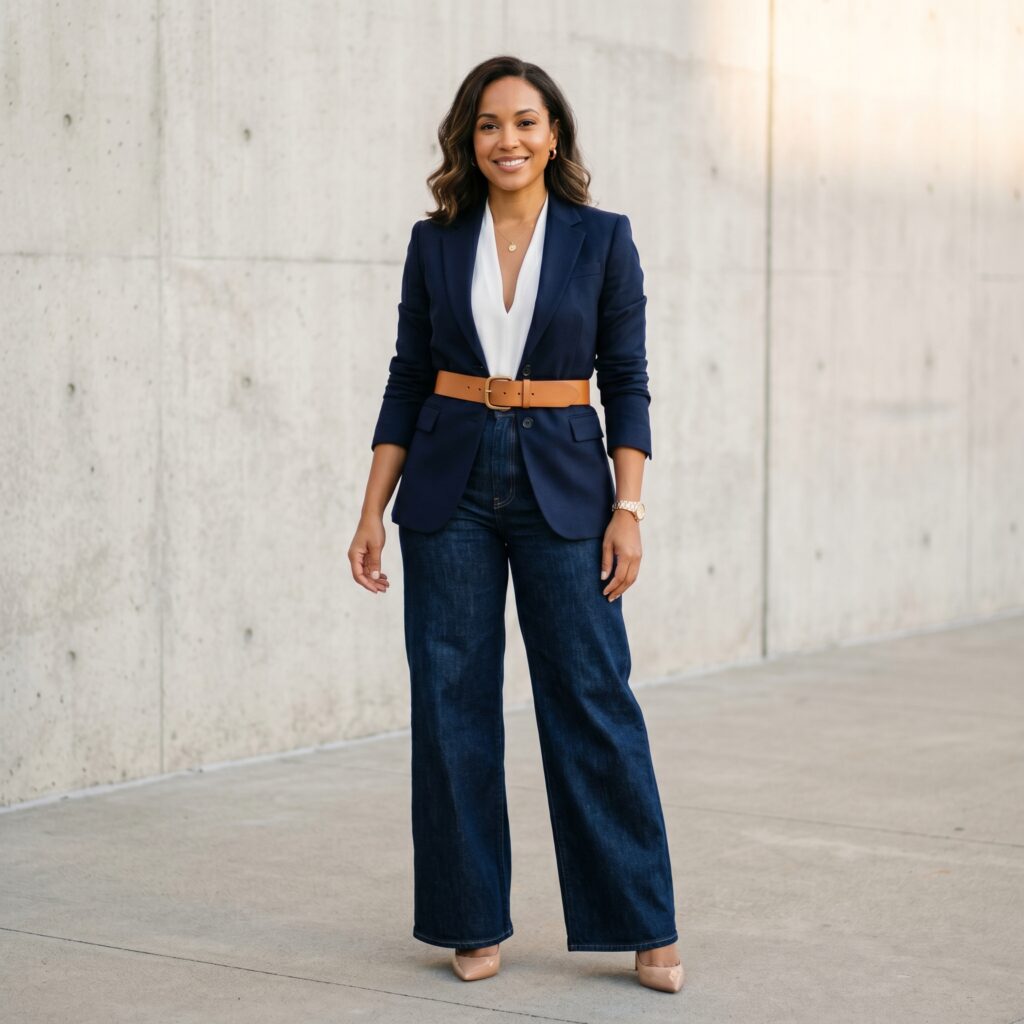
Single-breasted blazers: One clean vertical button line. This creates a slim, vertical visual through the chest.
Belted blazers: A belt at the waist redirects attention from the shoulders to the waist. Strong choice for office wear.
Long blazers (hip-length or longer): The length covers the shoulder-to-hip transition and adds vertical line.
Wide-lapel blazers: Wide lapels draw the eye inward and down the centre of the chest, which narrows the perceived shoulder width.
Peplum jackets: The peplum flares at the hip, adding exactly the volume you want at the lower half.
Avoid double-breasted jackets (two button lines add horizontal chest width), cropped bolero styles, and any jacket with structured or padded shoulders.
Coats
Trench coat: Belted at the waist, single-breasted versions are best. Creates definition without adding shoulder bulk.
Cocoon coat: Wider at the hem than at the shoulders. The shape directly reverses the inverted triangle line, which makes it one of the most flattering coat silhouettes.
Cape coat: Drapes from the shoulders without structure or seams. Softens the shoulder line.
Princess coat: Fitted through the bust and flared from the waist. Adds visual hip volume under the coat.
Car coat: Hip-length and structured at the hem. Adds weight at the right point.
Avoid double-breasted coats, epaulette detailing, and wide-shoulder peacoats.
Best bottoms for inverted triangle body shape
Trousers
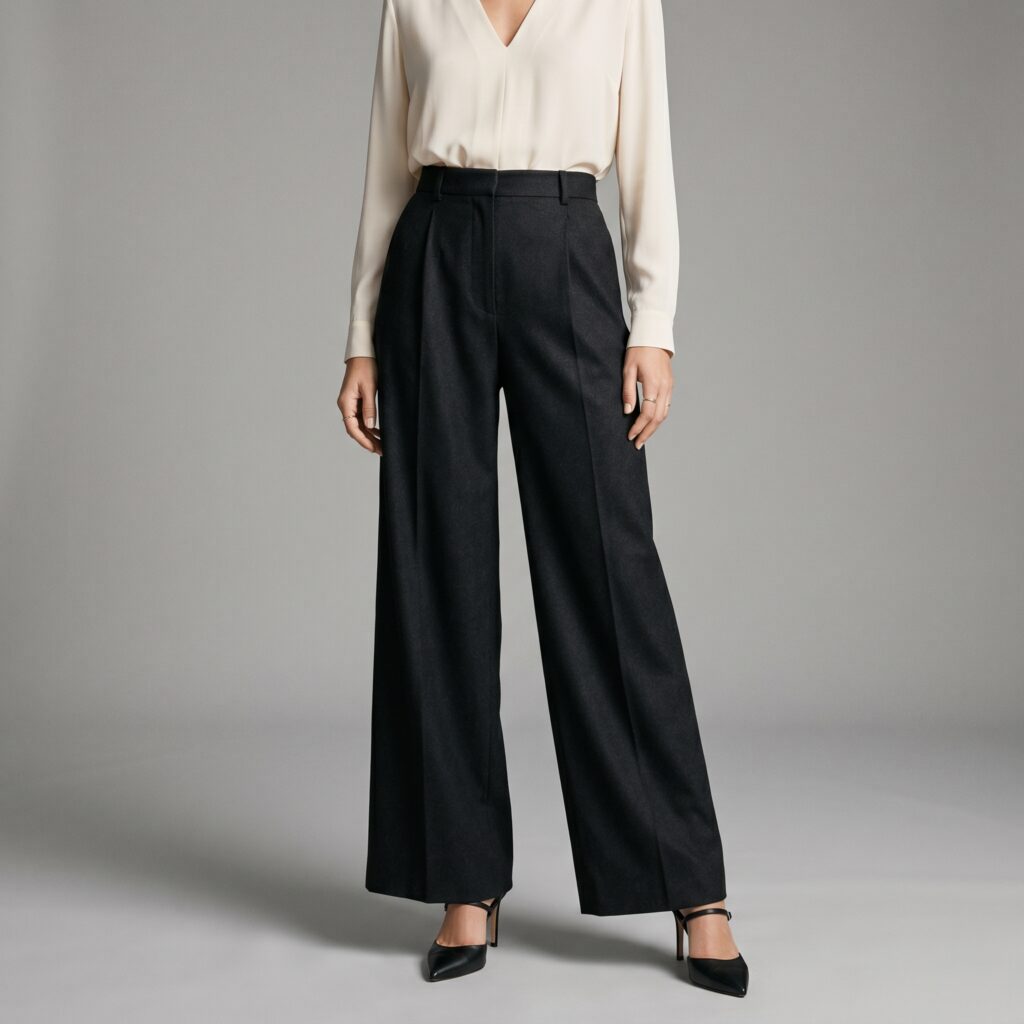
Wide-leg trousers: The strongest option. Volume from the hip down balances broad shoulders effectively.
Palazzo pants: Maximum volume, elongates the leg, and works for both Western and Indian wear.
Harem pants: Fullness through the hip and thigh, tapered at the ankle. Adds curve where you need it.
Sailor pants: Wide leg with a front button detail at the hip — the buttons themselves add horizontal emphasis at the hip line.
Straight-leg trousers: Clean and professional. They don’t add as much volume as wide-leg cuts but they don’t subtract from the hip either.
Pegged trousers: Fuller at the hip, tapered at the ankle. Creates an hourglass effect from the waist down.
Skip very slim or skinny tapered trousers worn alone — they emphasise the narrow hip against the broad shoulder.
Jeans
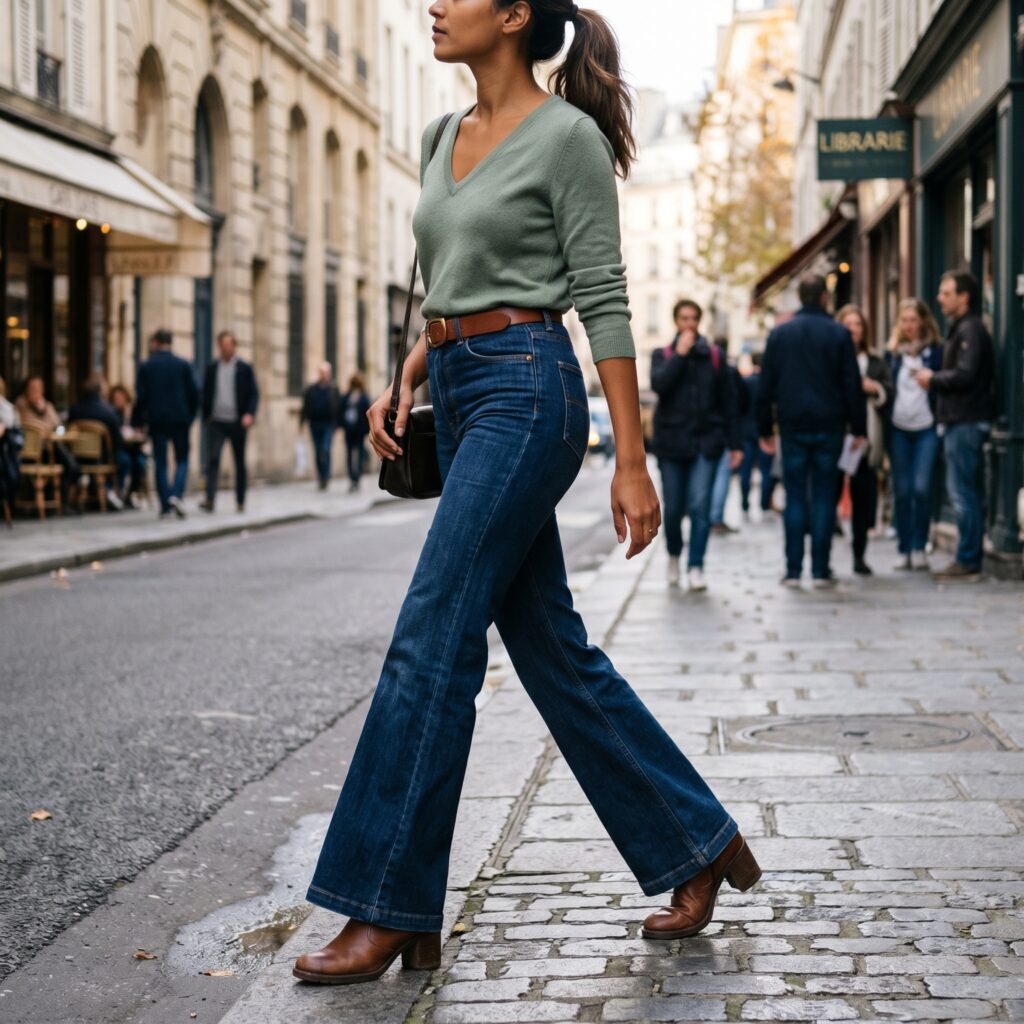
Wide-leg jeans and flare jeans: Best choices. Volume from hip to ankle.
Bootcut jeans: The flare from the knee down adds proportion.
Boyfriend jeans: Relaxed through the hip and thigh, often with an ankle roll. Adds casual volume.
Baggy jeans: A current trend that works well for inverted triangles. Volume throughout creates hip width naturally.
Skinny jeans aren’t off-limits, but wear them with a top that has volume at the hip — a peplum, a trapeze, or a longline shirt that flares at the hem.
Skirts
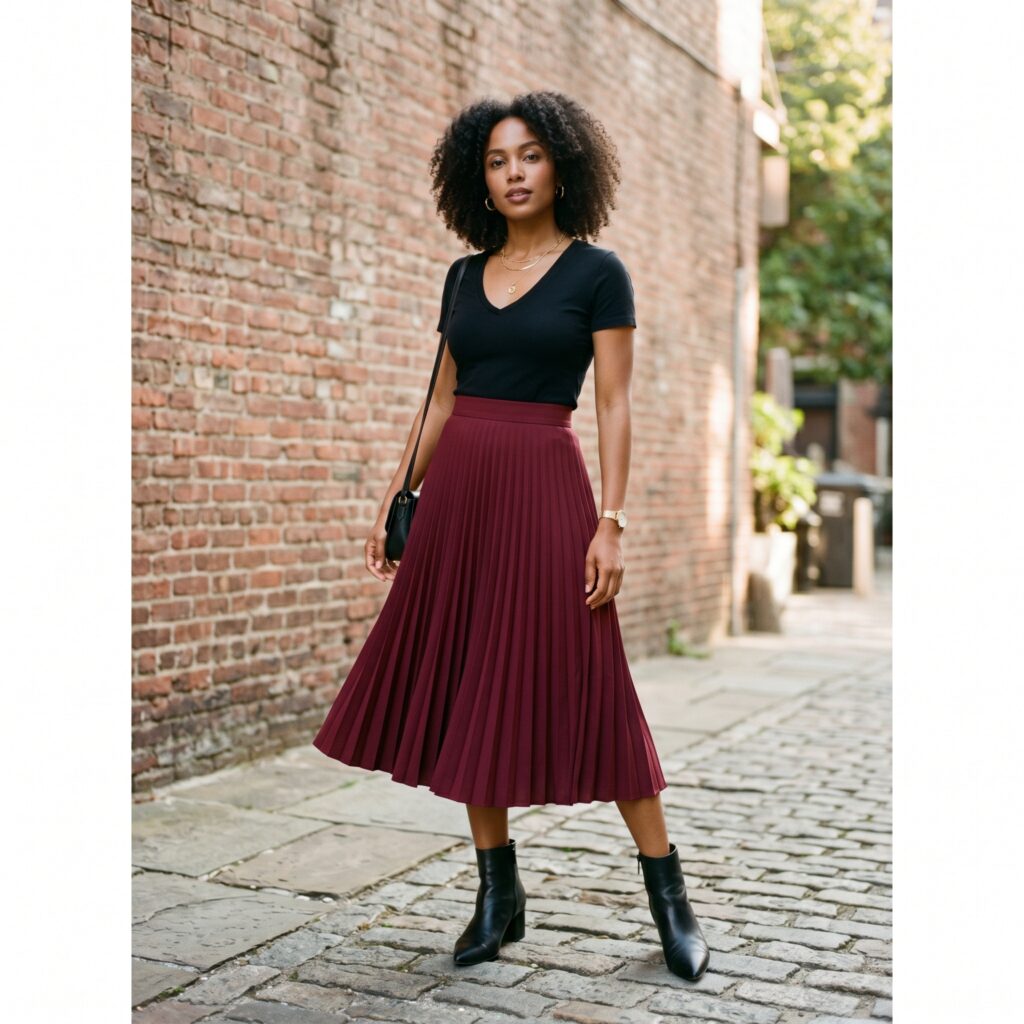
A-line skirt: Fitted at the waist, flaring to the hem. The most consistently flattering skirt shape for inverted triangles.
Pleated skirt: Pleats at the waist add instant volume to the hip area.
Circle skirt and full skirt: Dramatic flare. Particularly good for evening or party wear.
Layered skirt: Each layer adds volume.
Ruffled skirt: Texture and dimensional volume at the hip and thigh.
Tulip skirt: Wrapped front creates a rounded hip silhouette.
Paneled skirt: Structured panels add shape and hip width.
Pencil skirts and straight column skirts are the main skirts to avoid — they have no flare and no hip volume.
Dresses
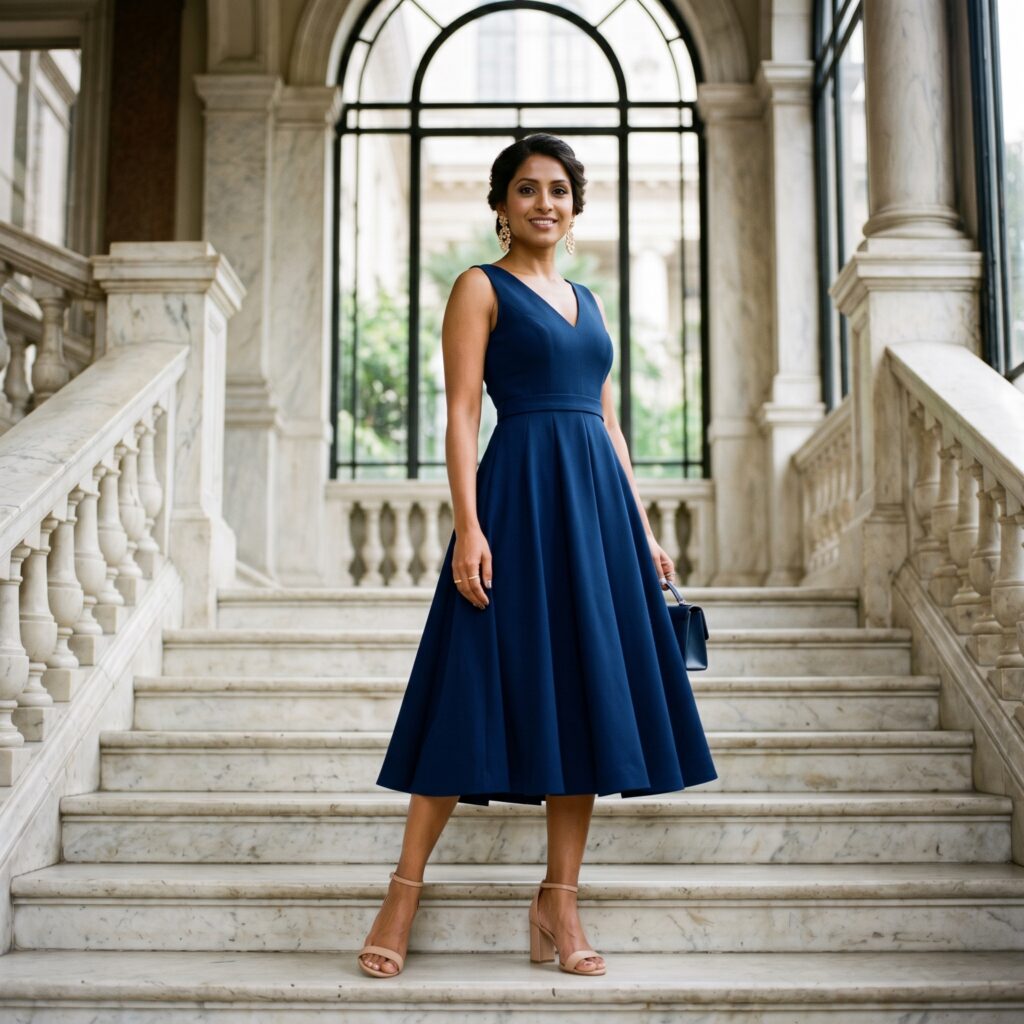
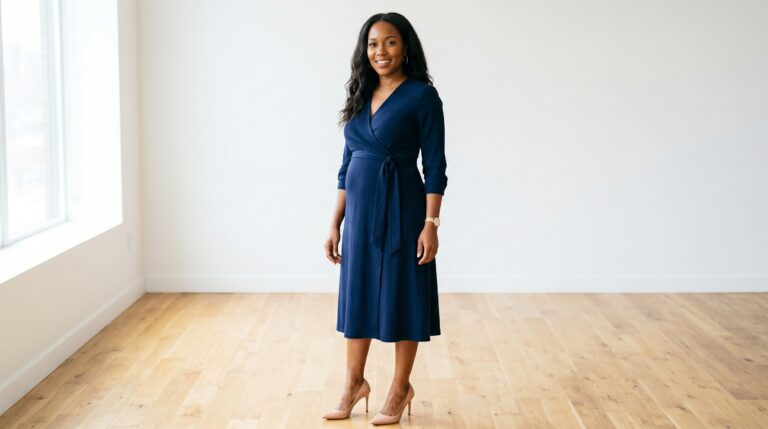
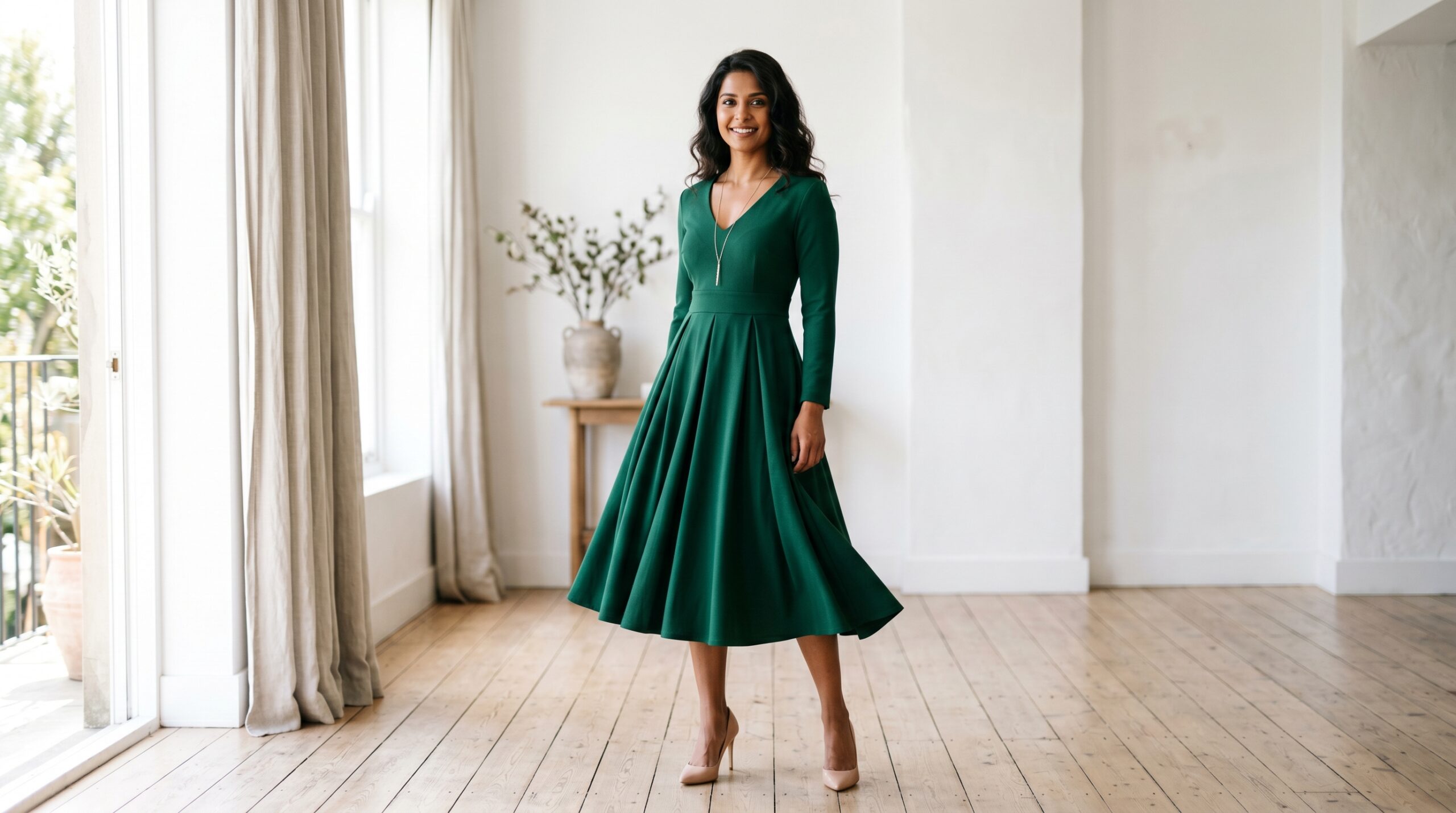
Wrap dress: V-neckline slims the chest, flared skirt adds hip volume. Top pick.
Fit and flare dress: Fitted through the bust and waist, dramatically flared skirt. The most balanced silhouette for this body shape.
A-line dress: Gradually widens from the waist to the hem. Flattering and versatile across occasions.
Sheath dress with belt: Fitted, but the belt at the waist breaks up the line and creates focus at the centre.
Off-shoulder dress: Only with a very full skirt. On its own, an off-shoulder neckline widens the shoulder line, but a dramatic flare below can offset it.
Shift dresses, column dresses, and strapless styles without a full skirt are the dresses to avoid. They create a single vertical line that emphasises the V silhouette.
Shorts
Pleated shorts: Pleats at the waist add hip volume.
Wide-leg culottes: Volume through the thigh and hip.
Patterned shorts: Bold print draws the eye to the lower half.
Cargo shorts: Side pockets and structure add visual width at the hip.
Flare shorts: Flair from the thigh — a feminine, balancing option.
Sailor shorts: High waist with front button detail. Horizontal emphasis at the hip.
Skip very short, tight shorts that expose the narrow hip without adding any visual volume.
Jumpsuits and playsuits
Flared-leg jumpsuits: Best option. The flare creates volume from hip to hem.
Wide-leg jumpsuits: Clean and modern. Works for both casual and dressy contexts.
Wrap jumpsuits: V-neck on top, wrapped silhouette through the body. Combines all the principles in one piece.
Avoid straight-leg fitted jumpsuits that create a single column line from shoulder to ankle.
Swimwear for inverted triangle body shape
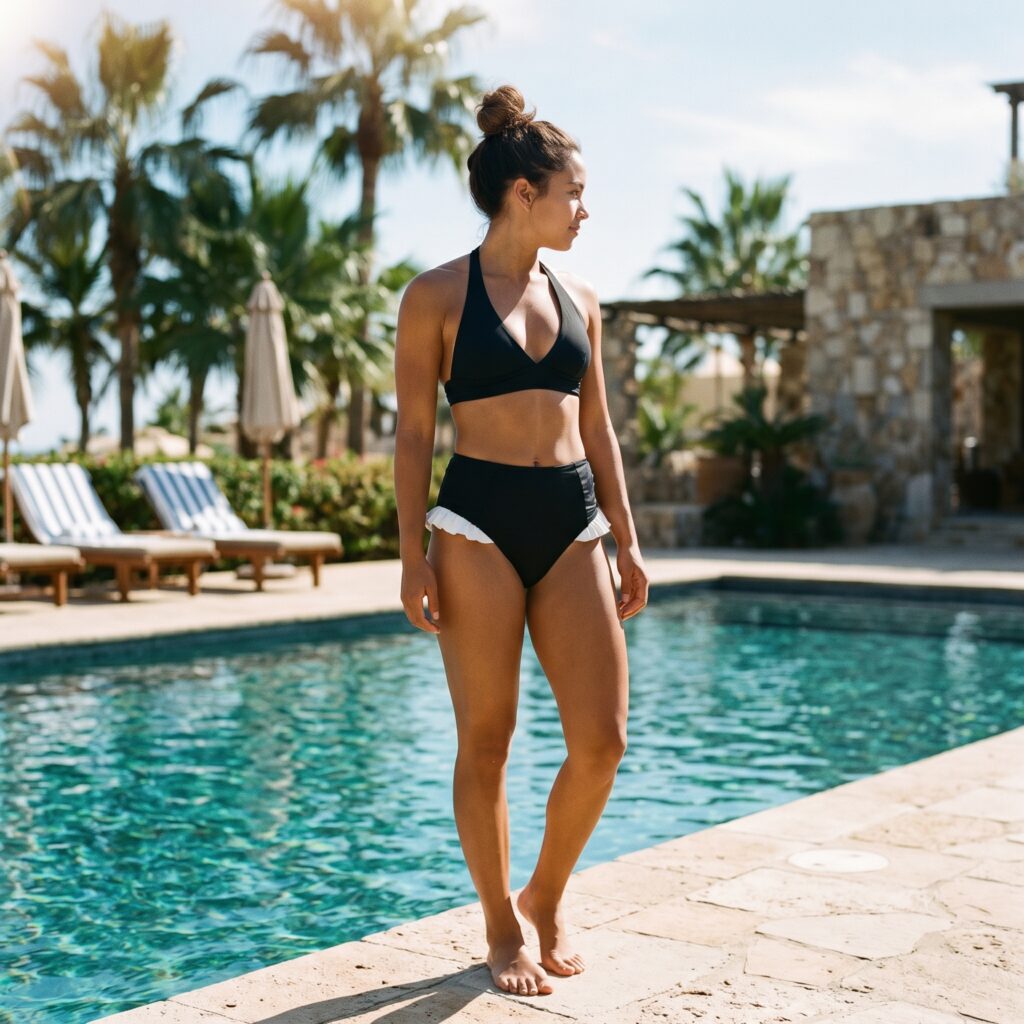
The same principles apply at the beach as anywhere else — soften the upper body, add volume at the hip.
High-waist bikini bottoms with ruffles or frills: The ruffles add visual volume at the hip. The high waist creates definition.
Side-tie or embellished bikini bottoms: Side details draw the eye outward at the hip.
Tankinis: A longer top covers more of the torso and pairs well with patterned or ruffled bottoms.
Patterned bottoms with a plain top: Directs attention to the lower half and away from the chest.
Skip bandeau tops (they widen the chest line), heavily embellished bikini tops, and halter tops paired with plain bottoms — all of these add visual emphasis exactly where you want less.
Accessories for inverted triangle body shape
Bags
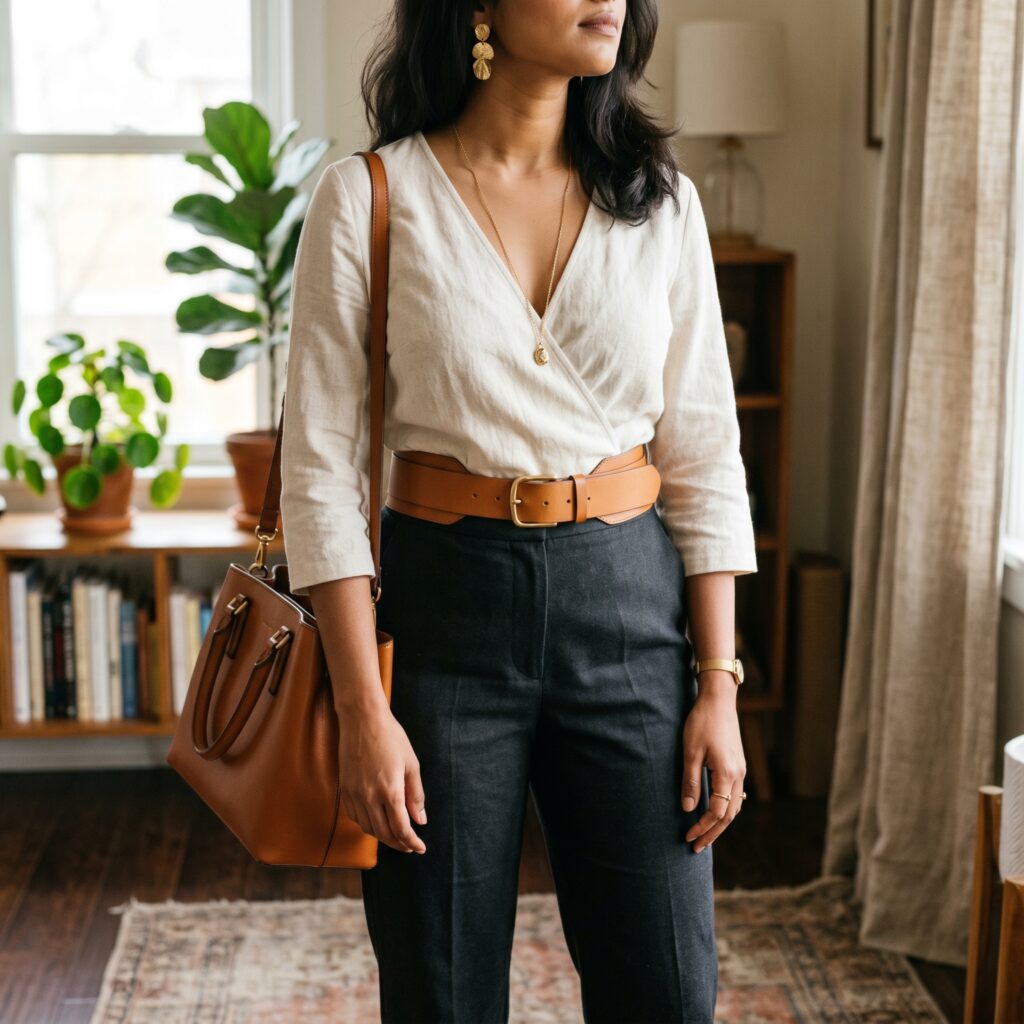
Medium-to-large totes and shoulder bags worn at hip height add visual width at the hip. Crossbody bags worn at hip level work for the same reason.
Avoid small bags worn at chest height — they add weight to the upper body.
Jewellery
Long pendant necklaces draw the eye downward. V-shaped pendants follow a V-neckline and emphasise the centre of the chest.
Skip wide chokers, chunky collar necklaces, and statement neckpieces that sit at the collarbone — they widen the neck and shoulder area.
Shoes
Bold shoes, interesting heels, and patterned footwear all pull the eye to the lower half. Ankle-strap heels and chunky-heeled boots add visual weight at the ankle, which helps balance.
Very delicate strappy heels look fine but don’t help with proportion if balancing the upper body is the goal.
Belts
Wide belts at the natural waist work brilliantly for inverted triangles — they create a focal point at the smallest part of the torso and break up the long line from shoulder to hip.
Contrasting belts (a dark belt over a light dress, for example) are even stronger.
Outfit ideas for inverted triangle body shape
Everyday casual
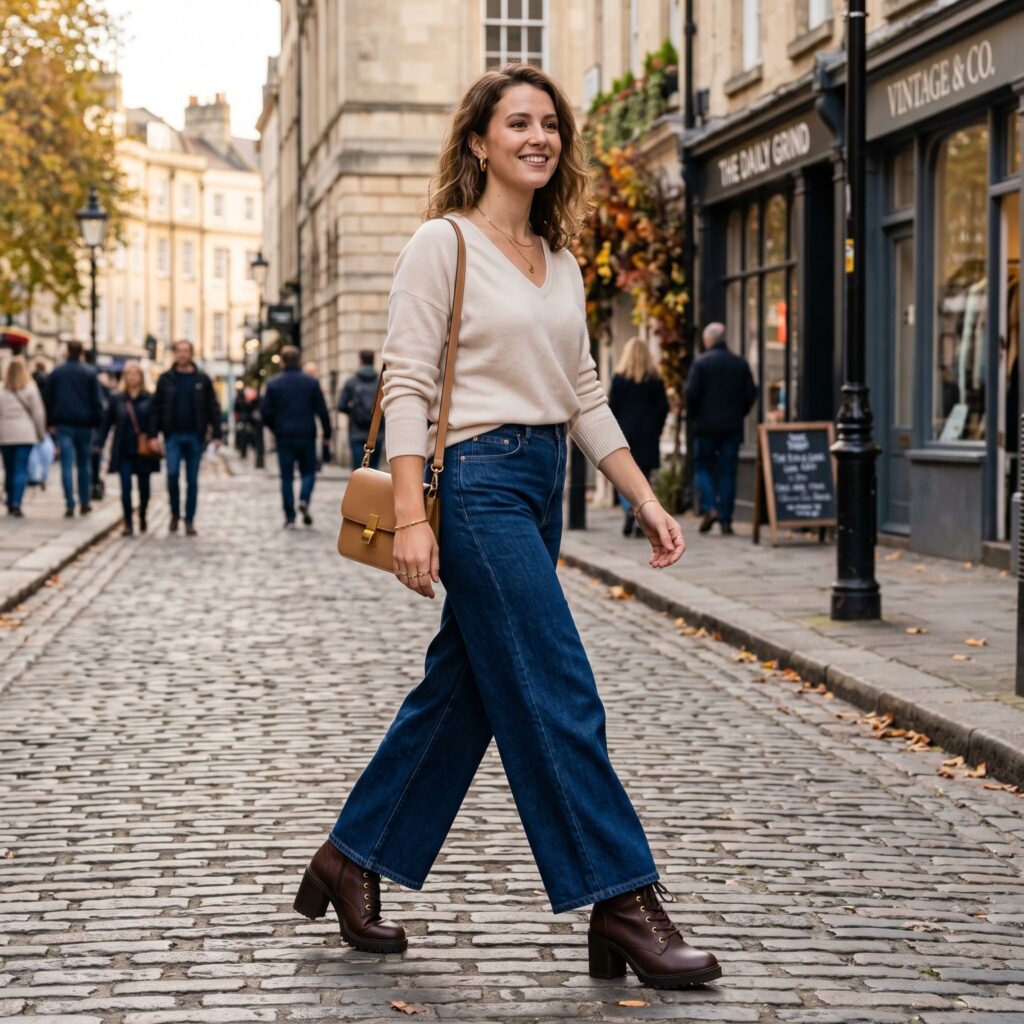
Wide-leg jeans + soft V-neck blouse + chunky-heeled boots
The wide jeans add hip volume. The V-neck blouse softens the shoulder line. The chunky boots anchor the lower half and pull the eye down. Three elements, each doing one job.
Office wear

Straight-leg trousers + single-breasted belted blazer + V-neck blouse underneath
The belt creates a focal point at the waist. The V-neck breaks up the chest line. The single-breasted blazer keeps the upper body clean. Add a long pendant necklace for vertical line.
For Indian workplaces: a fit and flare anarkali kurta over churidar leggings achieves the same balance. The flared kurta adds lower-body volume; the fitted bodice keeps the shoulder area clean.
Party / evening
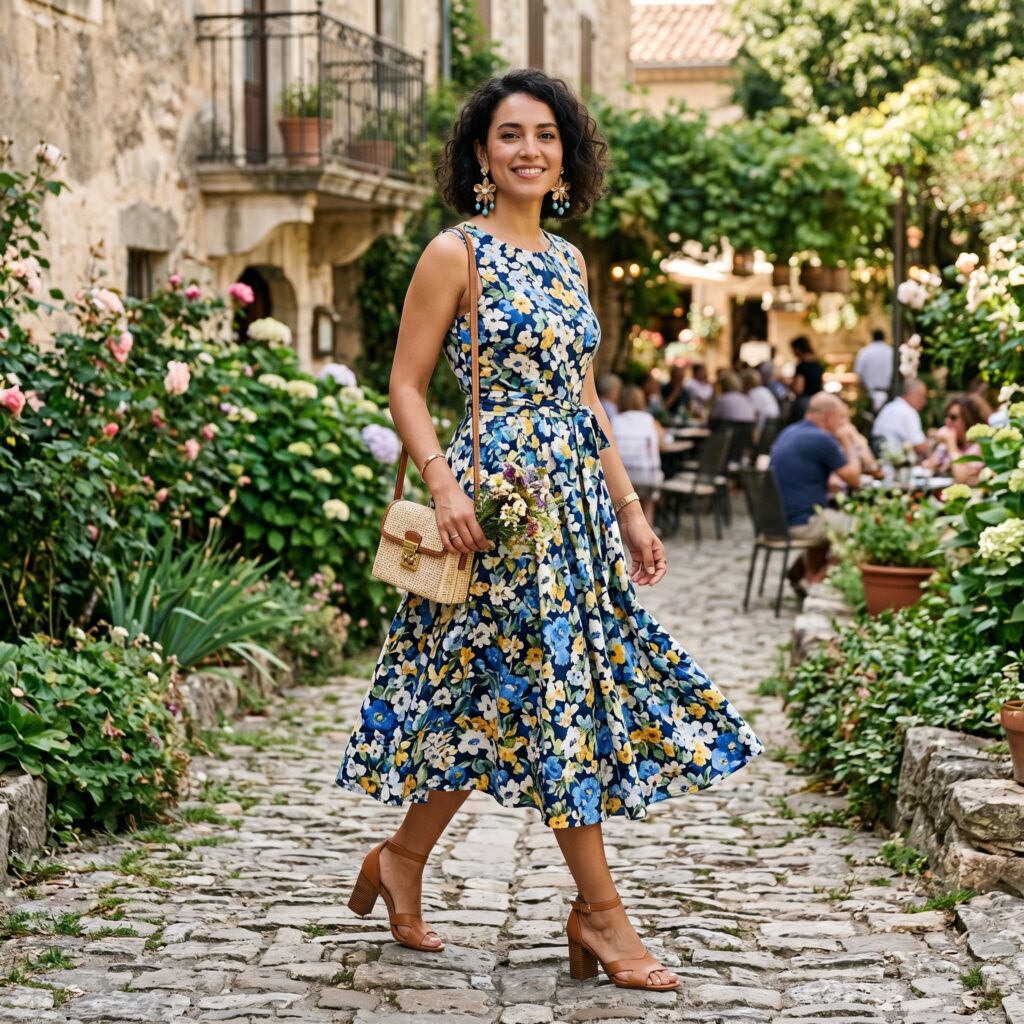
Fit and flare midi dress + statement earrings + block-heeled sandals
The fitted bodice avoids shoulder bulk. The flared midi skirt creates dramatic hip volume. Statement earrings draw attention to the face. Keep the chest area uncluttered — no statement necklace.
Indian ethnic occasion wear
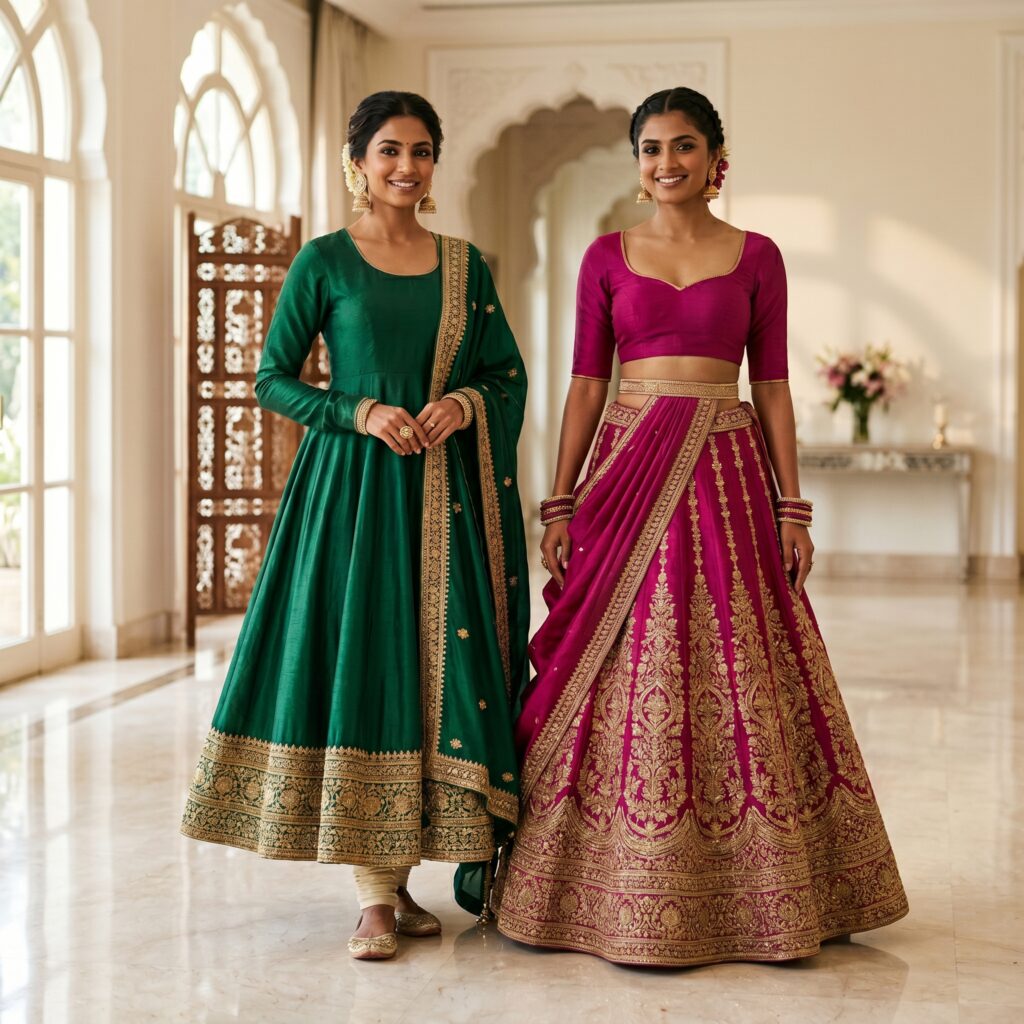
This is where inverted triangle shapes have real options that no competitor article covers.
Anarkali suits: Fitted through the chest and shoulders, dramatically flared from below the bust. The flare adds significant hip and lower body volume. Choose plain or lightly embroidered bodices. Keep all the embellishment at the hem of the skirt and the dupatta — never at the shoulders or chest. A floor-length anarkali in heavy fabric works brilliantly for weddings and formal events.
Saree draping: The Nivi drape works well for inverted triangles, particularly with thick fabrics like Banarasi silk, Kanjeevaram, or heavy georgette. The pleated fall at the front draws the eye downward. The pallu draped over one shoulder adds softness rather than structure. Avoid very sheer chiffon sarees that cling without volume. Choose a blouse with a V-neck or sweetheart neckline rather than a boat-neck or square-neck.
Lehenga choli: The most flattering Indian garment for this body shape. Choose a heavily flared lehenga skirt with a minimum of 3 metres of fabric — the volume at the hip and thigh creates immediate balance. Keep the choli fitted and simple, with no heavy shoulder embroidery. A long dupatta draped at the waist rather than over the shoulder adds further hip-level volume.
Sharara and Gharara: These wide-legged divided skirt styles add extraordinary volume from the waist down — excellent for inverted triangles. The Gharara, with its gathered knee detail, adds an extra visual line of volume at the lower half.
Kurta with palazzo pants: A fitted or slightly A-line kurta reaching mid-thigh, worn with wide palazzo pants. Keep the kurta plain or lightly printed. Choose the palazzo bold or patterned. This pulls the eye downward.
Celebrities with an inverted triangle body shape
International: Renée Zellweger, Demi Moore, Naomi Campbell, Claudia Schiffer, Amal Clooney, Emily Ratajkowski, Katie Holmes, Rosie Huntington-Whiteley. Naomi Campbell’s signature look — fitted on top, dramatically flared at the hip — is a study in inverted triangle styling.
Bollywood: Deepika Padukone is the most-cited Indian celebrity with this body shape. Her broad shoulders, swimmer’s frame, slim hips, and toned arms are textbook inverted triangle. Her consistent styling choices reflect it — she wears V-necks, wrap dresses, fit-and-flare gowns, and lehengas with dramatic flare. Sonam Kapoor, Bipasha Basu, and Vaani Kapoor have similar proportions and similar styling patterns.
Watching how these celebrities dress for red carpets is a useful styling reference. Almost all of them avoid strapless gowns without volume, double-breasted blazers, and chunky neckwear. Almost all of them choose plunge necklines, fit-and-flare silhouettes, and statement earrings rather than statement necklaces.
Can inverted triangles wear tight clothes?
Yes. Fitted clothing works as long as the fabric is soft rather than structured.
A fitted V-neck T-shirt in jersey or fine knit is fine. A fitted blazer with padded shoulders is not. A bodycon dress with a flared skirt panel at the hip is fine. A bodycon mini with no shape at the hip is not.
The principle isn’t about how tight or loose a garment is. It’s about whether the upper body looks built-up or soft, and whether the lower body has volume or not.
Inverted triangle capsule wardrobe essentials
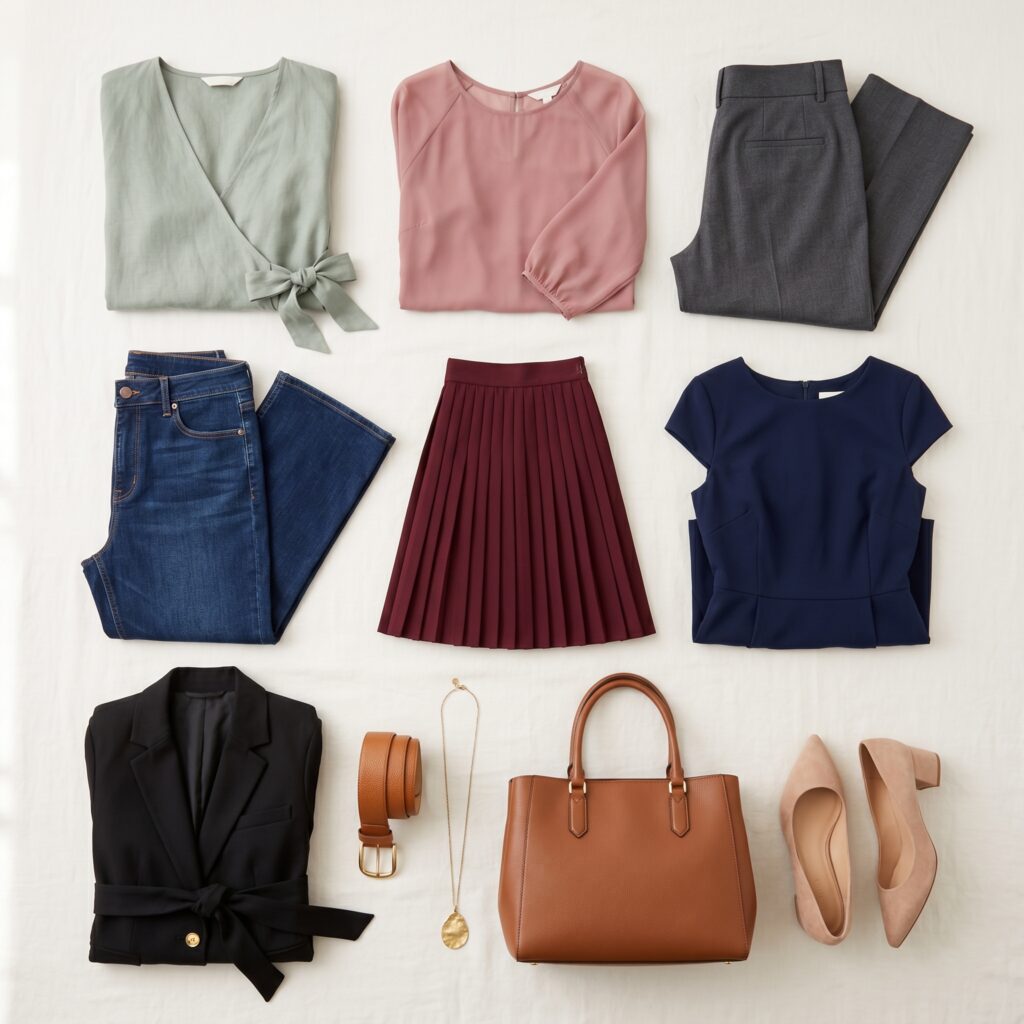
Here’s the core list — 14 pieces that mix across casual, office, party, and ethnic wear.
Tops
- V-neck blouse in chiffon or georgette
- Raglan sleeve T-shirt
- Wrap blouse
- Fine-knit V-neck jumper
- Soft fabric tunic
Bottoms
- Wide-leg trousers (dark or neutral)
- Flare or bootcut jeans
- A-line midi skirt
- Palazzo pants
- Pleated midi skirt
Dresses
- Wrap dress
- Fit and flare midi dress
Outerwear
- Single-breasted belted trench coat
- Long belted blazer
Accessories
- Wide belt for the natural waist
- Long pendant necklace
- Medium tote (worn at hip)
- Chunky-heeled ankle boots
Clothes to avoid for inverted triangle body shape
- Boat necks and off-shoulder tops — add horizontal width across the shoulders
- Cap sleeves and puff sleeves — the most shoulder-widening sleeve cuts
- Double-breasted jackets and coats — two button lines add chest width
- Padded or structured shoulder seams — the single biggest thing to avoid
- Skinny jeans worn with fitted tops — emphasises the V silhouette
- Strapless tops without a full skirt — widens the chest line
- Horizontal stripes on the upper body — adds visible width across the shoulders
- Small handbags worn at chest height — adds visual weight up top
- Chunky chokers and heavy collar necklaces — adds horizontal width at the neck
- Pencil skirts and column dresses — no hip volume, leaves the V uncorrected
FAQs
Which is the hottest body shape?
There’s no single “hottest” body shape — attractiveness is cultural and personal. Different shapes have been considered the ideal in different times and places. The inverted triangle is often associated with athletic, model-like proportions and is the natural shape of many of the world’s most photographed women, including Naomi Campbell, Deepika Padukone, and Emily Ratajkowski.
Is the inverted triangle body type rare?
Inverted triangle shapes make up around 14% of women, according to research from North Carolina State University. It’s less common than the rectangle (46%) and pear (20%) shapes, but more common than the classic hourglass (8%) and diamond (3%).
Which celebrity has an inverted triangle body shape?
Internationally — Renée Zellweger, Naomi Campbell, Demi Moore, Claudia Schiffer, Emily Ratajkowski, Amal Clooney, and Rosie Huntington-Whiteley. In Bollywood — Deepika Padukone is the most-cited example, along with Sonam Kapoor, Bipasha Basu, and Vaani Kapoor.
Where do inverted triangles gain weight?
Inverted triangle shapes typically gain weight in the upper body first — the chest, arms, shoulders, and upper back. The hips and legs tend to stay slim even with overall weight gain. This pattern is the opposite of pear-shaped women, who gain weight in the hips and thighs first.
Do inverted triangles have a small waist?
Inverted triangles usually have a defined waist, though it’s not always dramatically small. The waist is visibly narrower than the shoulders and bust but not always narrower than the hips by much. This is the key feature that separates an inverted triangle from an apple shape, which has little or no waist definition.
Is an inverted triangle curvy?
It depends on the bust. Inverted triangles with a fuller bust read as curvy in the upper body. The lower body — narrow hips, slim legs, flat seat — reads as more athletic than curvy. The overall silhouette is V-shaped, which is different from the curves of an hourglass or pear shape.
Which Indian clothes suit an inverted triangle body shape?
Anarkali suits with a fitted bodice and heavily flared skirt, lehenga choli with a fitted choli and a 3+ metre flared skirt, and sharara or gharara pants are the best Indian options. They add dramatic volume at the lower half. For sarees, choose thick fabrics and the Nivi drape with a V-neck or sweetheart blouse.
What hairstyle suits an inverted triangle body?
Longer hairstyles work well — shoulder-length or below — because they create vertical lines that soften the shoulder width. Side-parted styles, soft waves, and layered cuts are flattering. Very short pixie cuts and high, bulky updos can emphasise the broader shoulder line. A long, layered cut with side-swept bangs is a classic flattering choice for this shape.
Your shape, your wardrobe
The inverted triangle shape is one of the most photographed silhouettes in fashion — many top models, athletes, and Bollywood actresses share it. The challenge with styling it well is that most off-the-rack clothing isn’t designed with this shoulder-to-hip ratio in mind, so the work happens at the wardrobe-building stage.
The 3 things that make the most consistent difference:
- A V-neck, scoop neck, or wrap neckline on every top
- Volume at the hip — wide-leg, flared, pleated, or A-line bottoms
- A wide belt at the natural waist to break up the long line from shoulder to hip
Build the wardrobe from those 3 ideas and almost everything else falls into place.
Or explore related guides: apple body shape, pear body shape, hourglass body shape, Rectangle body shape, female body shapes: the complete overview.